
Clean & Minimal AI Powered Fitness Routines
Download App25-Minute Gaming & Long Sitting Reset
A 25-minute mobility + posture routine to reduce stiffness from long sitting and gaming.
25-Minute Gaming & Long Sitting Reset
A 25-minute mobility + posture routine to reduce stiffness from long sitting and gaming.
Warm-Up
Downshift tension and restore gentle spinal motion before mobility and strength work. — Focus on breath and spine.
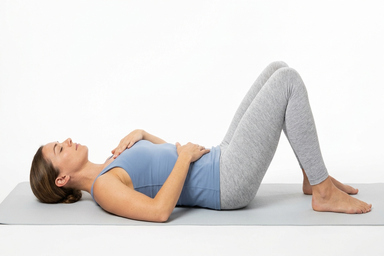
How to
A slow breathing drill that trains relaxed belly breathing and helps you control your breath.
- Lie on your back or sit tall with one hand on your belly.
- Inhale through your nose and let your belly rise.
- Exhale slowly and let your belly fall.
- Keep your chest and shoulders quiet.
- Continue for the set time with smooth breaths.
- Breathe low into your belly
- Keep your shoulders relaxed
- Shrugging your shoulders as you inhale
- Forcing the breath or holding tension
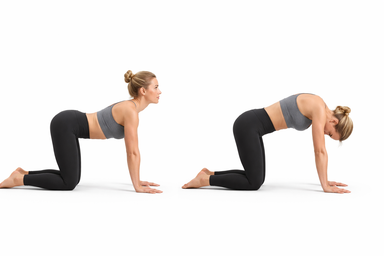
How to
A gentle spine mobility move that alternates rounding and arching your back on hands and knees.
- Start on hands and knees with wrists under shoulders and knees under hips.
- Inhale and drop your belly as you lift your chest and tailbone.
- Exhale and round your back, tucking your chin and tailbone.
- Move slowly between both positions with your breath.
- Move one vertebra at a time.
- Keep your shoulders away from your ears.
- Forcing your neck up or down.
- Rushing through the movement.
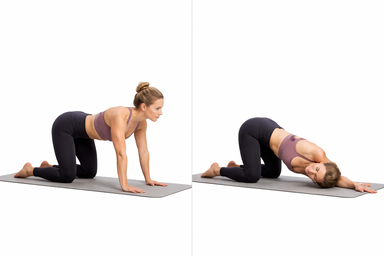
How to
A floor stretch that opens your upper back and shoulder while you hold one side at a time.
- Start on all fours with your hands under shoulders and knees under hips.
- Slide one arm under your chest, palm up, and lower your shoulder toward the floor.
- Rest your head down if comfortable, and keep your hips over your knees.
- Hold the stretch and breathe slowly.
- Press into your top hand to return to all fours, then switch sides.
- Keep your hips stacked over your knees
- Breathe into your upper back
- Letting your hips drift far to one side
- Forcing your shoulder lower than comfortable
Circuit A
Keep low back neutral; prioritize smooth reps over speed. — Focus on hips and core.
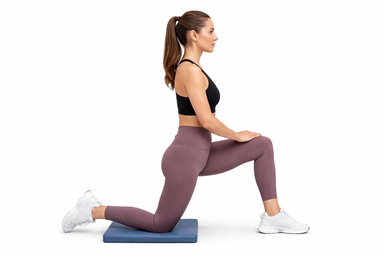
How to
A kneeling stretch for the front of your hip. It targets the hip flexors on one side at a time.
- Kneel with one knee down and the other foot in front.
- Tuck your pelvis slightly and keep your chest tall.
- Shift your hips forward until you feel a gentle stretch.
- Hold the position and breathe steadily.
- Finish the hold, then switch sides.
- Squeeze the glute on the back leg
- Keep your ribs stacked over your hips
- Arching your lower back to get deeper
- Letting the front knee cave inward
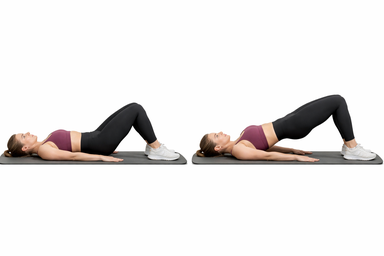
How to
A floor hip lift that trains your glutes and hamstrings with both feet planted.
- Lie on your back with knees bent and feet flat, hip-width apart.
- Brace your core and press your arms lightly into the floor.
- Drive through your heels and lift your hips until your body forms a straight line.
- Squeeze your glutes at the top, then lower with control.
- Repeat for your reps.
- Keep your ribs down
- Drive through your heels
- Arching your lower back at the top
- Pushing through your toes
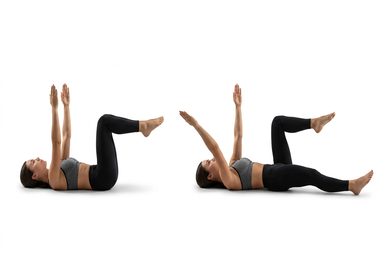
How to
A core move on your back that trains control while you move opposite arm and leg.
- Lie on your back with arms up and knees bent over hips.
- Press your lower back gently toward the floor.
- Lower one arm and the opposite leg with control.
- Return to the start, then repeat on the other side.
- Keep alternating sides for each rep.
- Move slow and stay braced
- Keep your ribs down
- Letting your lower back arch
- Rushing through the reps
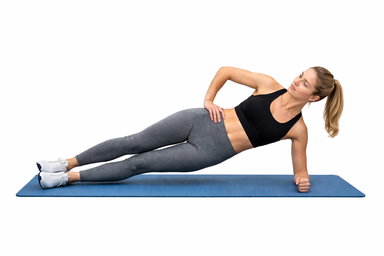
How to
A side hold that trains your obliques, hips, and shoulder stability.
- Lie on one side with your elbow under your shoulder and legs stacked.
- Lift your hips until your body forms a straight line.
- Hold the position and breathe steadily.
- Lower your hips with control.
- Finish your hold, then switch sides.
- Keep your hips stacked
- Press the floor away
- Letting your hips sag
- Rolling your chest toward the floor
Circuit B
Keep shoulders down and back; avoid shrugging. — Focus on posture and neck.
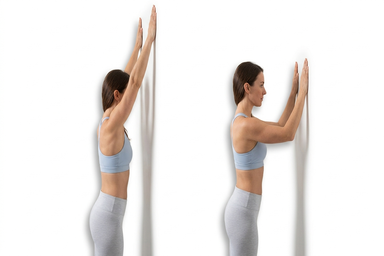
How to
A wall-based shoulder move that trains shoulder control and upper-back posture.
- Stand with your back to a wall and feet a small step out.
- Press your head, upper back, and hips gently into the wall.
- Place your arms on the wall in a goalpost shape.
- Slide your arms up the wall as far as you can control.
- Slide back down to the start and repeat.
- Keep your ribs down.
- Move slowly and stay in control.
- Arching your lower back to reach higher.
- Shrugging your shoulders toward your ears.
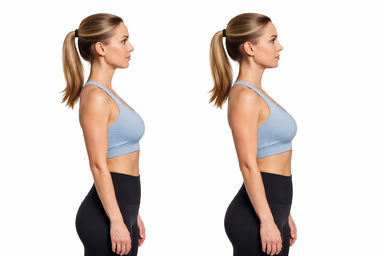
How to
A small neck position hold that trains the front of your neck and helps control head position.
- Sit or stand tall with your eyes looking straight ahead.
- Gently slide your chin straight back, like making a double chin.
- Keep your head level and your jaw relaxed.
- Hold the tuck and breathe slowly.
- Release to neutral, then repeat for the set.
- Move straight back, not down.
- Keep your shoulders relaxed.
- Tilting your head up or down.
- Forcing the tuck or clenching your jaw.
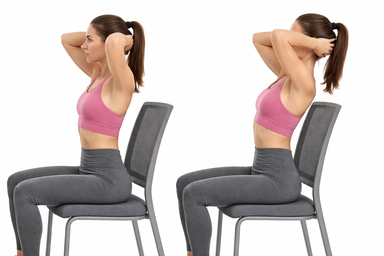
How to
A seated upper-back extension hold using a chair to open your chest and train thoracic mobility.
- Sit facing away from a chair back, feet flat on the floor.
- Place your hands behind your head or across your chest.
- Lean your upper back over the chair edge.
- Hold the stretch position and breathe slowly.
- Return to upright with control.
- Move from your upper back.
- Keep your ribs from flaring.
- Arching hard through your lower back.
- Pulling your neck forward with your hands.
Cool-Down
Bring the nervous system down and lock in the new range of motion. — Focus on glutes and upper back.
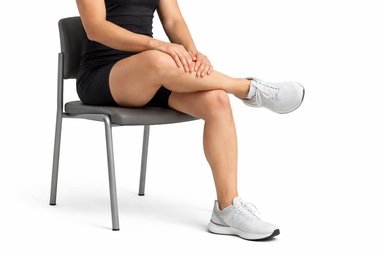
How to
A seated hip stretch that targets the glutes and outer hip on one side at a time.
- Sit tall near the edge of a chair with both feet flat.
- Cross one ankle over the opposite thigh, just above the knee.
- Keep your spine long and gently lean forward from your hips.
- Hold the stretch and breathe slowly.
- Finish the hold, then switch sides.
- Keep your chest lifted
- Relax the raised knee down
- Rounding your back to reach lower
- Pushing hard on the knee
How to
A slow breathing drill that trains relaxed belly breathing and helps you control your breath.
- Lie on your back or sit tall with one hand on your belly.
- Inhale through your nose and let your belly rise.
- Exhale slowly and let your belly fall.
- Keep your chest and shoulders quiet.
- Continue for the set time with smooth breaths.
- Breathe low into your belly
- Keep your shoulders relaxed
- Shrugging your shoulders as you inhale
- Forcing the breath or holding tension

Why Every Joint in This Sequence Gets Its Turn
Cat-Cow and Thoracic Extension on Chair directly counteract the flexion-dominant posture that locks your T-spine during long sessions. Thread the Needle rotates the thoracic vertebrae through their full range, while Wall Slides retrain serratus anterior and lower trapezius — muscles chronically inhibited by rounded shoulders.

What Hours at a Screen Actually Do to Your Body
Sustained hip flexion shortens the iliopsoas and compresses lumbar discs, while forward head posture shifts up to 60lbs of effective load onto your cervical spine. The Chin Tuck and Kneeling Hip Flexor Stretch directly address this dual threat, restoring the length-tension relationships that gaming posture systematically dismantles.

Sequencing Breath Before Bracing — Here's Why
Diaphragmatic Breathing opens the routine deliberately: a compressed diaphragm from slouching inhibits core activation, so breathing mechanics must be restored before Dead Bug and Side Plank can recruit deep stabilizers effectively. If Side Plank feels shaky, reduce hold time and prioritize rib-cage alignment over duration.