
Clean & Minimal AI Powered Fitness Routines
Download AppIntermediate Older Adult Strength
A balanced, joint-friendly strength session to build full-body strength and stability in ~25 minutes.
Intermediate Older Adult Strength
A balanced, joint-friendly strength session to build full-body strength and stability in ~25 minutes.
Warm-Up
Increase blood flow and prepare joints for strength work. — 4 minutes.
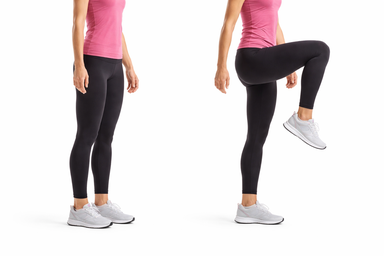
How to
A low-impact cardio move that warms up your legs and hips while raising your heart rate.
- Stand tall with your feet hip-width apart and arms at your sides.
- Lift one knee to hip height as you swing the opposite arm forward.
- Lower that foot, then lift the other knee and switch arms.
- Keep alternating sides at a steady pace.
- Slow down and plant both feet to finish.
- Stand tall with your chest up
- Land softly under your hips
- Leaning back as you lift your knees
- Stomping your feet on each step
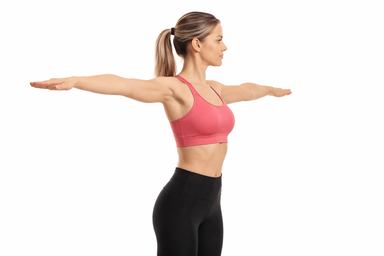
How to
A simple shoulder warm-up that moves both arms in circles and trains shoulder control.
- Stand tall with your feet about hip-width apart.
- Raise both arms out to your sides at shoulder height.
- Make small, controlled circles with both arms.
- Keep circling for the set time, then reverse direction if told.
- Lower your arms to finish.
- Keep your ribs down
- Move smoothly, not fast
- Shrugging your shoulders toward your ears
- Arching your back to keep the arms up
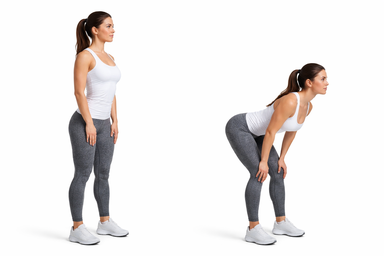
How to
A standing hip hinge that trains your glutes and hamstrings and builds the pattern for deadlifts.
- Stand with feet hip-width apart and knees slightly bent.
- Brace your core and keep your chest open.
- Push your hips back as your torso tips forward.
- Lower until you feel your hamstrings, keeping your back flat.
- Drive your hips forward to stand tall again.
- Move from your hips, not your waist.
- Keep your back long.
- Squatting instead of hinging your hips back.
- Rounding your back as you lower.
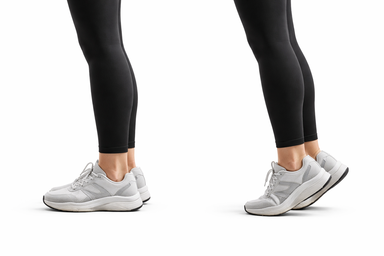
How to
A standing lower-leg move that trains your calves by lifting and lowering your heels.
- Stand tall with both feet hip-width apart.
- Press through the balls of your feet and lift your heels.
- Pause briefly at the top with control.
- Lower your heels slowly back to the floor.
- Repeat for your reps.
- Keep your ankles tracking straight.
- Move up and down with control.
- Rocking onto the outside edges of your feet.
- Bouncing at the bottom of each rep.
Circuit A
Controlled reps. Use a chair for support as needed.
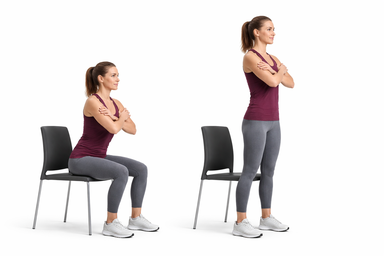
How to
A chair-based squat pattern that trains your thighs and glutes for standing strength.
- Sit near the front of a chair with feet flat and hip-width apart.
- Lean slightly forward and brace your core.
- Press through both feet and stand tall.
- Push your hips back and sit down with control.
- Keep your knees tracking over your toes
- Stand tall at the top
- Letting your knees cave inward
- Dropping hard onto the chair
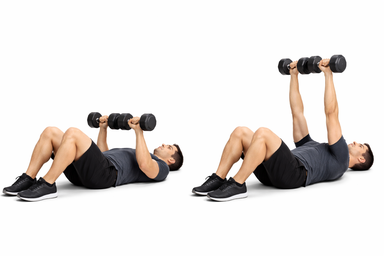
How to
A floor chest press with dumbbells that trains your chest, shoulders, and triceps.
- Lie on your back with knees bent and a dumbbell in each hand.
- Set upper arms on the floor, elbows about 45 degrees from your body.
- Press the dumbbells up until your arms are straight over your chest.
- Lower with control until your upper arms lightly touch the floor.
- Repeat for reps.
- Keep wrists stacked over elbows.
- Press both dumbbells evenly.
- Bouncing your arms off the floor.
- Letting elbows flare straight out.
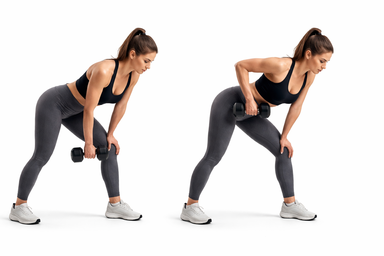
How to
A bent-over pulling move that trains your upper back, lats, and arms.
- Hold a dumbbell in each hand and hinge at your hips.
- Let your arms hang under your shoulders with palms facing in.
- Pull both elbows up toward your ribs.
- Pause briefly, then lower the dumbbells with control.
- Keep your back flat
- Pull elbows close to your sides
- Shrugging your shoulders toward your ears
- Using your torso to swing the weights
Circuit B
Maintain a neutral spine and steady breathing.
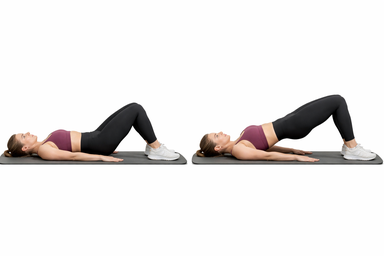
How to
A floor hip lift that trains your glutes and hamstrings with both feet planted.
- Lie on your back with knees bent and feet flat, hip-width apart.
- Brace your core and press your arms lightly into the floor.
- Drive through your heels and lift your hips until your body forms a straight line.
- Squeeze your glutes at the top, then lower with control.
- Repeat for your reps.
- Keep your ribs down
- Drive through your heels
- Arching your lower back at the top
- Pushing through your toes
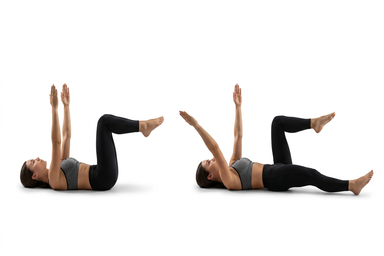
How to
A core move on your back that trains control while you move opposite arm and leg.
- Lie on your back with arms up and knees bent over hips.
- Press your lower back gently toward the floor.
- Lower one arm and the opposite leg with control.
- Return to the start, then repeat on the other side.
- Keep alternating sides for each rep.
- Move slow and stay braced
- Keep your ribs down
- Letting your lower back arch
- Rushing through the reps
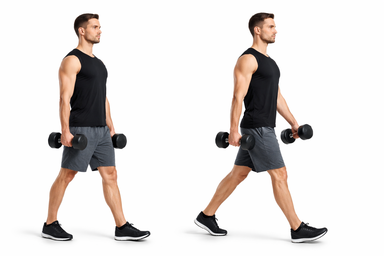
How to
A loaded walk that trains your grip, core, shoulders, and posture.
- Stand tall with a weight in each hand at your sides.
- Brace your core and pull your shoulders down and back.
- Walk forward with short, controlled steps.
- Keep the weights steady and your torso upright.
- Set the weights down with control when finished.
- Stand tall as you walk
- Keep the weights by your sides
- Leaning back or to one side
- Letting the weights swing
Cool-Down
Bring your heart rate down and finish with easy mobility. — 3 minutes.
How to
A low-impact cardio move that warms up your legs and hips while raising your heart rate.
- Stand tall with your feet hip-width apart and arms at your sides.
- Lift one knee to hip height as you swing the opposite arm forward.
- Lower that foot, then lift the other knee and switch arms.
- Keep alternating sides at a steady pace.
- Slow down and plant both feet to finish.
- Stand tall with your chest up
- Land softly under your hips
- Leaning back as you lift your knees
- Stomping your feet on each step
How to
A standing hip hinge that trains your glutes and hamstrings and builds the pattern for deadlifts.
- Stand with feet hip-width apart and knees slightly bent.
- Brace your core and keep your chest open.
- Push your hips back as your torso tips forward.
- Lower until you feel your hamstrings, keeping your back flat.
- Drive your hips forward to stand tall again.
- Move from your hips, not your waist.
- Keep your back long.
- Squatting instead of hinging your hips back.
- Rounding your back as you lower.
How to
A simple shoulder warm-up that moves both arms in circles and trains shoulder control.
- Stand tall with your feet about hip-width apart.
- Raise both arms out to your sides at shoulder height.
- Make small, controlled circles with both arms.
- Keep circling for the set time, then reverse direction if told.
- Lower your arms to finish.
- Keep your ribs down
- Move smoothly, not fast
- Shrugging your shoulders toward your ears
- Arching your back to keep the arms up

Hip Hinge to Farmer Carry: The Chain Reaction
The hip hinge primes your posterior chain—glutes, hamstrings, and erector spinae—creating the neuromuscular pattern that makes the farmer carry far safer and more powerful. Sit-to-stand directly targets quad-dominant knee extension and hip flexor mobility, the two most critical factors for fall prevention and functional independence.

Sarcopenia Demands Compound Loading
After 50, muscle protein synthesis requires heavier mechanical stimulus than most people apply. The dumbbell row and floor press address the upper-body pulling and pushing imbalance that accumulates from decades of desk posture, while the glute bridge offloads spinal compression compared to standing lifts—protecting discs while still maximally recruiting the gluteus maximus.

Why Dead Bug Anchors This Entire Routine
Dead bug trains anti-extension core stability—the ability to resist lumbar hyperextension under load—which directly transfers to every weighted movement here, especially the farmer carry and dumbbell row. Program progressive overload by adding half-reps per set weekly before increasing dumbbell weight, keeping joint stress predictable and connective tissue adaptation ahead of muscle fatigue.