
Clean & Minimal AI Powered Fitness Routines
Download AppPiriformis Syndrome Relief — 25 Minutes
A ~25-minute mobility + glute-strength routine to reduce piriformis irritation and improve hip mechanics.
Piriformis Syndrome Relief — 25 Minutes
A ~25-minute mobility + glute-strength routine to reduce piriformis irritation and improve hip mechanics.
Warm-Up & Decompression
Reduce guarding and gently mobilize the spine/hips before strengthening.
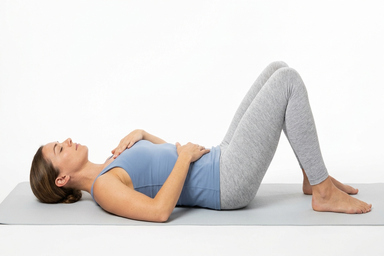
How to
A slow breathing drill that trains relaxed belly breathing and helps you control your breath.
- Lie on your back or sit tall with one hand on your belly.
- Inhale through your nose and let your belly rise.
- Exhale slowly and let your belly fall.
- Keep your chest and shoulders quiet.
- Continue for the set time with smooth breaths.
- Breathe low into your belly
- Keep your shoulders relaxed
- Shrugging your shoulders as you inhale
- Forcing the breath or holding tension
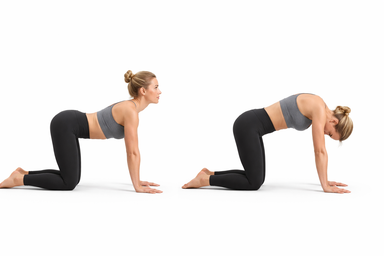
How to
A gentle spine mobility move that alternates rounding and arching your back on hands and knees.
- Start on hands and knees with wrists under shoulders and knees under hips.
- Inhale and drop your belly as you lift your chest and tailbone.
- Exhale and round your back, tucking your chin and tailbone.
- Move slowly between both positions with your breath.
- Move one vertebra at a time.
- Keep your shoulders away from your ears.
- Forcing your neck up or down.
- Rushing through the movement.
Glute & Hip Circuit
Controlled tempo. Pause briefly at the top of bridges; keep hips stacked on side-lying work.
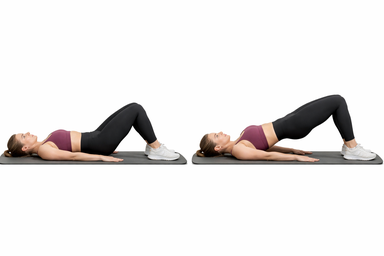
How to
A floor hip lift that trains your glutes and hamstrings with both feet planted.
- Lie on your back with knees bent and feet flat, hip-width apart.
- Brace your core and press your arms lightly into the floor.
- Drive through your heels and lift your hips until your body forms a straight line.
- Squeeze your glutes at the top, then lower with control.
- Repeat for your reps.
- Keep your ribs down
- Drive through your heels
- Arching your lower back at the top
- Pushing through your toes
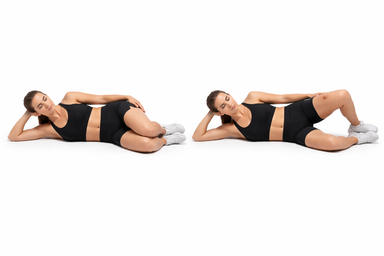
How to
A side-lying hip exercise that trains your glutes and outer hips.
- Lie on your side with knees bent and feet stacked.
- Brace your core and keep your hips stacked.
- Lift your top knee while keeping your feet together.
- Lower your knee with control to the start.
- Finish your reps, then switch sides.
- Keep your hips stacked
- Move slow and controlled
- Rolling your hips back as you lift
- Letting your feet separate
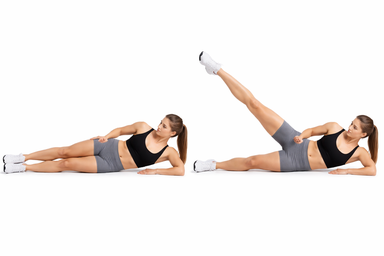
How to
A side-lying leg lift that trains your outer hips and glutes.
- Lie on your side with your legs straight and hips stacked.
- Brace your core and point your top foot straight ahead.
- Lift your top leg up without rolling your hips back.
- Lower with control to the start position.
- Finish your reps, then switch sides.
- Keep your hips stacked.
- Lead with your heel.
- Rolling your top hip back as you lift.
- Swinging the leg instead of controlling it.
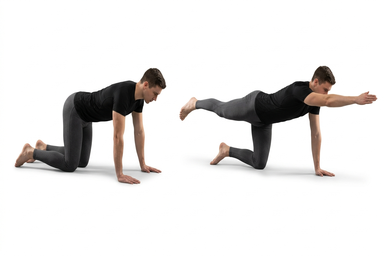
How to
A core stability move from all fours that trains your abs, back, glutes, and balance.
- Start on hands and knees with your hands under shoulders and knees under hips.
- Brace your core and keep your back flat.
- Reach one arm forward and the opposite leg back until they are straight.
- Pause briefly, then bring your hand and knee back under you.
- Repeat on the other side, alternating each rep.
- Keep your hips square
- Move slow and controlled
- Arching or sagging your lower back
- Rotating your hips as you reach
Hip Hinge Pattern
Use a chair/bench height that allows a smooth, controlled stand without pain.
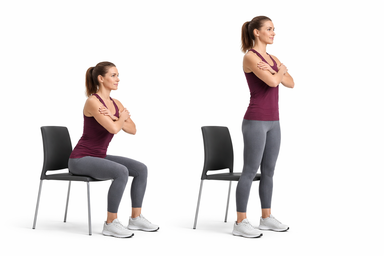
How to
A chair-based squat pattern that trains your thighs and glutes for standing strength.
- Sit near the front of a chair with feet flat and hip-width apart.
- Lean slightly forward and brace your core.
- Press through both feet and stand tall.
- Push your hips back and sit down with control.
- Keep your knees tracking over your toes
- Stand tall at the top
- Letting your knees cave inward
- Dropping hard onto the chair
Cool-Down & Targeted Stretching
Gentle holds to reduce hip tightness without provoking nerve symptoms.
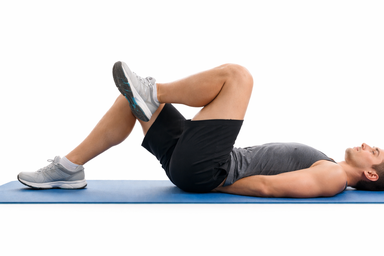
How to
A seated or lying hip stretch that targets your glutes and outer hip on one side.
- Lie on your back with both knees bent and feet flat.
- Cross one ankle over the opposite thigh, making a figure four.
- Pull the uncrossed thigh toward your chest until you feel a stretch.
- Hold and breathe, keeping your shoulders relaxed.
- Release slowly, then switch sides.
- Keep your lower back relaxed
- Flex the crossed foot
- Forcing the knee down with your hand
- Holding your breath
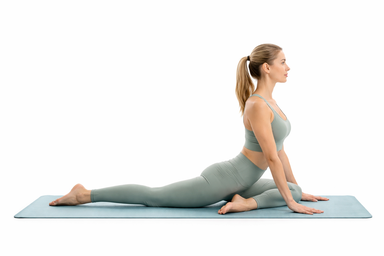
How to
A floor hip stretch for the front-leg glutes and outer hip while opening the back hip.
- Start on hands and knees, then bring one knee toward the same-side wrist.
- Angle your front shin across the mat and slide the other leg back.
- Square your hips forward and lower onto your hands, forearms, or a support.
- Hold the stretch and breathe slowly.
- Come out carefully, then switch sides.
- Keep both hips facing forward.
- Relax your shoulders and jaw.
- Letting one hip drop hard to the floor.
- Forcing the front knee into a sharp angle.
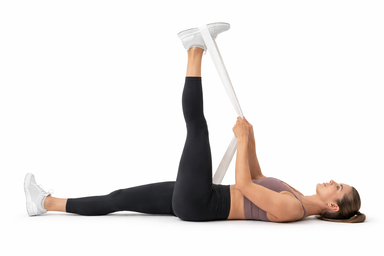
How to
A lying hamstring stretch that targets the back of your thigh with a steady hold.
- Lie on your back with one leg extended and the other leg raised.
- Hold behind your thigh or calf, keeping your back flat.
- Gently straighten the raised knee until you feel a stretch.
- Hold the stretch and breathe slowly.
- Release with control, then switch legs.
- Keep your back flat
- Relax your shoulders
- Pulling the leg past a comfortable stretch
- Lifting your hips off the floor

Why Glute Strength Silences the Piriformis
When the glutes underperform, the piriformis overcompensates as a hip stabilizer — triggering compression on the sciatic nerve. Clamshells and hip abduction directly load gluteus medius, while glute bridges and bird dog train gluteus maximus with spinal co-activation, redistributing the rotational demand away from the piriformis.

The Compression-Tension Cycle of Piriformis Pain
Piriformis syndrome thrives on a vicious loop: tightness reduces hip internal rotation, which forces compensatory movement patterns that re-irritate the muscle. Figure-4 and pigeon pose target the deep external rotator group specifically, while diaphragmatic breathing downregulates the nervous system tension that keeps the piriformis in chronic guard.

Sequencing That Retrains, Not Just Relieves
This routine follows a decompress-strengthen-release arc — a deliberate order that prepares tissue before loading it and stretches only after muscles are warm and patterned. To personalize, track which side feels asymmetrical during bird dog or clamshells and add one extra set on that side to close the stability gap driving your symptoms.