
Clean & Minimal AI Powered Fitness Routines
Download AppIntermediate Sacroiliac Joint Pain Relief Routine
A low-impact mobility + core/glute stability session to reduce SI joint irritation and improve pelvic control.
Intermediate Sacroiliac Joint Pain Relief Routine
A low-impact mobility + core/glute stability session to reduce SI joint irritation and improve pelvic control.
Warm-Up
Reduce guarding around the low back/hips and gently mobilize the pelvis and spine. Focus on mobility and down-regulation.
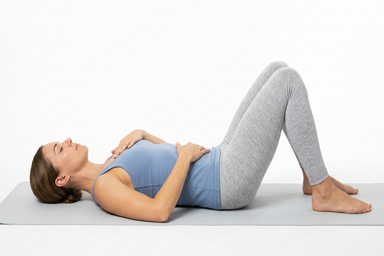
How to
A slow breathing drill that trains relaxed belly breathing and helps you control your breath.
- Lie on your back or sit tall with one hand on your belly.
- Inhale through your nose and let your belly rise.
- Exhale slowly and let your belly fall.
- Keep your chest and shoulders quiet.
- Continue for the set time with smooth breaths.
- Breathe low into your belly
- Keep your shoulders relaxed
- Shrugging your shoulders as you inhale
- Forcing the breath or holding tension
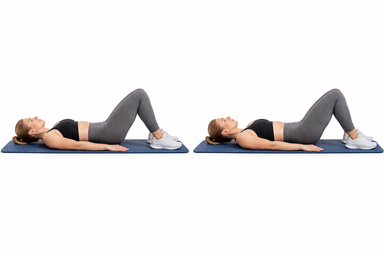
How to
A gentle floor move that trains pelvic control and engages your lower abs and glutes.
- Lie on your back with knees bent and feet flat on the floor.
- Exhale and tilt your pelvis to press your lower back toward the floor.
- Inhale and slowly return to your starting curve.
- Repeat with smooth, controlled movement.
- Move from your pelvis, not your ribs.
- Keep your shoulders relaxed.
- Holding your breath during the tilt.
- Pushing hard through your feet.
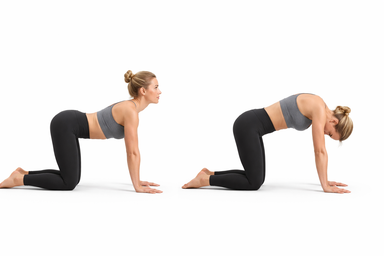
How to
A gentle spine mobility move that alternates rounding and arching your back on hands and knees.
- Start on hands and knees with wrists under shoulders and knees under hips.
- Inhale and drop your belly as you lift your chest and tailbone.
- Exhale and round your back, tucking your chin and tailbone.
- Move slowly between both positions with your breath.
- Move one vertebra at a time.
- Keep your shoulders away from your ears.
- Forcing your neck up or down.
- Rushing through the movement.
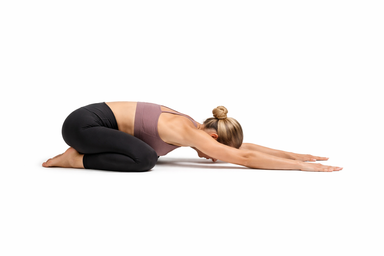
How to
A kneeling rest pose that gently stretches your back, hips, and shoulders.
- Kneel on the floor with your big toes together and knees apart.
- Sit your hips back toward your heels.
- Fold forward and reach your arms in front of you.
- Rest your forehead down and let your chest sink between your thighs.
- Hold the position and breathe slowly.
- Relax your shoulders
- Breathe into your back
- Forcing your hips down
- Holding your breath
Circuit A
Quality over speed. Keep pelvis level; avoid rotating the hips.
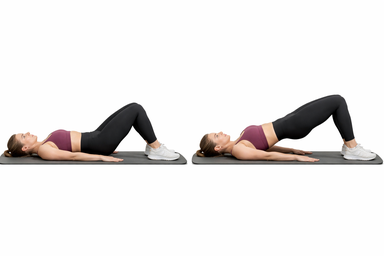
How to
A floor hip lift that trains your glutes and hamstrings with both feet planted.
- Lie on your back with knees bent and feet flat, hip-width apart.
- Brace your core and press your arms lightly into the floor.
- Drive through your heels and lift your hips until your body forms a straight line.
- Squeeze your glutes at the top, then lower with control.
- Repeat for your reps.
- Keep your ribs down
- Drive through your heels
- Arching your lower back at the top
- Pushing through your toes
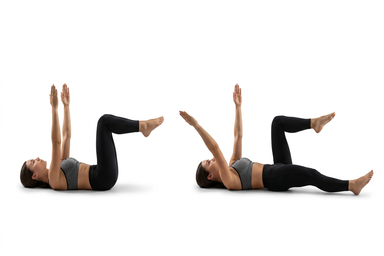
How to
A core move on your back that trains control while you move opposite arm and leg.
- Lie on your back with arms up and knees bent over hips.
- Press your lower back gently toward the floor.
- Lower one arm and the opposite leg with control.
- Return to the start, then repeat on the other side.
- Keep alternating sides for each rep.
- Move slow and stay braced
- Keep your ribs down
- Letting your lower back arch
- Rushing through the reps
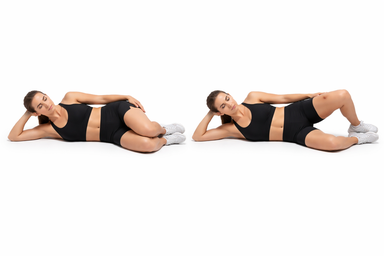
How to
A side-lying hip exercise that trains your glutes and outer hips.
- Lie on your side with knees bent and feet stacked.
- Brace your core and keep your hips stacked.
- Lift your top knee while keeping your feet together.
- Lower your knee with control to the start.
- Finish your reps, then switch sides.
- Keep your hips stacked
- Move slow and controlled
- Rolling your hips back as you lift
- Letting your feet separate
Circuit B
Brace gently as if preparing for a cough; keep breathing.
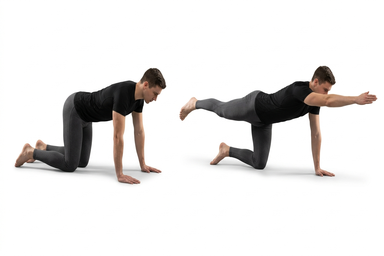
How to
A core stability move from all fours that trains your abs, back, glutes, and balance.
- Start on hands and knees with your hands under shoulders and knees under hips.
- Brace your core and keep your back flat.
- Reach one arm forward and the opposite leg back until they are straight.
- Pause briefly, then bring your hand and knee back under you.
- Repeat on the other side, alternating each rep.
- Keep your hips square
- Move slow and controlled
- Arching or sagging your lower back
- Rotating your hips as you reach
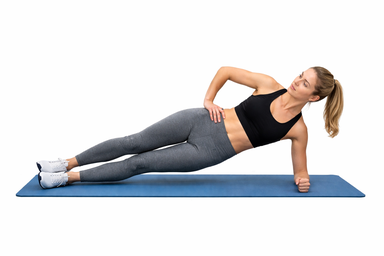
How to
A side hold that trains your obliques, hips, and shoulder stability.
- Lie on one side with your elbow under your shoulder and legs stacked.
- Lift your hips until your body forms a straight line.
- Hold the position and breathe steadily.
- Lower your hips with control.
- Finish your hold, then switch sides.
- Keep your hips stacked
- Press the floor away
- Letting your hips sag
- Rolling your chest toward the floor
Cool-Down
Downshift and restore comfortable hip motion without forcing end range. Gentle hip mobility work.
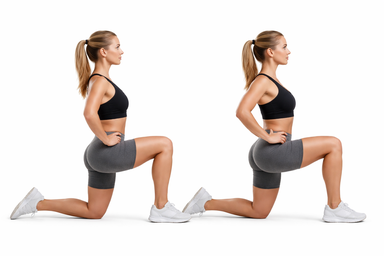
How to
A kneeling stretch for the front of your hip. It targets the hip flexors on one side at a time.
- Kneel with one foot forward and the other knee on the floor.
- Tuck your hips slightly and stand tall through your chest.
- Shift your hips forward until you feel a stretch in the back-leg hip.
- Hold and breathe slowly without bouncing.
- Release gently, then switch sides.
- Keep your ribs stacked over your hips
- Squeeze the back-leg glute lightly
- Arching your lower back to go deeper
- Bouncing in the stretch
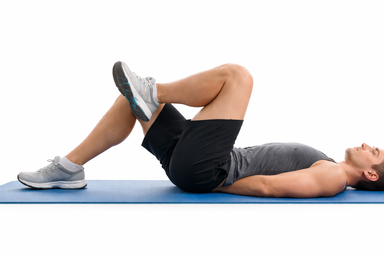
How to
A seated or lying hip stretch that targets your glutes and outer hip on one side.
- Lie on your back with both knees bent and feet flat.
- Cross one ankle over the opposite thigh, making a figure four.
- Pull the uncrossed thigh toward your chest until you feel a stretch.
- Hold and breathe, keeping your shoulders relaxed.
- Release slowly, then switch sides.
- Keep your lower back relaxed
- Flex the crossed foot
- Forcing the knee down with your hand
- Holding your breath

Restoring Force Closure at the SI Joint
Glute Bridges, Clamshells, and Bird Dogs directly target the gluteus medius, multifidus, and deep hip rotators — the muscles responsible for compressing and stabilizing the sacroiliac joint through "force closure." Without adequate tension in these slings, the SI joint relies on passive ligamentous structures alone, perpetuating irritation and micro-instability.

Why SI Pain Is a Motor Control Problem
The SI joint has almost no intrinsic mobility — it moves just 2–4° — yet it's exquisitely sensitive to asymmetrical loading and poor pelvic timing. Dead Bug and Side Plank train anti-rotation and lateral pelvic stability, the exact motor patterns that break the cycle of compensatory movement that keeps SI joints chronically inflamed.

Sequencing That Calms Before It Strengthens
Diaphragmatic Breathing and Cat-Cow front-load the session intentionally, downregulating the nervous system and reducing protective muscle guarding before any load is introduced. If the Side Plank feels asymmetrical or the Bird Dog produces a sharp catch, reduce the lever arm — bend the knee or shorten the reach — before progressing to full extension.