
Clean & Minimal AI Powered Fitness Routines
Download AppIntermediate Heart Failure Exercise
A moderate, low-impact cardio + strength routine designed to support heart failure exercise tolerance.
Intermediate Heart Failure Exercise
A moderate, low-impact cardio + strength routine designed to support heart failure exercise tolerance.
Warm-Up
Gradually raise heart rate and loosen joints. 6 minutes.
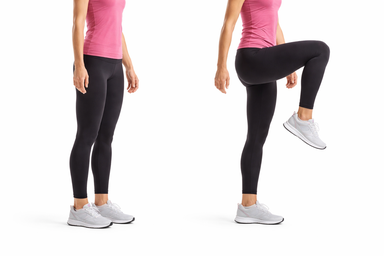
How to
A low-impact cardio move that warms up your legs and hips while raising your heart rate.
- Stand tall with your feet hip-width apart and arms at your sides.
- Lift one knee to hip height as you swing the opposite arm forward.
- Lower that foot, then lift the other knee and switch arms.
- Keep alternating sides at a steady pace.
- Slow down and plant both feet to finish.
- Stand tall with your chest up
- Land softly under your hips
- Leaning back as you lift your knees
- Stomping your feet on each step
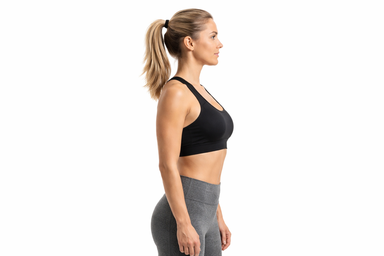
How to
A simple shoulder mobility move that warms up your upper back, neck, and shoulders.
- Stand tall with your arms relaxed at your sides.
- Lift both shoulders up toward your ears.
- Roll them back and down in a smooth circle.
- Repeat for reps, then reverse the direction if needed.
- Move slowly and smoothly.
- Keep your neck relaxed.
- Shrugging with tension in your neck.
- Rushing through small, jerky circles.
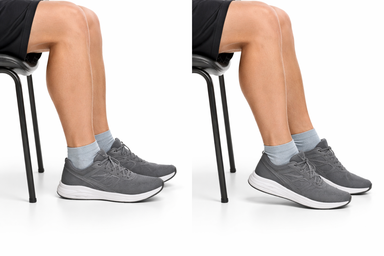
How to
A simple ankle movement that warms your calves and shins and moves both ankles through flex and point.
- Sit or lie down with both legs extended and relaxed.
- Pull your toes toward your shins on both feet.
- Point your toes away from you on both feet.
- Move smoothly back and forth for the set.
- Keep your knees still
- Use a full, smooth range
- Bouncing or jerking the ankles
- Letting your legs tense up
How to
A low-impact cardio move that warms up your legs and hips while raising your heart rate.
- Stand tall with your feet hip-width apart and arms at your sides.
- Lift one knee to hip height as you swing the opposite arm forward.
- Lower that foot, then lift the other knee and switch arms.
- Keep alternating sides at a steady pace.
- Slow down and plant both feet to finish.
- Stand tall with your chest up
- Land softly under your hips
- Leaning back as you lift your knees
- Stomping your feet on each step
Main Circuit
Low-impact strength and steady cardio intervals at moderate effort. 15 minutes.
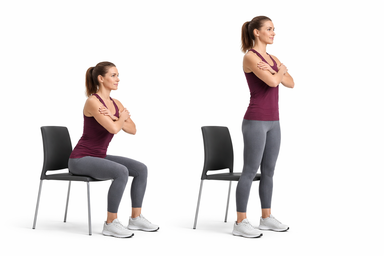
How to
A chair-based squat pattern that trains your thighs and glutes for standing strength.
- Sit near the front of a chair with feet flat and hip-width apart.
- Lean slightly forward and brace your core.
- Press through both feet and stand tall.
- Push your hips back and sit down with control.
- Keep your knees tracking over your toes
- Stand tall at the top
- Letting your knees cave inward
- Dropping hard onto the chair
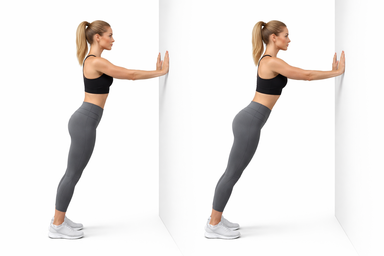
How to
A standing push-up against a wall that trains your chest, shoulders, and triceps.
- Stand facing a wall and place your hands at chest height.
- Step your feet back so your body forms a straight line.
- Bend your elbows and lower your chest toward the wall.
- Press the wall away to return to the start.
- Repeat for your planned reps.
- Keep your body straight
- Keep elbows about 45 degrees
- Letting your hips sag
- Shrugging your shoulders toward your ears
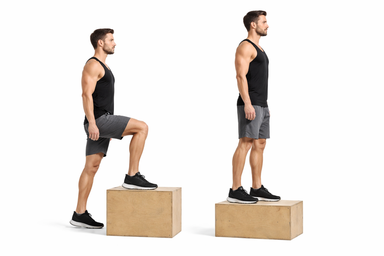
How to
A single-leg climb onto a step that trains your quads, glutes, and balance.
- Stand facing a sturdy step with one foot fully on top.
- Lean slightly forward and drive through the front foot to stand up.
- Bring your back foot onto the step with control.
- Step back down with the same back foot, then lower the front foot.
- Finish your reps, then switch legs.
- Keep your chest tall
- Drive through your whole front foot
- Pushing off too much with the back foot
- Letting your front knee cave inward
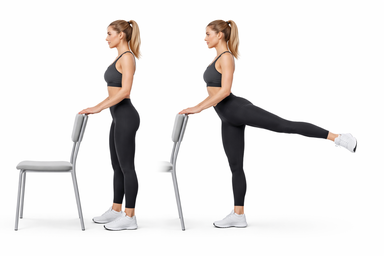
How to
A standing leg raise to the side that trains your outer hips and balance.
- Stand tall with one hand on a wall or chair for balance.
- Shift your weight onto one leg and brace your core.
- Lift the other leg out to the side without leaning your torso.
- Lower the leg with control to the start position.
- Finish your reps, then switch legs.
- Keep your toes facing forward.
- Stand tall through each rep.
- Leaning your torso to lift the leg.
- Turning your toes outward as you raise.
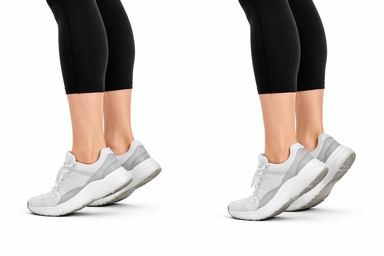
How to
A standing lower-leg move that trains your calves by lifting and lowering your heels.
- Stand tall with feet hip-width apart and toes pointing forward.
- Press through the balls of your feet and lift your heels high.
- Pause briefly at the top without leaning forward.
- Lower your heels with control to the floor.
- Keep your knees softly straight.
- Rise straight up, not forward.
- Bouncing through the reps.
- Letting your ankles roll outward.
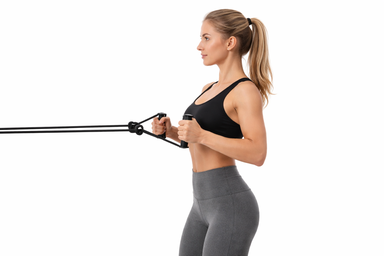
How to
A standing row hold that trains your upper back and arms with steady tension.
- Stand tall with feet hip-width, arms straight in front holding the resistance.
- Pull your elbows back until your hands reach your ribs.
- Hold this row position and breathe steadily.
- Keep tension, then release with control.
- Squeeze shoulder blades down and back.
- Keep ribs stacked over hips.
- Shrugging your shoulders toward your ears.
- Leaning back to make the hold easier.
Cool-Down
Bring heart rate down and finish with gentle breathing and stretches. 4 minutes.
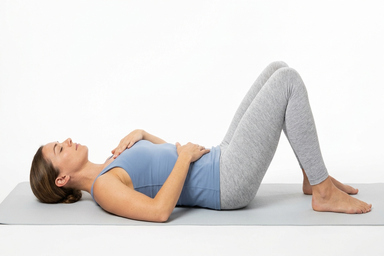
How to
A slow breathing drill that trains relaxed belly breathing and helps you control your breath.
- Lie on your back or sit tall with one hand on your belly.
- Inhale through your nose and let your belly rise.
- Exhale slowly and let your belly fall.
- Keep your chest and shoulders quiet.
- Continue for the set time with smooth breaths.
- Breathe low into your belly
- Keep your shoulders relaxed
- Shrugging your shoulders as you inhale
- Forcing the breath or holding tension
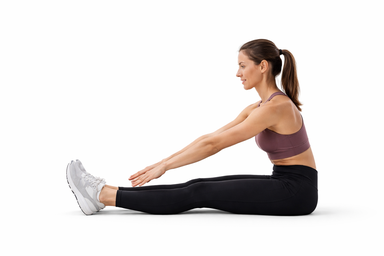
How to
A seated stretch for your hamstrings that helps you practice a relaxed forward fold.
- Sit tall with your legs extended in front of you.
- Flex your feet and keep a soft bend in your knees.
- Hinge forward from your hips and reach toward your feet.
- Hold the stretch and breathe slowly.
- Ease back up to seated when the hold is done.
- Keep your spine long
- Relax your shoulders
- Rounding hard through your back
- Forcing the reach or bouncing
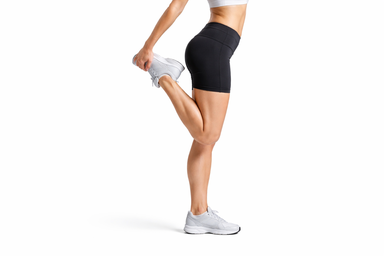
How to
A standing thigh stretch that targets the front of your hip and quad on one leg.
- Stand tall and hold a wall or chair for balance if needed.
- Bend one knee and hold your ankle or foot behind you.
- Keep your knees close and gently draw your heel toward your glute.
- Hold the stretch and breathe slowly.
- Release with control, then switch legs.
- Stand tall through your chest
- Keep your knees close
- Arching your lower back
- Pulling the knee out to the side

Low-Load Moves, High Cardiac Demand
Sit to Stand and Step Up target the large quadriceps and glutes to drive peripheral muscle oxygen extraction, reducing the cardiac workload per movement. Wall Push Ups and Isometric Standing Row recruit upper body musculature without the blood pressure spikes that heavy isotonic loads produce — critical when ventricular function is compromised.

The Preload-Afterload Balancing Act
Heart failure limits both stroke volume and the heart's ability to handle resistance, so every exercise here is chosen to avoid Valsalva-inducing strain while still building functional capacity. Ankle Pumps and Calf Raises activate the venous muscle pump in the lower leg, directly countering the peripheral edema and poor venous return that make daily movement exhausting.

Rate of Perceived Exertion Over Heart Rate
Because beta-blockers and other HF medications blunt heart rate response, this routine is structured around effort tolerance and symptom monitoring rather than target heart rate zones. Diaphragmatic Breathing is placed at cool-down intentionally — activating parasympathetic tone post-exertion accelerates heart rate recovery, a key adaptation marker. Progress by adding one rep to Sit to Stand or on