
Clean & Minimal AI Powered Fitness Routines
Download AppIntermediate Plantar Fasciitis Relief
A 25-minute mobility + strengthening session to reduce plantar fascia irritation and support the arch and calf.
Intermediate Plantar Fasciitis Relief
A 25-minute mobility + strengthening session to reduce plantar fascia irritation and support the arch and calf.
Warm-Up
Foot and ankle prep to increase circulation and gently wake up the foot/ankle before loading.
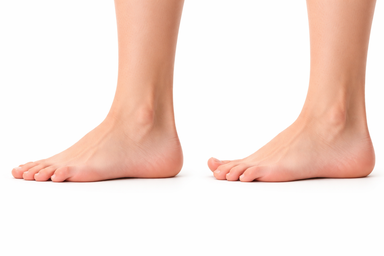
How to
A foot control drill that trains your toe muscles and arch awareness.
- Stand or sit with both feet flat and toes pointing forward.
- Lift both big toes while keeping the other toes down.
- Lower your big toes, then lift the four small toes on each foot.
- Move slowly and keep the balls of your feet on the floor.
- Repeat, alternating big toes and small toes with control.
- Keep your arches gently lifted
- Move only your toes
- Letting your feet roll in or out
- Clawing the toes instead of lifting them
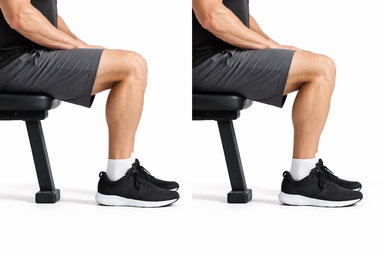
How to
A seated calf raise that trains your calves with a small, controlled ankle movement.
- Sit tall with feet flat and knees bent about 90 degrees.
- Press through the balls of both feet to lift your heels.
- Pause briefly at the top.
- Lower your heels back to the floor with control.
- Keep your toes planted.
- Move straight up and down.
- Rocking your body to lift higher.
- Letting your feet roll outward.
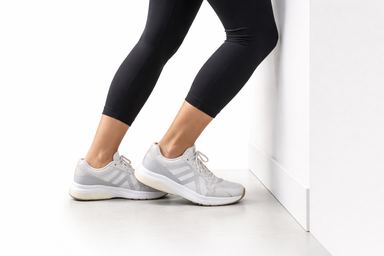
How to
A seated stretch for the arch and sole of one foot. It targets the plantar fascia area.
- Sit and cross one ankle over the opposite knee.
- Hold your toes and gently pull them back toward your shin.
- Hold the stretch and breathe slowly.
- Release with control, then switch feet.
- Keep the pull gentle.
- Let your foot and ankle relax.
- Pulling hard or forcing your toes back.
- Holding your breath.
Strength & Tissue Capacity
Build tolerance in the calf/arch complex with controlled strengthening.
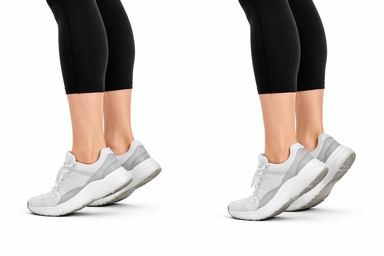
How to
A standing lower-leg move that trains your calves by lifting and lowering your heels.
- Stand tall with feet hip-width apart and toes pointing forward.
- Press through the balls of your feet and lift your heels high.
- Pause briefly at the top without leaning forward.
- Lower your heels with control to the floor.
- Keep your knees softly straight.
- Rise straight up, not forward.
- Bouncing through the reps.
- Letting your ankles roll outward.
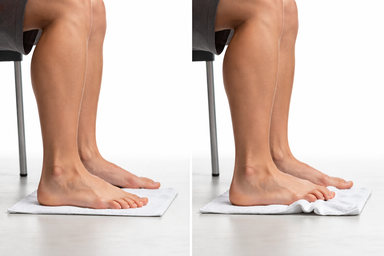
How to
A seated toe exercise that trains the small muscles of your feet and arches.
- Sit tall with both feet flat on a towel.
- Keep your heels down and scrunch the towel toward you with your toes.
- Release your toes and spread them back out.
- Repeat until you finish the set.
- Keep your heels planted
- Move from your toes, not your ankles
- Lifting your heels off the floor
- Curling your whole foot instead of using your toes
How to
A seated calf raise that trains your calves with a small, controlled ankle movement.
- Sit tall with feet flat and knees bent about 90 degrees.
- Press through the balls of both feet to lift your heels.
- Pause briefly at the top.
- Lower your heels back to the floor with control.
- Keep your toes planted.
- Move straight up and down.
- Rocking your body to lift higher.
- Letting your feet roll outward.
Cool-Down
Mobility and relief to downshift and reduce tension in the calf/soleus and plantar fascia.
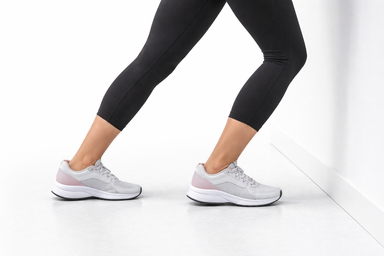
How to
A wall-supported calf stretch that targets one lower leg at a time.
- Stand facing a wall and place your hands on it at chest height.
- Step one foot back with that heel down and toes pointing forward.
- Bend your front knee and lean in until you feel a calf stretch.
- Hold the position and breathe slowly.
- Release, then switch legs.
- Keep your back heel down
- Keep both toes facing forward
- Letting the back heel lift
- Turning the back foot out
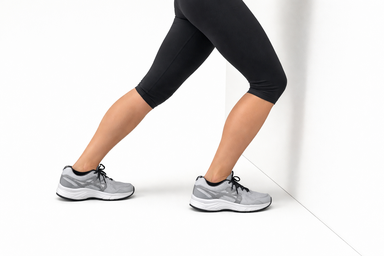
How to
A bent-knee calf stretch at a wall that targets the soleus in your lower leg.
- Face a wall and place both hands on it at chest height.
- Step one foot back, toes pointing forward, heel flat on the floor.
- Bend your back knee and shift your hips forward until you feel a calf stretch.
- Hold the stretch and breathe slowly, keeping the back heel down.
- Release gently, then switch legs.
- Keep your back heel heavy
- Point both feet straight ahead
- Letting the back heel lift
- Turning the back foot out
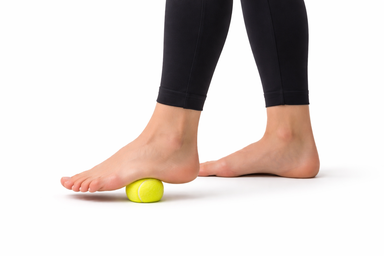
How to
A foot mobility drill using a tennis ball to apply gentle pressure to the sole of one foot.
- Sit or stand and place a tennis ball under one foot.
- Press the sole into the ball with gentle, steady pressure.
- Hold each spot and breathe, then move the ball to a new spot.
- Cover heel, arch, and forefoot without forcing pressure.
- Finish your time, then switch feet.
- Use gentle pressure.
- Keep your toes relaxed.
- Pressing so hard you tense up.
- Rolling over sharp pain.

Load the Fascia to Heal the Fascia
Seated and standing heel raises progressively tension the plantar fascia through the windlass mechanism, stimulating collagen remodeling in the tissue. Towel scrunches and toe yoga isolate the intrinsic foot muscles—flexor digitorum brevis and lumbricals—which directly unload the fascia by sharing tensile stress across the forefoot.

Why Plantar Fasciitis Resists Passive Treatment
The fascia endures 2–3x bodyweight with every heel strike, meaning passive rest alone never restores load tolerance. Tightness in the gastrocnemius and soleus—addressed here with both straight-knee and bent-knee calf stretches—increases fascial tension at the calcaneal insertion, which is why ankle dorsiflexion restriction is the single strongest mechanical predictor of symptom persistence.

Eccentric-First, Then Mobilize
Structuring strength work before the tennis ball roll and plantar stretch is intentional: loading first upregulates tissue tolerance, while manual release afterward reduces post-exercise stiffness without blunting the adaptive signal. As symptoms improve, progress standing calf raises to a single-leg deficit variation off a step to drive greater tensile adaptation through the full range of the fas