
Clean & Minimal AI Powered Fitness Routines
Download AppIntermediate 5K Run
A structured 5K session with warm-up, steady effort, and a short cool-down (~25 min).
Intermediate 5K Run
A structured 5K session with warm-up, steady effort, and a short cool-down (~25 min).
Warm-Up
Gradually raise heart rate and loosen up before the main run. ~5 minutes.
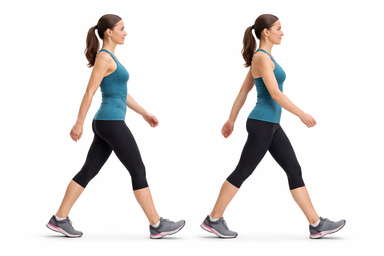
How to
A simple walking movement that trains your legs and builds steady full-body rhythm.
- Stand tall with your feet under your hips.
- Step forward with one foot and roll from heel to toe.
- Swing the opposite arm naturally as you step.
- Push off your back foot and step forward with the other foot.
- Keep alternating steps at a steady pace.
- Stand tall
- Let your arms swing naturally
- Looking down the whole time
- Taking steps that feel too long
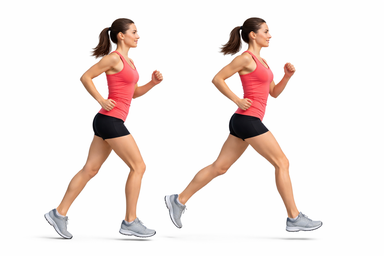
How to
A steady running movement that raises your heart rate and trains your legs and endurance.
- Stand tall with your feet under your hips and arms bent.
- Start with small, quick steps at an easy pace.
- Land softly under your body and keep your chest lifted.
- Swing your arms naturally as your legs move.
- Keep jogging for the planned time or distance.
- Stay light on your feet
- Breathe at a steady rhythm
- Overstriding with your foot far in front
- Hunching your shoulders as you jog
Main Run
Sustained steady effort—controlled breathing, consistent pace. ~17 minutes.
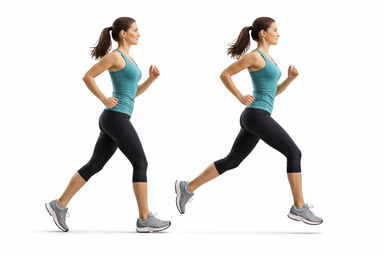
How to
A steady forward run that trains your legs and cardio fitness.
- Stand tall and look ahead.
- Start with short, quick steps and build your pace.
- Land lightly under your hips.
- Swing your arms forward and back.
- Keep a steady rhythm until the set ends.
- Stay tall through your chest
- Land softly
- Overstriding with your foot far ahead
- Hunching your shoulders
Cool-Down
Bring your heart rate down and finish feeling recovered. ~3 minutes.
How to
A simple walking movement that trains your legs and builds steady full-body rhythm.
- Stand tall with your feet under your hips.
- Step forward with one foot and roll from heel to toe.
- Swing the opposite arm naturally as you step.
- Push off your back foot and step forward with the other foot.
- Keep alternating steps at a steady pace.
- Stand tall
- Let your arms swing naturally
- Looking down the whole time
- Taking steps that feel too long

Pacing Zones That Build Real Speed
The Walk-to-Easy Jog progression primes your cardiovascular system by gradually recruiting slow-twitch Type I fibers before demanding sustained aerobic output during the Steady Run. This prevents lactate accumulation from spiking too early, protecting your 17-minute main effort and training your body to sustain race-pace efficiency.

What a 5K Actually Asks of Your Body
The 5K sits at the brutal intersection of aerobic endurance and anaerobic threshold — too fast for pure endurance, too long for all-out speed. Your aerobic system must supply roughly 95% of energy demand while your legs manage cumulative ground-reaction force across 3,000-plus footstrikes, making pacing discipline and muscular resilience equally critical.

The 25-Minute Structure Is Not Arbitrary
The 5-minute warm-up matches the time needed for synovial fluid to lubricate joints and core temperature to rise enough for optimal muscle elasticity. To personalize this, extend your Easy Jog segment by 60–90 seconds on days when your resting heart rate runs higher than normal — your body is signaling it needs more ramp-up time before the Steady Run demands kick in.