
Clean & Minimal AI Powered Fitness Routines
Download App10-Second Interval Strength and Mobility
A circuit of 10-second exercises focused on strength, muscle gain, and conditioning with back-friendly options.
10-Second Interval Strength and Mobility
A circuit of 10-second exercises focused on strength, muscle gain, and conditioning with back-friendly options.
Warm-Up
Gentle mobility to prep hips, spine, and shoulders while keeping the low back comfortable. 10-second intervals.
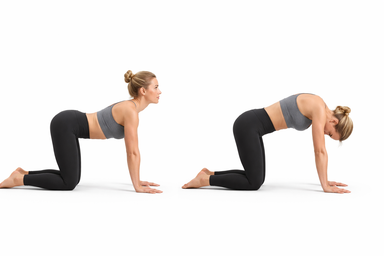
How to
A gentle spine mobility move that alternates rounding and arching your back on hands and knees.
- Start on hands and knees with wrists under shoulders and knees under hips.
- Inhale and drop your belly as you lift your chest and tailbone.
- Exhale and round your back, tucking your chin and tailbone.
- Move slowly between both positions with your breath.
- Move one vertebra at a time.
- Keep your shoulders away from your ears.
- Forcing your neck up or down.
- Rushing through the movement.
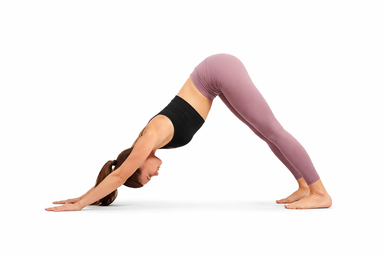
How to
A full-body isometric pose that trains shoulders, core, and hips while stretching the back line.
- Start on hands and knees, with hands under shoulders and knees under hips.
- Tuck your toes and lift your hips up and back.
- Straighten your arms and press the floor away.
- Let your heels reach toward the floor, with knees slightly bent if needed.
- Hold the pose and breathe steadily.
- Press your chest toward your thighs
- Keep your neck relaxed
- Rounding your upper back and shrugging your shoulders
- Forcing your heels down by locking your knees
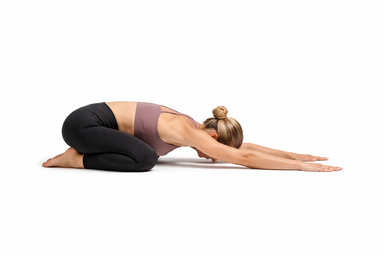
How to
A kneeling rest pose that gently stretches your back, hips, and shoulders.
- Kneel on the floor with your big toes together and knees apart.
- Sit your hips back toward your heels.
- Fold forward and reach your arms in front of you.
- Rest your forehead down and let your chest sink between your thighs.
- Hold the position and breathe slowly.
- Relax your shoulders
- Breathe into your back
- Forcing your hips down
- Holding your breath
Circuit A
Moderate load. Continuous tension, neutral spine, controlled tempo.
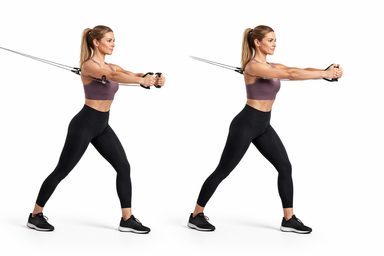
How to
A standing cable press that trains your chest, shoulders, and triceps.
- Stand tall between the cables and grip both handles at chest height.
- Brace your core and set your hands just outside your chest.
- Press the handles forward until your arms are straight.
- Pause briefly, then return the handles with control.
- Keep your ribs down
- Press straight ahead
- Letting your shoulders creep up
- Flaring your elbows too wide
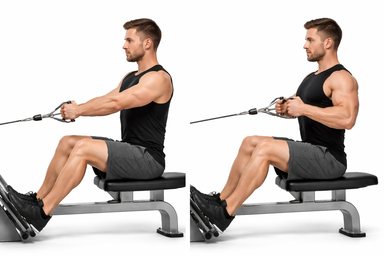
How to
A seated or standing pull that trains your upper back, lats, and arms.
- Set the cable at about waist height and hold the handle with both hands.
- Step back or sit tall with arms straight and shoulders down.
- Pull the handle toward your ribs, squeezing your shoulder blades back.
- Pause briefly, then straighten your arms with control.
- Repeat for all reps.
- Keep your chest tall
- Pull elbows back, not up
- Leaning far back to move the weight
- Shrugging your shoulders as you pull
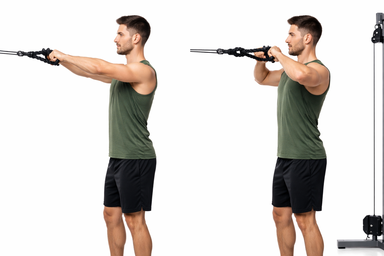
How to
A cable pull to face height that trains your upper back and rear shoulders.
- Set the cable at upper-chest height and grip the rope with both hands.
- Step back until your arms are straight and the cable is taut.
- Pull the rope toward your face, elbows high and out to the sides.
- Squeeze your shoulder blades, then return with control.
- Keep your ribs down
- Lead with your elbows
- Shrugging your shoulders toward your ears
- Leaning back to move the weight
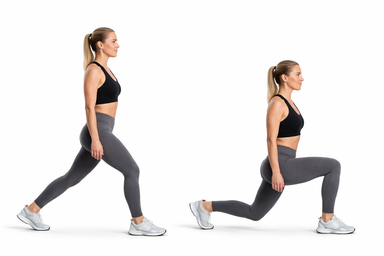
How to
A staggered-stance squat that trains your quads, glutes, and balance one leg at a time.
- Stand in a long split stance with your front foot flat.
- Keep your chest tall and bend both knees to lower down.
- Lower until your front thigh is near parallel, if comfortable.
- Press through your front foot to stand back up.
- Finish your reps, then switch legs.
- Keep your front knee tracking over your toes.
- Stay tall through your torso.
- Letting your front heel lift off the floor.
- Pushing your front knee far inward.
Circuit B
Core stability and arms. Keep ribs down; avoid twisting through the low back.
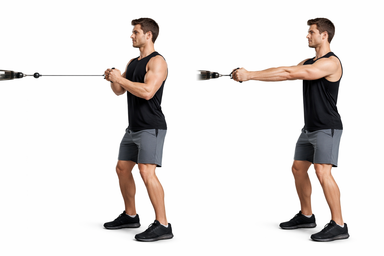
How to
An anti-rotation cable hold that trains your core as you resist the pull from one side.
- Stand side-on to the cable with the handle at chest height.
- Hold the handle with both hands at the center of your chest.
- Step away until you feel tension, then brace your core.
- Press your hands straight out and hold, breathing steadily.
- Bring your hands back to your chest with control.
- Finish the hold, then switch sides.
- Keep your ribs down
- Do not let your torso rotate
- Leaning toward or away from the cable
- Letting the handle drift off center
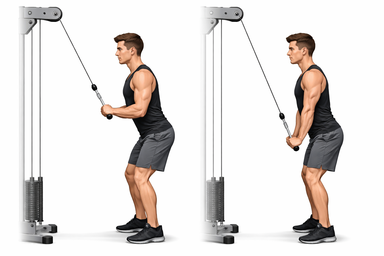
How to
A cable arm exercise that trains your triceps by extending your elbows against resistance.
- Stand tall facing the cable with elbows close to your sides.
- Grip the handle and start with elbows bent about 90 degrees.
- Push the handle down until your arms are straight.
- Pause briefly, then control the handle back to the start.
- Keep your elbows pinned by your sides.
- Move only at your elbows.
- Leaning your body weight into the push.
- Letting your elbows flare forward or out.
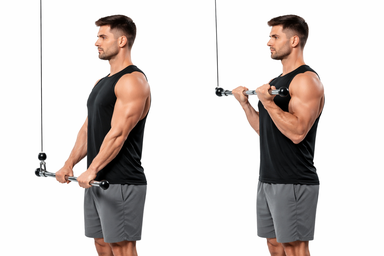
How to
An alternating cable curl that trains your biceps with steady resistance.
- Stand facing the cable with a handle in each hand, arms straight.
- Brace your core and keep your elbows close to your sides.
- Curl one handle toward your shoulder without moving your upper arm.
- Lower it with control, then curl the other side.
- Alternate sides until the set is complete.
- Keep your wrists straight
- Move only at your elbows
- Swinging your body to lift the weight
- Letting your elbows drift forward
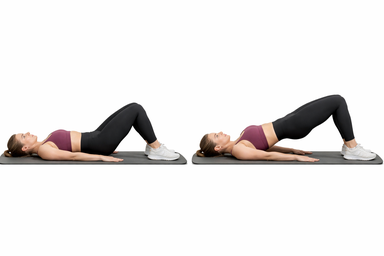
How to
A floor hip lift that trains your glutes and hamstrings with both feet planted.
- Lie on your back with knees bent and feet flat, hip-width apart.
- Brace your core and press your arms lightly into the floor.
- Drive through your heels and lift your hips until your body forms a straight line.
- Squeeze your glutes at the top, then lower with control.
- Repeat for your reps.
- Keep your ribs down
- Drive through your heels
- Arching your lower back at the top
- Pushing through your toes
Stability Finisher
Slow, controlled stability work. Stop if low back discomfort increases.
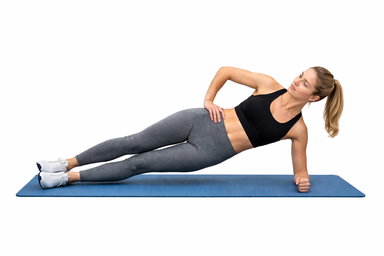
How to
A side hold that trains your obliques, hips, and shoulder stability.
- Lie on one side with your elbow under your shoulder and legs stacked.
- Lift your hips until your body forms a straight line.
- Hold the position and breathe steadily.
- Lower your hips with control.
- Finish your hold, then switch sides.
- Keep your hips stacked
- Press the floor away
- Letting your hips sag
- Rolling your chest toward the floor
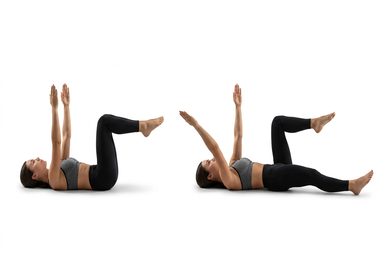
How to
A core move on your back that trains control while you move opposite arm and leg.
- Lie on your back with arms up and knees bent over hips.
- Press your lower back gently toward the floor.
- Lower one arm and the opposite leg with control.
- Return to the start, then repeat on the other side.
- Keep alternating sides for each rep.
- Move slow and stay braced
- Keep your ribs down
- Letting your lower back arch
- Rushing through the reps
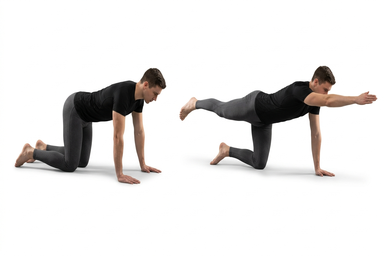
How to
A core stability move from all fours that trains your abs, back, glutes, and balance.
- Start on hands and knees with your hands under shoulders and knees under hips.
- Brace your core and keep your back flat.
- Reach one arm forward and the opposite leg back until they are straight.
- Pause briefly, then bring your hand and knee back under you.
- Repeat on the other side, alternating each rep.
- Keep your hips square
- Move slow and controlled
- Arching or sagging your lower back
- Rotating your hips as you reach

Why These Exercises Were Chosen
Each exercise targets specific muscle groups and movement patterns matched to the demands of your discipline. The selection balances agonist-antagonist pairs, stabilizer engagement, and energy system development to build functional capacity that transfers directly to performance.

Built Around How Your Body Works
Your routine reflects the biomechanical and physiological demands of your goal. Joint angles, contraction types, and loading patterns are chosen to strengthen exactly the positions and forces your body encounters during your activity.

Structured for Long-Term Adaptation
Set and rep schemes follow progressive overload principles, giving your tendons, muscles, and nervous system the stimulus they need to adapt. Adjust load and rest periods as movements become easier to keep driving improvement.