
Clean & Minimal AI Powered Fitness Routines
Download AppIntermediate Hypertension Management
A moderate, low-impact cardio + breathing routine to support healthy blood pressure.
Intermediate Hypertension Management
A moderate, low-impact cardio + breathing routine to support healthy blood pressure.
Warm-Up
Gradually raise heart rate and loosen shoulders/hips while keeping breathing steady. 6 minutes.
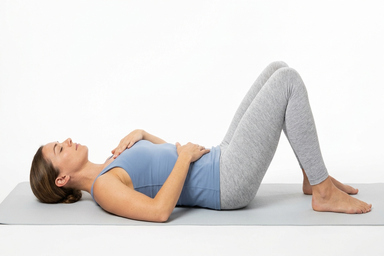
How to
A slow breathing drill that trains relaxed belly breathing and helps you control your breath.
- Lie on your back or sit tall with one hand on your belly.
- Inhale through your nose and let your belly rise.
- Exhale slowly and let your belly fall.
- Keep your chest and shoulders quiet.
- Continue for the set time with smooth breaths.
- Breathe low into your belly
- Keep your shoulders relaxed
- Shrugging your shoulders as you inhale
- Forcing the breath or holding tension
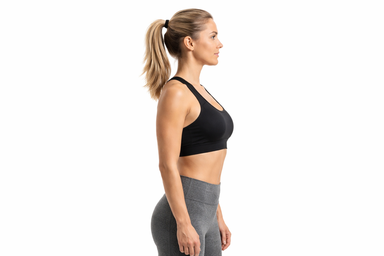
How to
A simple shoulder mobility move that warms up your upper back, neck, and shoulders.
- Stand tall with your arms relaxed at your sides.
- Lift both shoulders up toward your ears.
- Roll them back and down in a smooth circle.
- Repeat for reps, then reverse the direction if needed.
- Move slowly and smoothly.
- Keep your neck relaxed.
- Shrugging with tension in your neck.
- Rushing through small, jerky circles.
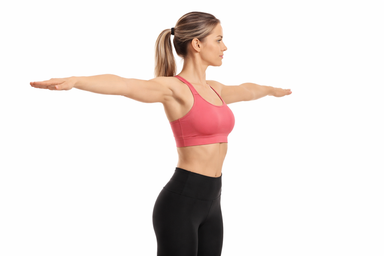
How to
A simple shoulder warm-up that moves both arms in circles and trains shoulder control.
- Stand tall with your feet about hip-width apart.
- Raise both arms out to your sides at shoulder height.
- Make small, controlled circles with both arms.
- Keep circling for the set time, then reverse direction if told.
- Lower your arms to finish.
- Keep your ribs down
- Move smoothly, not fast
- Shrugging your shoulders toward your ears
- Arching your back to keep the arms up
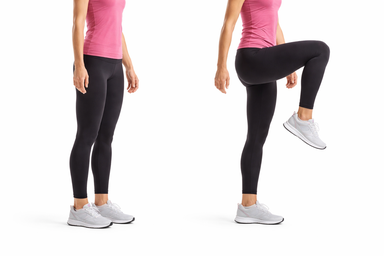
How to
A low-impact cardio move that warms up your legs and hips while raising your heart rate.
- Stand tall with your feet hip-width apart and arms at your sides.
- Lift one knee to hip height as you swing the opposite arm forward.
- Lower that foot, then lift the other knee and switch arms.
- Keep alternating sides at a steady pace.
- Slow down and plant both feet to finish.
- Stand tall with your chest up
- Land softly under your hips
- Leaning back as you lift your knees
- Stomping your feet on each step
Cardio Strength Circuit
Moderate pace combination of cardio and strength work. Keep breathing continuous; avoid holding your breath during effort.
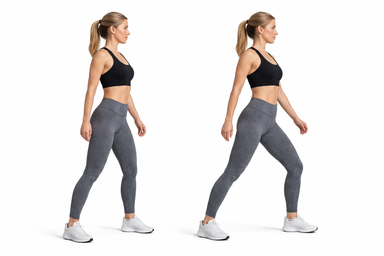
How to
A side-to-side stepping move that warms up your hips, glutes, and legs.
- Stand tall with feet hip-width apart and arms relaxed.
- Step one foot out to the side, then follow with the other foot.
- Step back the other way and keep alternating sides.
- Stay light on your feet and keep a steady rhythm.
- Keep your chest up
- Step softly with control
- Letting your knees cave inward
- Dragging your feet instead of stepping
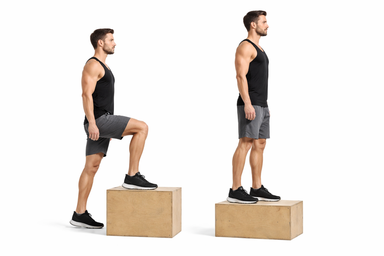
How to
A single-leg climb onto a step that trains your quads, glutes, and balance.
- Stand facing a sturdy step with one foot fully on top.
- Lean slightly forward and drive through the front foot to stand up.
- Bring your back foot onto the step with control.
- Step back down with the same back foot, then lower the front foot.
- Finish your reps, then switch legs.
- Keep your chest tall
- Drive through your whole front foot
- Pushing off too much with the back foot
- Letting your front knee cave inward
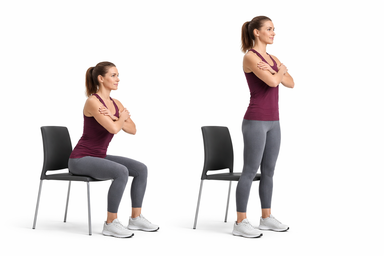
How to
A chair-based squat pattern that trains your thighs and glutes for standing strength.
- Sit near the front of a chair with feet flat and hip-width apart.
- Lean slightly forward and brace your core.
- Press through both feet and stand tall.
- Push your hips back and sit down with control.
- Keep your knees tracking over your toes
- Stand tall at the top
- Letting your knees cave inward
- Dropping hard onto the chair
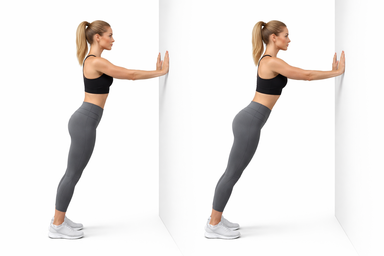
How to
A standing push-up against a wall that trains your chest, shoulders, and triceps.
- Stand facing a wall and place your hands at chest height.
- Step your feet back so your body forms a straight line.
- Bend your elbows and lower your chest toward the wall.
- Press the wall away to return to the start.
- Repeat for your planned reps.
- Keep your body straight
- Keep elbows about 45 degrees
- Letting your hips sag
- Shrugging your shoulders toward your ears
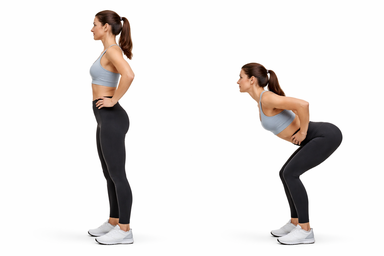
How to
A basic hip hinge that trains your glutes and hamstrings while practicing a strong spine position.
- Stand with feet hip-width apart and knees soft.
- Push your hips back as your chest tips forward.
- Lower until you feel tension in your hamstrings.
- Drive through your feet and squeeze your glutes to stand tall.
- Keep your spine long
- Hips move back, not down
- Squatting instead of hinging
- Rounding your back as you lower
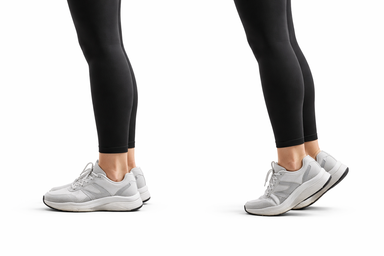
How to
A standing lower-leg move that trains your calves by lifting and lowering your heels.
- Stand tall with both feet hip-width apart.
- Press through the balls of your feet and lift your heels.
- Pause briefly at the top with control.
- Lower your heels slowly back to the floor.
- Repeat for your reps.
- Keep your ankles tracking straight.
- Move up and down with control.
- Rocking onto the outside edges of your feet.
- Bouncing at the bottom of each rep.
Cardio Interval Finisher
Stay low-impact. If you can't speak a short sentence, slow down.
How to
A low-impact cardio move that warms up your legs and hips while raising your heart rate.
- Stand tall with your feet hip-width apart and arms at your sides.
- Lift one knee to hip height as you swing the opposite arm forward.
- Lower that foot, then lift the other knee and switch arms.
- Keep alternating sides at a steady pace.
- Slow down and plant both feet to finish.
- Stand tall with your chest up
- Land softly under your hips
- Leaning back as you lift your knees
- Stomping your feet on each step
Cool-Down
Bring heart rate down and finish with calming breathing. 3 minutes.
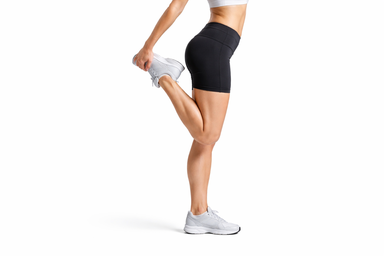
How to
A standing thigh stretch that targets the front of your hip and quad on one leg.
- Stand tall and hold a wall or chair for balance if needed.
- Bend one knee and hold your ankle or foot behind you.
- Keep your knees close and gently draw your heel toward your glute.
- Hold the stretch and breathe slowly.
- Release with control, then switch legs.
- Stand tall through your chest
- Keep your knees close
- Arching your lower back
- Pulling the knee out to the side
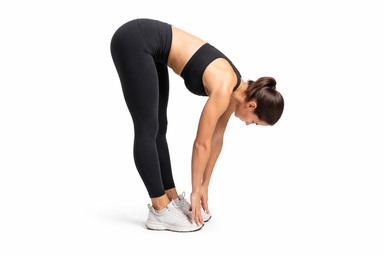
How to
A standing hamstring stretch that uses a hip hinge to stretch the back of your thigh.
- Stand tall and step one foot forward with your heel down and toes up.
- Bend your back knee slightly and hinge at your hips.
- Keep your back long as you lower your chest toward your thigh.
- Hold the stretch and breathe slowly.
- Release, then switch legs.
- Keep your hips square
- Point your toes up
- Rounding your back to reach lower
- Locking the standing knee
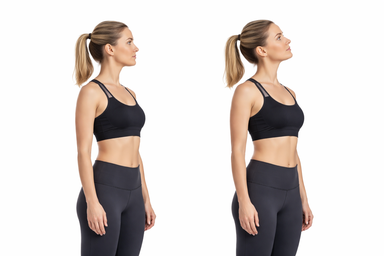
How to
A gentle side-bend stretch for the side of your neck, held still while you breathe.
- Sit or stand tall with your shoulders relaxed.
- Let your right ear move toward your right shoulder.
- Hold the stretch and breathe slowly.
- Return to center, then switch sides.
- Keep both shoulders down.
- Move slowly and gently.
- Lifting the shoulder toward your ear.
- Forcing your head into the stretch.
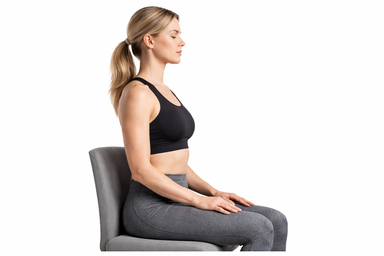
How to
A steady breathing pattern that trains control and helps you settle your breathing.
- Sit or stand tall with relaxed shoulders.
- Inhale through your nose for 4 counts.
- Hold your breath for 4 counts.
- Exhale slowly for 4 counts.
- Hold with your lungs empty for 4 counts, then repeat.
- Keep your face and jaw relaxed.
- Breathe smoothly and quietly.
- Rushing the counts.
- Tensing your shoulders or neck.

Vasodilation Through Rhythmic Movement
March in Place, Side Step, and Calf Raises recruit large lower-body muscle groups to drive peripheral vasodilation, reducing vascular resistance without spiking cardiac demand. Sit to Stand and Step Up (Low Step) add functional load that trains the heart to handle real-world exertion at safe intensity thresholds.

Why Blood Pressure Responds to This Approach
Hypertension stiffens arterial walls and blunts baroreceptor sensitivity — meaning your body struggles to regulate pressure during even mild exertion. Low-impact rhythmic movement paired with diaphragmatic breathing directly activates the parasympathetic nervous system, countering the chronic sympathetic overdrive that keeps resting BP elevated.

Box Breathing as a Physiological Reset
Bookending this session with Diaphragmatic Breathing and Box Breathing isn't recovery filler — it's deliberate vagal nerve stimulation that lowers heart rate variability stress markers post-exercise. To personalize, extend your Box Breathing exhale by 1–2 counts as weeks progress; longer exhales amplify parasympathetic response and compound the session's BP-lowering effect.