
Clean & Minimal AI Powered Fitness Routines
Download App25-Minute Intermediate Desk Stretching
A desk-friendly mobility and stretching routine to reduce stiffness in the neck, shoulders, hips, and back.
25-Minute Intermediate Desk Stretching
A desk-friendly mobility and stretching routine to reduce stiffness in the neck, shoulders, hips, and back.
Reset & Mobilize
Warm-up. Downshift tension and gently mobilize the neck, upper back, and spine.
How to
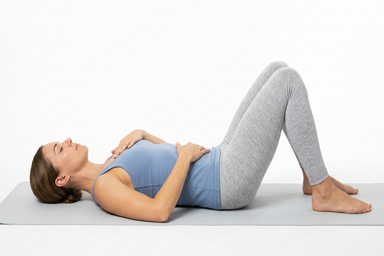
A slow breathing drill that trains relaxed belly breathing and helps you control your breath.
- Lie on your back or sit tall with one hand on your belly.
- Inhale through your nose and let your belly rise.
- Exhale slowly and let your belly fall.
- Keep your chest and shoulders quiet.
- Continue for the set time with smooth breaths.
- Breathe low into your belly
- Keep your shoulders relaxed
- Shrugging your shoulders as you inhale
- Forcing the breath or holding tension
How to
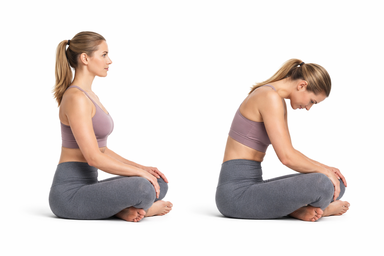
A seated spine mobility move that gently flexes and extends your back while you breathe.
- Sit tall with your feet flat and hands on your knees.
- Inhale and arch your back, lifting your chest and looking slightly up.
- Exhale and round your back, tucking your chin toward your chest.
- Move slowly between both positions for each rep.
- Move with your breath
- Keep your shoulders relaxed
- Forcing your neck too far back
- Rushing through the movement
How to
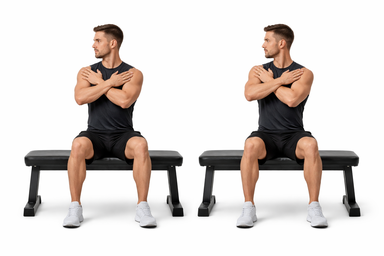
A seated upper-back rotation that moves your thoracic spine and opens your chest.
- Sit tall with your feet flat and knees bent.
- Place your hands behind your head or across your chest.
- Rotate your chest to one side while keeping your hips still.
- Return to center, then rotate to the other side.
- Alternate sides with smooth, controlled reps.
- Sit tall through your spine
- Turn from your upper back
- Leaning back or slumping as you turn
- Twisting your hips instead of your chest
How to
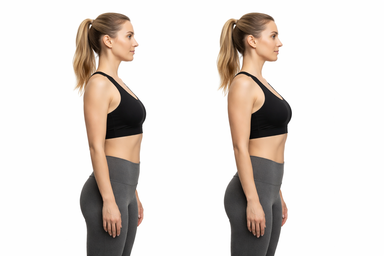
A small shoulder blade squeeze that trains your upper back and shoulder control.
- Stand or sit tall with your arms relaxed by your sides.
- Pull your shoulder blades back and slightly down.
- Pause briefly while keeping your ribs stacked.
- Release with control to the start position.
- Repeat for the set.
- Keep your neck relaxed
- Move from your shoulder blades
- Shrugging your shoulders toward your ears
- Arching your lower back to create the squeeze
Neck, Shoulders, Chest & Wrists
Main workout. Target common desk tightness through the neck and chest while opening wrists and forearms.
How to
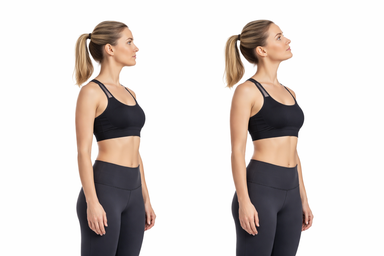
A gentle side-bend stretch for the side of your neck, held still while you breathe.
- Sit or stand tall with your shoulders relaxed.
- Let your right ear move toward your right shoulder.
- Hold the stretch and breathe slowly.
- Return to center, then switch sides.
- Keep both shoulders down.
- Move slowly and gently.
- Lifting the shoulder toward your ear.
- Forcing your head into the stretch.
How to
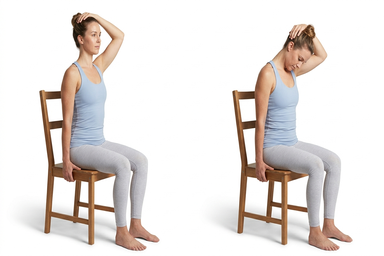
A seated neck stretch for one side that targets the levator scapulae near the neck and upper shoulder.
- Sit tall and place one hand behind your back to anchor that shoulder.
- Turn your head about 45 degrees away from that shoulder.
- Look down toward your opposite armpit.
- Use your other hand to gently guide your head down.
- Hold and breathe slowly, then switch sides.
- Keep the stretch gentle
- Keep your anchored shoulder down
- Pulling hard on your head
- Rounding your upper back
How to
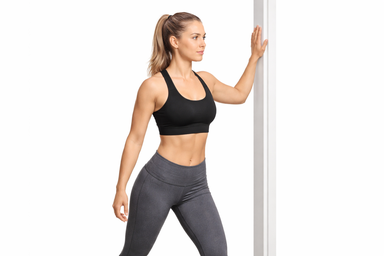
A doorway hold that stretches your chest and front shoulders.
- Stand in a doorway with forearms on the frame at shoulder height.
- Step one foot forward until you feel a gentle chest stretch.
- Hold the position and breathe slowly.
- Step back to release the stretch.
- Keep your ribs down
- Relax your neck and shoulders
- Leaning your head forward
- Pushing into sharp pain
How to
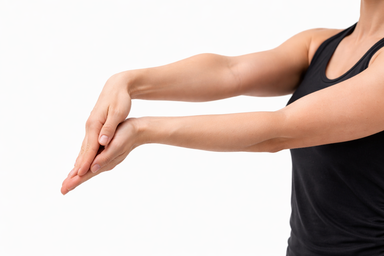
A forearm stretch that targets the wrist flexors on one arm at a time.
- Extend one arm in front of you, palm up.
- Keep your elbow straight and gently pull your fingers back.
- Hold the stretch and breathe slowly.
- Release gently, then switch sides.
- Keep your shoulder relaxed
- Use gentle pressure
- Bending your elbow
- Pulling into sharp pain
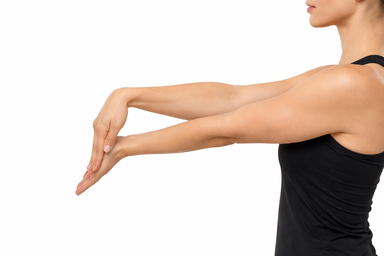
How to
A forearm stretch that targets the wrist extensors on the top of your forearm.
- Extend one arm in front with your palm down.
- Use your other hand to gently bend your wrist down.
- Keep your elbow straight and hold while breathing slowly.
- Release slowly, then switch sides.
- Use gentle pressure
- Keep your shoulder relaxed
- Forcing the wrist into pain
- Bending your elbow during the stretch
Hips & Lower Legs
Cool-down. Open hips after sitting and finish with lower-leg stretches to reduce overall stiffness.
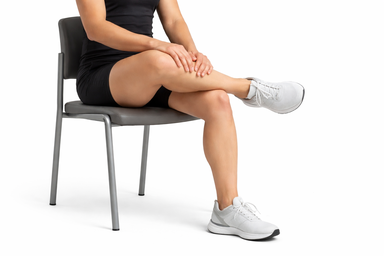
How to
A seated hip stretch that targets the glutes and outer hip on one side at a time.
- Sit tall near the edge of a chair with both feet flat.
- Cross one ankle over the opposite thigh, just above the knee.
- Keep your spine long and gently lean forward from your hips.
- Hold the stretch and breathe slowly.
- Finish the hold, then switch sides.
- Keep your chest lifted
- Relax the raised knee down
- Rounding your back to reach lower
- Pushing hard on the knee
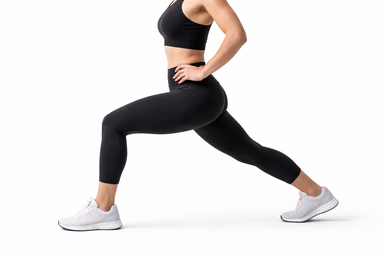
How to
A standing stretch for the front of your hip and thigh on one side.
- Stand tall and hold a wall or sturdy support for balance.
- Step one foot back and tuck that hip slightly under you.
- Bend your front knee until you feel a stretch in the back hip.
- Hold the stretch and breathe slowly.
- Finish the hold, then switch sides.
- Keep your torso tall
- Squeeze the back-side glute
- Arching your lower back
- Letting the back foot turn far outward
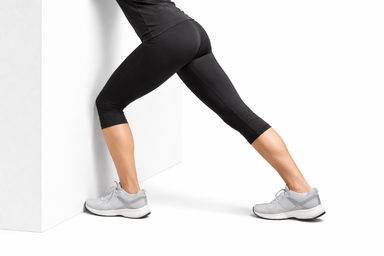
How to
A standing calf stretch for one leg that targets the back of your lower leg.
- Stand facing a wall and place both hands on it.
- Step one foot back and keep that heel on the floor.
- Bend your front knee until you feel a stretch in the back calf.
- Hold the stretch and breathe slowly.
- Release, step in, then switch legs.
- Keep your back heel down
- Point both toes forward
- Letting the back heel lift
- Turning the back foot out

Targeting the Posture-Pain Feedback Loop
Levator scapulae and thoracic rotation work directly counters the upper-cross syndrome pattern that develops from sustained forward-head sitting. Scapular retraction reactivates inhibited mid-trapezius fibers, while the doorway chest stretch lengthens chronically shortened pectoralis minor — the two muscles most responsible for rounded-shoulder posture.

What Eight Hours of Sitting Does to Your Fascia
Prolonged hip flexion causes the iliopsoas and hip flexor complex to adaptively shorten, compressing lumbar vertebrae and tilting the pelvis anteriorly. The seated figure-four targets the piriformis and external rotators that tighten defensively around a compressed SI joint — tension most desk workers feel as vague, hard-to-place low back ache.

Sequencing That Unlocks Range, Not Just Relief
Diaphragmatic breathing first is intentional — downregulating the nervous system increases passive tissue extensibility before any stretch begins. Moving proximal-to-distal (spine → shoulders → wrists → hips → calves) follows kinetic chain logic, so each segment is mobile before the next is loaded. To personalize: add 5 seconds to any hold where you feel asymmetry between sides.