
Clean & Minimal AI Powered Fitness Routines
Download App25-Minute Type 2 Diabetes Fitness
A moderate full-body cardio + strength circuit to support glucose control and overall fitness.
25-Minute Type 2 Diabetes Fitness
A moderate full-body cardio + strength circuit to support glucose control and overall fitness.
Warm-Up
Gradually raise heart rate and mobilize shoulders and hips. 5 minutes.
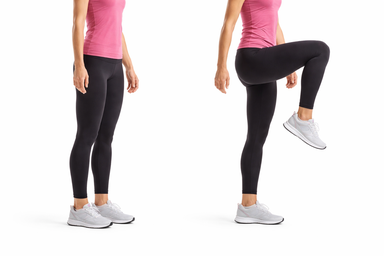
How to
A low-impact cardio move that warms up your legs and hips while raising your heart rate.
- Stand tall with your feet hip-width apart and arms at your sides.
- Lift one knee to hip height as you swing the opposite arm forward.
- Lower that foot, then lift the other knee and switch arms.
- Keep alternating sides at a steady pace.
- Slow down and plant both feet to finish.
- Stand tall with your chest up
- Land softly under your hips
- Leaning back as you lift your knees
- Stomping your feet on each step
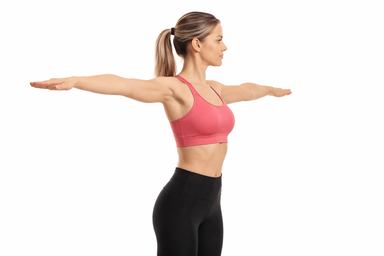
How to
A simple shoulder warm-up that moves both arms in circles and trains shoulder control.
- Stand tall with your feet about hip-width apart.
- Raise both arms out to your sides at shoulder height.
- Make small, controlled circles with both arms.
- Keep circling for the set time, then reverse direction if told.
- Lower your arms to finish.
- Keep your ribs down
- Move smoothly, not fast
- Shrugging your shoulders toward your ears
- Arching your back to keep the arms up
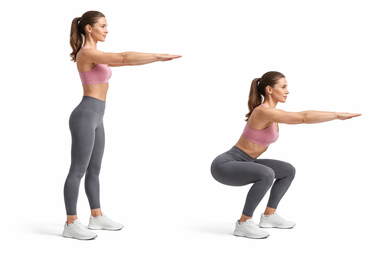
How to
A bodyweight lower-body move that trains your quads, glutes, and hips.
- Stand with feet about shoulder-width apart and toes slightly out.
- Brace your core and keep your chest tall.
- Bend your knees and hips to lower into a squat.
- Push through your feet to stand back up.
- Keep your knees tracking over your toes
- Keep your chest up
- Letting your knees cave in
- Rounding your back as you lower
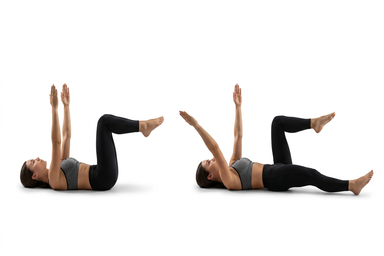
How to
A core move on your back that trains control while you move opposite arm and leg.
- Lie on your back with arms up and knees bent over hips.
- Press your lower back gently toward the floor.
- Lower one arm and the opposite leg with control.
- Return to the start, then repeat on the other side.
- Keep alternating sides for each rep.
- Move slow and stay braced
- Keep your ribs down
- Letting your lower back arch
- Rushing through the reps
Main Circuit
Full-body strength with low-impact cardio. Keep breathing steady; avoid holding your breath. 17 minutes.
How to
A bodyweight lower-body move that trains your quads, glutes, and hips.
- Stand with feet about shoulder-width apart and toes slightly out.
- Brace your core and keep your chest tall.
- Bend your knees and hips to lower into a squat.
- Push through your feet to stand back up.
- Keep your knees tracking over your toes
- Keep your chest up
- Letting your knees cave in
- Rounding your back as you lower
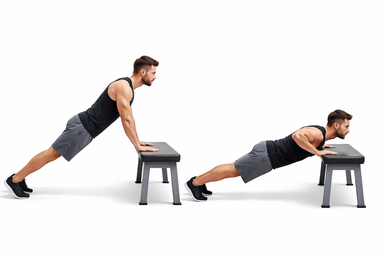
How to
A push-up with your hands elevated. It trains your chest, shoulders, triceps, and core.
- Place your hands on a sturdy elevated surface, slightly wider than shoulders.
- Step your feet back and make a straight line from head to heels.
- Bend your elbows and lower your chest toward the surface.
- Press through your hands to return to the start.
- Repeat for the set.
- Keep your body in one straight line.
- Brace your core as you move.
- Letting your hips sag or pike up.
- Flaring your elbows straight out to the sides.
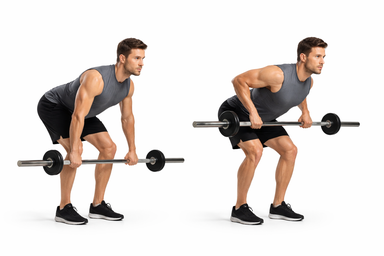
How to
A bent-over pulling move that trains your upper back, lats, and arms.
- Stand with feet hip-width and hold the weights in front of your thighs.
- Hinge at your hips and keep your back long, with arms hanging down.
- Pull the weights toward your ribs, squeezing your shoulder blades back.
- Lower the weights with control until your arms are straight.
- Keep your chest proud.
- Pull elbows back, not out.
- Rounding your back as you row.
- Jerking the weights with your body.
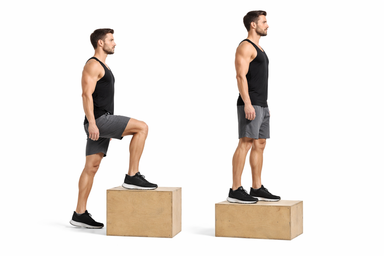
How to
A single-leg climb onto a step that trains your quads, glutes, and balance.
- Stand facing a sturdy step with one foot fully on top.
- Lean slightly forward and drive through the front foot to stand up.
- Bring your back foot onto the step with control.
- Step back down with the same back foot, then lower the front foot.
- Finish your reps, then switch legs.
- Keep your chest tall
- Drive through your whole front foot
- Pushing off too much with the back foot
- Letting your front knee cave inward
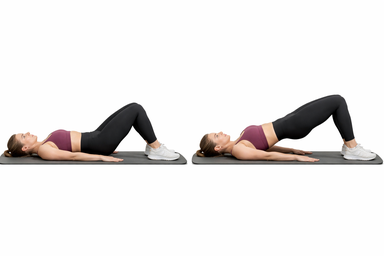
How to
A floor hip lift that trains your glutes and hamstrings with both feet planted.
- Lie on your back with knees bent and feet flat, hip-width apart.
- Brace your core and press your arms lightly into the floor.
- Drive through your heels and lift your hips until your body forms a straight line.
- Squeeze your glutes at the top, then lower with control.
- Repeat for your reps.
- Keep your ribs down
- Drive through your heels
- Arching your lower back at the top
- Pushing through your toes
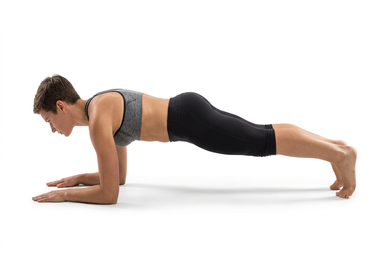
How to
A core hold that trains your abs, shoulders, and glutes while you keep a straight body line.
- Place your forearms on the floor with elbows under shoulders.
- Step both feet back and lift into a straight line from head to heels.
- Brace your abs and squeeze your glutes.
- Hold the position and breathe steadily.
- Lower your knees to the floor to finish.
- Keep your ribs pulled down
- Push the floor away
- Letting your hips sag
- Lifting your hips too high
Cool-Down
Bring heart rate down and stretch major muscle groups. 3 minutes.
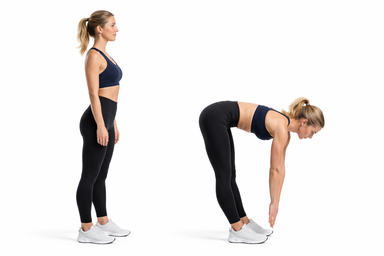
How to
A held stretch for the back of your thigh that targets your hamstrings.
- Sit tall with your target leg straight and toes up.
- Hinge at your hips and reach toward your foot.
- Stop when you feel a gentle stretch behind your thigh.
- Hold the stretch and breathe slowly.
- Release slowly, then switch sides if stretching one leg.
- Keep your back long.
- Hinge from your hips.
- Rounding your back to reach farther.
- Bouncing in the stretch.
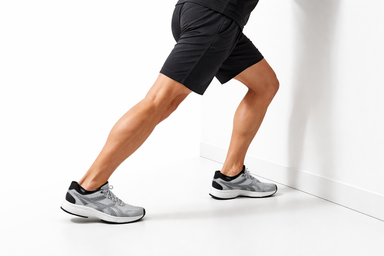
How to
A standing calf stretch that targets the back of your lower leg with a steady hold.
- Stand facing a wall and place your hands on it.
- Step one foot back and keep that heel on the floor.
- Bend your front knee until you feel a calf stretch.
- Hold and breathe slowly without bouncing.
- Finish the hold, then switch legs.
- Keep your back heel down
- Point both toes forward
- Bouncing in the stretch
- Letting the back heel lift
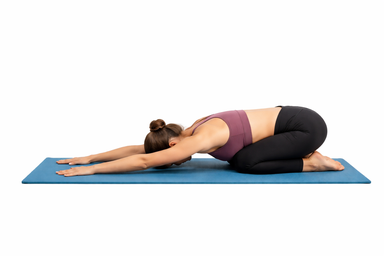
How to
A kneeling rest stretch that relaxes your back, hips, and shoulders while you breathe.
- Kneel with your big toes together and knees apart.
- Sit your hips back toward your heels.
- Reach your arms forward and lower your chest to the floor.
- Rest your forehead down and relax your neck.
- Hold the stretch and breathe slowly.
- Let your hips sink back
- Keep your neck relaxed
- Forcing your hips down
- Holding your breath

Glucose Uptake Starts With Large Muscles
Squats, step-ups, and glute bridges target the quadriceps, glutes, and hamstrings — the body's largest muscle groups — which are the primary sites of insulin-independent glucose uptake during exercise. Rows and push-ups add upper-body recruitment to maximize total glycogen demand across the session.

The 25-Minute Window Is Not Arbitrary
Post-meal blood glucose peaks around 30–90 minutes after eating, making moderate-intensity circuits timed at this duration particularly effective at blunting glucose spikes. The alternating push-pull-hinge pattern keeps heart rate elevated without taxing any single muscle group to failure, sustaining aerobic metabolism throughout.

Circuit Sequencing as Metabolic Architecture
Dead Bug and plank are placed mid-to-late circuit intentionally — core stabilizers fatigue last, protecting spinal alignment when legs and arms are already fatigued. To personalize load progression, increase dumbbell weight on the row by 2–5 lbs every two weeks while keeping step-up height constant until form is fully automatic.