
Clean & Minimal AI Powered Fitness Routines
Download AppBalance Skills for Bike and Board
Controlled single-leg balance drills that mimic turning, landings, and stance shifts.
Balance Skills for Bike and Board
Controlled single-leg balance drills that mimic turning, landings, and stance shifts.
Warm-up
Prepare your lower body and balance with gentle mobility and activation.
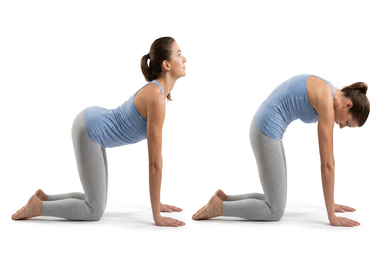
How to
A gentle spine mobility move on hands and knees that warms up your back, neck, and hips.
- Start on hands and knees with wrists under shoulders and knees under hips.
- Inhale and drop your belly as you lift your chest and tailbone.
- Exhale and round your back as you tuck your chin and tailbone.
- Move slowly between positions with your breath.
- Move one vertebra at a time
- Keep your hands and knees planted
- Shrugging your shoulders toward your ears
- Forcing your neck at the end range
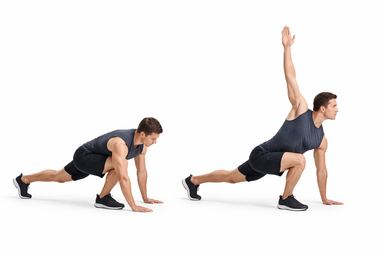
How to
A dynamic lunge stretch that opens your hips, hamstrings, and upper back as you alternate sides.
- Start in a high plank with hands under shoulders.
- Step your right foot outside your right hand.
- Drop your hips, then rotate your right arm up toward the ceiling.
- Place your hand down and step back to plank.
- Repeat on the left side, alternating sides each rep.
- Keep your front foot flat.
- Reach long through your top hand.
- Letting your front heel lift off the floor.
- Rushing the rotation without control.
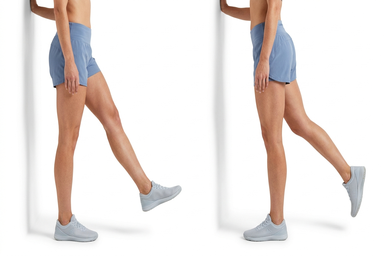
How to
A dynamic leg swing that warms up your hips, hamstrings, and hip flexors.
- Stand tall beside a wall or sturdy support.
- Shift weight to one leg and brace your core.
- Swing the other leg forward and back with control.
- Set it down, then alternate to the other leg.
- Keep alternating sides for the set.
- Keep your torso tall
- Move from the hip
- Leaning back as the leg swings forward
- Kicking so high you lose control
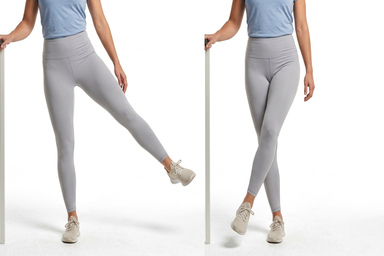
How to
A dynamic leg swing that warms up your hips, inner thighs, and outer hips side to side.
- Stand tall and hold a wall or post for balance.
- Shift weight to one leg and lift the other foot slightly.
- Swing that leg across your body, then out to the side.
- Set it down, then repeat with the other leg.
- Keep alternating sides with smooth, controlled swings.
- Stand tall through your chest
- Keep your hips facing forward
- Twisting your torso with each swing
- Swinging so high that you lose control
How to
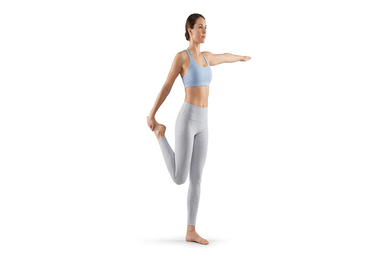
A supported one-leg balance hold that trains stability in your foot, ankle, and hips.
- Stand tall beside a wall or sturdy support, fingertips resting lightly.
- Shift your weight onto one foot and lift the other foot off the floor.
- Hold the balance while breathing steadily.
- Lower your foot with control, then switch legs.
- Use only light hand support
- Keep your hips level
- Leaning hard into your hand
- Letting your lifted hip drop
How to
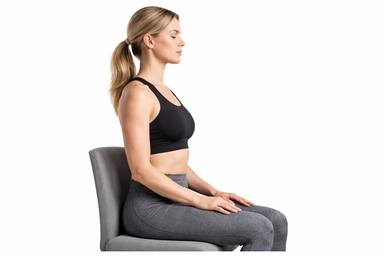
A steady breathing pattern that trains control and helps you settle your breathing.
- Sit or stand tall with relaxed shoulders.
- Inhale through your nose for 4 counts.
- Hold your breath for 4 counts.
- Exhale slowly for 4 counts.
- Hold with your lungs empty for 4 counts, then repeat.
- Keep your face and jaw relaxed.
- Breathe smoothly and quietly.
- Rushing the counts.
- Tensing your shoulders or neck.
Baseline Holds
Smooth posture, slow breathing. Stop one rep before your form turns sloppy.
How to
A supported one-leg balance hold that trains stability in your foot, ankle, and hips.
- Stand tall beside a wall or sturdy support, fingertips resting lightly.
- Shift your weight onto one foot and lift the other foot off the floor.
- Hold the balance while breathing steadily.
- Lower your foot with control, then switch legs.
- Use only light hand support
- Keep your hips level
- Leaning hard into your hand
- Letting your lifted hip drop
How to
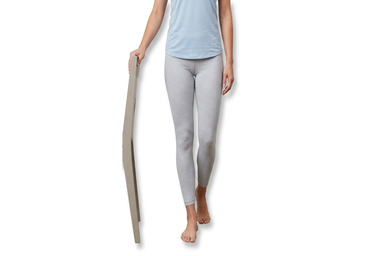
A supported semi-tandem balance hold that trains steady posture, feet, and ankles.
- Stand near a wall or chair with one hand lightly touching it.
- Place one foot slightly ahead of the other, heel near the back foot's arch.
- Stand tall and share your weight between both feet.
- Hold the position and breathe slowly.
- Step out of the stance when the hold is done.
- Use a light hand touch
- Keep your chest tall
- Leaning hard into your hand
- Letting your feet roll inward
Reach and Reset
Keep hips level. Touch lightly and bring your torso back under control.
How to
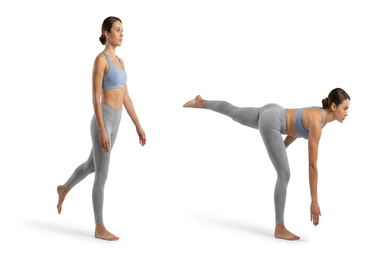
A single-leg hip hinge that trains your glutes and hamstrings while challenging balance.
- Stand on one leg with a soft knee and your foot rooted.
- Hinge at your hips and reach your hands toward the floor.
- Let your free leg extend back as your chest lowers.
- Drive through your standing foot to return tall.
- Finish your reps, then switch legs.
- Keep your hips square.
- Move slow and stay controlled.
- Rounding your back as you reach down.
- Opening your hips toward the side.
Lateral Weight Shifts
Small-to-medium range. Knees track over toes; no wobbling panic—control every rep.
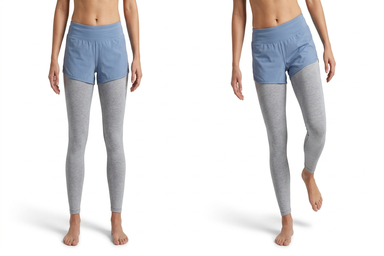
How to
A side-to-side weight shift that trains balance, hips, and leg control.
- Stand tall with feet wider than hip-width and arms relaxed.
- Shift your weight into one foot and bend that knee slightly.
- Let the other foot get light, then lift it if you can balance.
- Pause briefly, then place the foot down and shift to the other side.
- Continue moving side to side with control.
- Keep your chest tall
- Move slowly and stay controlled
- Letting your knee cave inward
- Rushing the shift from side to side
Step-Down Control
Use a low step. Lower slowly for control, lightly tap, then stand tall again.
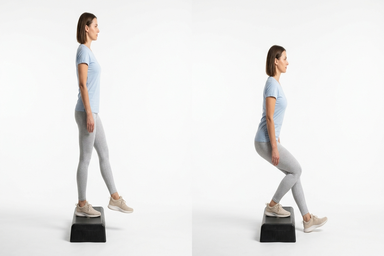
How to
A slow step-down from a raised surface that trains your quads, glutes, and single-leg control.
- Stand on a low step with one foot near the edge.
- Let the other foot hover in front or beside the step.
- Bend your standing knee and lower your free heel toward the floor.
- Tap lightly, then push through your standing foot to rise.
- Finish your reps, then switch legs.
- Keep your knee tracking over your toes.
- Move slowly and stay tall.
- Dropping your hip as you lower.
- Letting your knee cave inward.
Balance Catch Timing
Get tall first, then reach. If you lose it, reduce reach distance and try again.
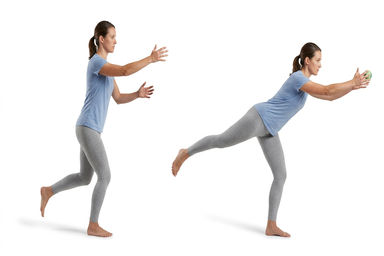
How to
A single-leg balance drill using a wall reach and catch. It trains ankle, hip, and core control.
- Stand on one leg facing a wall, about arm’s length away.
- Soften your standing knee and keep your chest tall.
- Reach both hands to the wall and lightly catch yourself.
- Push off the wall to return to single-leg balance.
- Finish your reps, then switch legs.
- Keep your hips level.
- Use a light touch on the wall.
- Slamming into the wall with your hands.
- Letting the standing knee cave inward.
Cool-Down Balance Reset
Downshift the nervous system while keeping posture tall and control active.
How to
A steady breathing pattern that trains control and helps you settle your breathing.
- Sit or stand tall with relaxed shoulders.
- Inhale through your nose for 4 counts.
- Hold your breath for 4 counts.
- Exhale slowly for 4 counts.
- Hold with your lungs empty for 4 counts, then repeat.
- Keep your face and jaw relaxed.
- Breathe smoothly and quietly.
- Rushing the counts.
- Tensing your shoulders or neck.

Why Every Drill Mirrors Real Terrain Demands
Single Leg Reach To Floor and Controlled Step Down replicate the hip hinge and deceleration forces your ankle and glute medius absorb mid-turn or on landing. Lateral Weight Shift To Balance directly trains the frontal-plane stability that keeps you upright through berms, carves, and edge transitions.

What Bikes and Boards Actually Ask of Your Body
Riding disciplines punish proprioceptive gaps — your neuromuscular system must fire corrective responses in milliseconds when terrain shifts underfoot. The ankle-to-hip chain is your primary stability line, and asymmetrical weakness between legs is the hidden culprit behind most bail-outs and knee strain.

Building Reactive Balance Through Progressions
This routine uses a specificity-to-complexity arc: Semi Tandem Balance establishes baseline joint stacking before Single Leg Wall Reach Catch introduces reactive neuromuscular demand. Add instability by closing your eyes during Single Leg Balance holds to amplify proprioceptive adaptation without adding load.