
Clean & Minimal AI Powered Fitness Routines
Download AppConstruction Worker Strength & Mobility
A 25-minute intermediate full-body session to build strength, core stability, and joint resilience for physically demanding work.
Construction Worker Strength & Mobility
A 25-minute intermediate full-body session to build strength, core stability, and joint resilience for physically demanding work.
Warm-Up
5 min. Mobilize spine, hips, and shoulders; prime core and glutes.
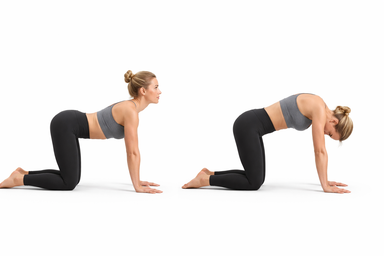
How to
A gentle spine mobility move that alternates rounding and arching your back on hands and knees.
- Start on hands and knees with wrists under shoulders and knees under hips.
- Inhale and drop your belly as you lift your chest and tailbone.
- Exhale and round your back, tucking your chin and tailbone.
- Move slowly between both positions with your breath.
- Move one vertebra at a time.
- Keep your shoulders away from your ears.
- Forcing your neck up or down.
- Rushing through the movement.
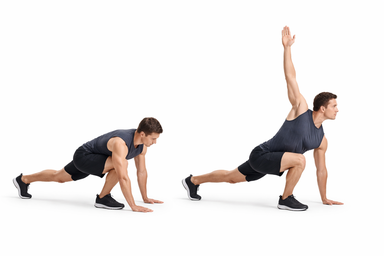
How to
A dynamic lunge stretch that opens your hips, hamstrings, and upper back as you alternate sides.
- Start in a high plank with hands under shoulders.
- Step your right foot outside your right hand.
- Drop your hips, then rotate your right arm up toward the ceiling.
- Place your hand down and step back to plank.
- Repeat on the left side, alternating sides each rep.
- Keep your front foot flat.
- Reach long through your top hand.
- Letting your front heel lift off the floor.
- Rushing the rotation without control.
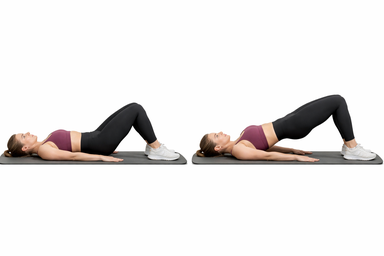
How to
A floor hip lift that trains your glutes and hamstrings with both feet planted.
- Lie on your back with knees bent and feet flat, hip-width apart.
- Brace your core and press your arms lightly into the floor.
- Drive through your heels and lift your hips until your body forms a straight line.
- Squeeze your glutes at the top, then lower with control.
- Repeat for your reps.
- Keep your ribs down
- Drive through your heels
- Arching your lower back at the top
- Pushing through your toes
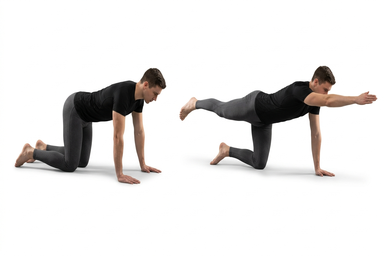
How to
A core stability move from all fours that trains your abs, back, glutes, and balance.
- Start on hands and knees with your hands under shoulders and knees under hips.
- Brace your core and keep your back flat.
- Reach one arm forward and the opposite leg back until they are straight.
- Pause briefly, then bring your hand and knee back under you.
- Repeat on the other side, alternating each rep.
- Keep your hips square
- Move slow and controlled
- Arching or sagging your lower back
- Rotating your hips as you reach
Main Work
18 min. Strength and work capacity emphasizing hinge, squat, pull, carry, and lateral core stability.
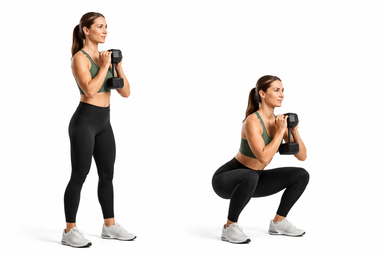
How to
A squat holding a weight at your chest. It trains your quads, glutes, and core.
- Stand with feet about shoulder-width and hold the weight at your chest.
- Brace your core and keep your chest tall.
- Bend your knees and hips to squat down under control.
- Lower until comfortable, with knees tracking over toes.
- Drive through your feet to stand back up.
- Keep your chest tall
- Knees track over toes
- Letting your knees cave inward
- Rounding your back at the bottom
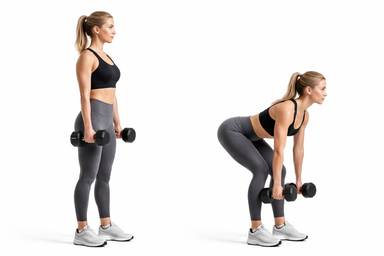
How to
A dumbbell hip hinge that trains your hamstrings, glutes, and back position control.
- Stand tall with a dumbbell in each hand, arms in front of your thighs.
- Soften your knees and brace your core.
- Push your hips back and lower the dumbbells along your legs.
- Stop when you feel a strong hamstring stretch or your back starts to round.
- Drive your hips forward and stand tall again.
- Keep the dumbbells close to your legs.
- Move from your hips, not your knees.
- Rounding your back as you lower.
- Letting the dumbbells drift away from your body.
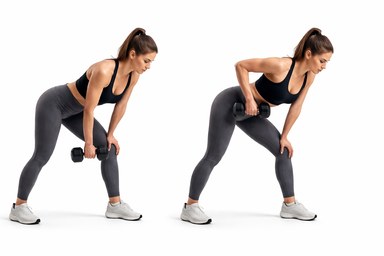
How to
A bent-over pulling move that trains your upper back, lats, and arms.
- Hold a dumbbell in each hand and hinge at your hips.
- Let your arms hang under your shoulders with palms facing in.
- Pull both elbows up toward your ribs.
- Pause briefly, then lower the dumbbells with control.
- Keep your back flat
- Pull elbows close to your sides
- Shrugging your shoulders toward your ears
- Using your torso to swing the weights
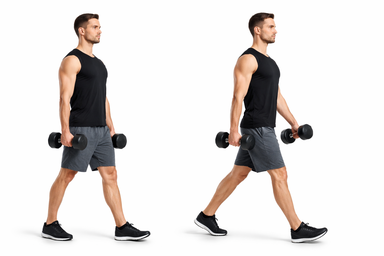
How to
A loaded walk that trains your grip, core, shoulders, and posture.
- Stand tall with a weight in each hand at your sides.
- Brace your core and pull your shoulders down and back.
- Walk forward with short, controlled steps.
- Keep the weights steady and your torso upright.
- Set the weights down with control when finished.
- Stand tall as you walk
- Keep the weights by your sides
- Leaning back or to one side
- Letting the weights swing
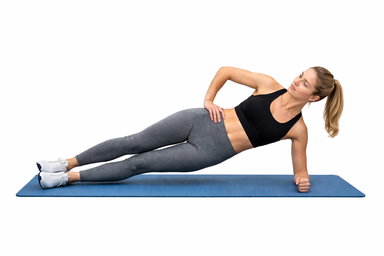
How to
A side hold that trains your obliques, hips, and shoulder stability.
- Lie on one side with your elbow under your shoulder and legs stacked.
- Lift your hips until your body forms a straight line.
- Hold the position and breathe steadily.
- Lower your hips with control.
- Finish your hold, then switch sides.
- Keep your hips stacked
- Press the floor away
- Letting your hips sag
- Rolling your chest toward the floor
Cool-Down
2 min. Downshift breathing and open the chest after pulling/carrying.
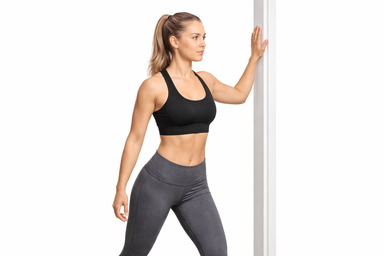
How to
A doorway hold that stretches your chest and front shoulders.
- Stand in a doorway with forearms on the frame at shoulder height.
- Step one foot forward until you feel a gentle chest stretch.
- Hold the position and breathe slowly.
- Step back to release the stretch.
- Keep your ribs down
- Relax your neck and shoulders
- Leaning your head forward
- Pushing into sharp pain

Loaded Carries & Hinge Patterns for Site Work
The Farmer Carry and Romanian Deadlift directly train the posterior chain and grip under axial load — mirroring the demands of carrying materials and lifting from ground level. Goblet Squats reinforce knee tracking and thoracic uprightness, the exact mechanics that protect you when working in confined or uneven spaces.

Why Construction Breaks Bodies Differently
Repetitive asymmetrical loading, prolonged static postures, and sudden heavy lifts compress the lumbar spine and destabilize the SI joint over time. The Bird Dog and Side Plank target deep spinal stabilizers — multifidus and quadratus lumborum — the muscles most chronically underloaded in trade work yet most responsible for keeping you injury-free through a full shift.

Mobility First, Strength Second — Here's Why
The Cat-Cow and World's Greatest Stretch prime thoracic rotation and hip flexor extensibility before any load is applied, reducing injury risk from cold-tissue lifting that's common on early job starts. To personalize, increase Farmer Carry distance weekly by 10% — that single metric will reliably track your functional strength progress over time.