
Clean & Minimal AI Powered Fitness Routines
Download AppIntermediate Abs Routine
A focused 25-minute core session to build strength and endurance.
Intermediate Abs Routine
A focused 25-minute core session to build strength and endurance.
Warm-Up
Prepare the spine and core with gentle mobility and activation. — 4 minutes.
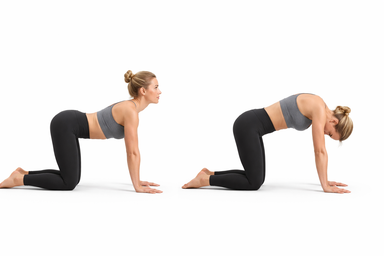
How to
A gentle spine mobility move that alternates rounding and arching your back on hands and knees.
- Start on hands and knees with wrists under shoulders and knees under hips.
- Inhale and drop your belly as you lift your chest and tailbone.
- Exhale and round your back, tucking your chin and tailbone.
- Move slowly between both positions with your breath.
- Move one vertebra at a time.
- Keep your shoulders away from your ears.
- Forcing your neck up or down.
- Rushing through the movement.
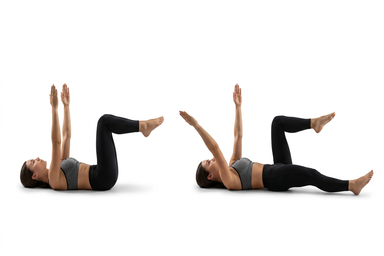
How to
A core move on your back that trains control while you move opposite arm and leg.
- Lie on your back with arms up and knees bent over hips.
- Press your lower back gently toward the floor.
- Lower one arm and the opposite leg with control.
- Return to the start, then repeat on the other side.
- Keep alternating sides for each rep.
- Move slow and stay braced
- Keep your ribs down
- Letting your lower back arch
- Rushing through the reps
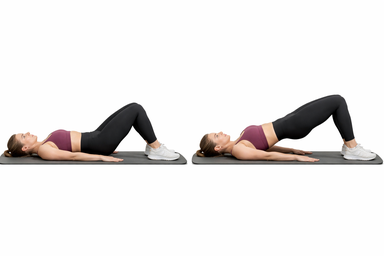
How to
A floor hip lift that trains your glutes and hamstrings with both feet planted.
- Lie on your back with knees bent and feet flat, hip-width apart.
- Brace your core and press your arms lightly into the floor.
- Drive through your heels and lift your hips until your body forms a straight line.
- Squeeze your glutes at the top, then lower with control.
- Repeat for your reps.
- Keep your ribs down
- Drive through your heels
- Arching your lower back at the top
- Pushing through your toes
Circuit A
Keep your core braced; avoid sagging through the hips on planks.
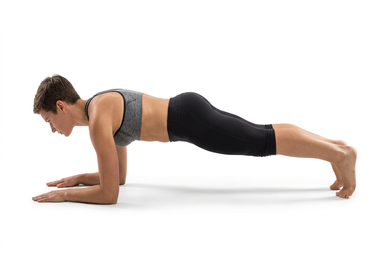
How to
A core hold that trains your abs, shoulders, and glutes while you keep a straight body line.
- Place your forearms on the floor with elbows under shoulders.
- Step both feet back and lift into a straight line from head to heels.
- Brace your abs and squeeze your glutes.
- Hold the position and breathe steadily.
- Lower your knees to the floor to finish.
- Keep your ribs pulled down
- Push the floor away
- Letting your hips sag
- Lifting your hips too high
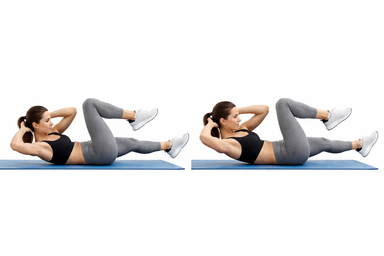
How to
An alternating crunch that trains your abs and obliques.
- Lie on your back with hands lightly by your head.
- Lift your shoulders and bring one elbow to the opposite knee.
- Switch sides in a smooth pedaling motion.
- Keep alternating until your reps are done.
- Keep your lower back pressed down
- Move with control, not speed
- Pulling on your neck
- Letting your elbows do the work
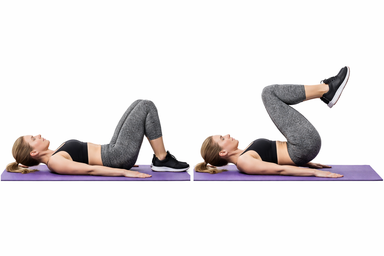
How to
A floor core move that curls your hips toward your ribs to train your abs.
- Lie on your back with knees bent and feet lifted.
- Brace your abs and press your lower back into the floor.
- Curl your hips up, bringing your knees toward your chest.
- Lower your hips with control and keep your feet off the floor.
- Repeat for the set.
- Move from your abs, not momentum.
- Keep your neck relaxed.
- Swinging your legs to lift your hips.
- Letting your lower back arch as you lower.
Circuit B
Stay controlled; keep shoulders away from ears and move with steady breathing.
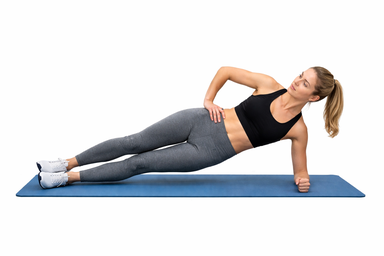
How to
A side hold that trains your obliques, hips, and shoulder stability.
- Lie on one side with your elbow under your shoulder and legs stacked.
- Lift your hips until your body forms a straight line.
- Hold the position and breathe steadily.
- Lower your hips with control.
- Finish your hold, then switch sides.
- Keep your hips stacked
- Press the floor away
- Letting your hips sag
- Rolling your chest toward the floor
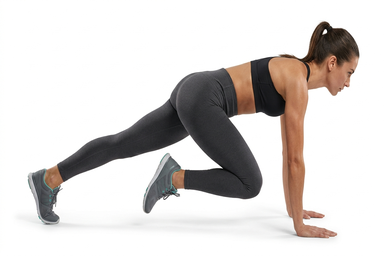
How to
A fast plank move that trains your core, shoulders, and hip flexors.
- Start in a high plank with hands under shoulders and legs straight.
- Brace your core and keep your body in a straight line.
- Drive one knee toward your chest, then quickly step it back.
- Alternate knees at a steady pace for the set.
- Keep your hips low
- Push the floor away
- Letting your hips bounce high
- Dropping your head or rounding your shoulders
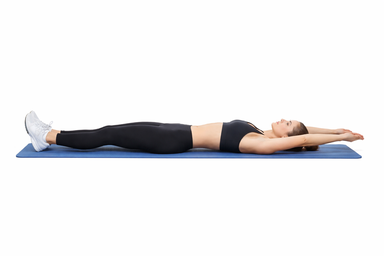
How to
A core hold that trains your abs and hip flexors while keeping your lower back pressed down.
- Lie on your back and press your lower back into the floor.
- Lift your shoulders and legs off the floor.
- Hold the shape and breathe steadily.
- Lower with control when your time is up.
- Keep your ribs down
- Press your low back flat
- Letting your lower back arch off the floor
- Holding your breath
Cool-Down
Decompress and reset with controlled, low-intensity core and spine work. — 2 minutes.
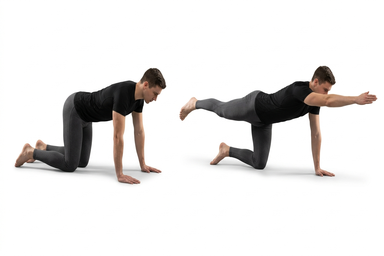
How to
A core stability move from all fours that trains your abs, back, glutes, and balance.
- Start on hands and knees with your hands under shoulders and knees under hips.
- Brace your core and keep your back flat.
- Reach one arm forward and the opposite leg back until they are straight.
- Pause briefly, then bring your hand and knee back under you.
- Repeat on the other side, alternating each rep.
- Keep your hips square
- Move slow and controlled
- Arching or sagging your lower back
- Rotating your hips as you reach
How to
A gentle spine mobility move that alternates rounding and arching your back on hands and knees.
- Start on hands and knees with wrists under shoulders and knees under hips.
- Inhale and drop your belly as you lift your chest and tailbone.
- Exhale and round your back, tucking your chin and tailbone.
- Move slowly between both positions with your breath.
- Move one vertebra at a time.
- Keep your shoulders away from your ears.
- Forcing your neck up or down.
- Rushing through the movement.

Anti-Rotation Before Flexion: The Smart Order
Dead Bug and Bird Dog appear before loaded flexion work because they train spinal stabilization through contralateral limb loading—your transverse abdominis and multifidus fire before your rectus dominates. Bicycle Crunch and Reverse Crunch then target rotational and posterior-chain flexion with a pre-activated, stable spine.

Core Endurance: The Real Athletic Demand
True core strength isn't peak force—it's resisting fatigue across repeated contractions and sustained positions. Hollow Body Hold and Plank expose your deep stabilizers to time-under-tension stress, the exact demand your core faces during any athletic movement, heavy lift, or prolonged physical output.

Isometric-to-Dynamic Sequencing Pays Off
This routine builds from isometric holds (Plank, Side Plank, Hollow Body) into dynamic patterns (Mountain Climber, Bicycle Crunch), mirroring the principle of specificity—stabilize before you accelerate. To personalize, extend your weakest hold by 5 seconds each week as your progressive overload marker.