
Clean & Minimal AI Powered Fitness Routines
Download AppPush Pull Calisthenics Progression
Beginner-friendly harder push-ups and pull-ups using wrist-friendly grips.
Push Pull Calisthenics Progression
Beginner-friendly harder push-ups and pull-ups using wrist-friendly grips.
Warm-Up
Wrist-friendly prep and shoulder activation for push-ups and pull-ups.
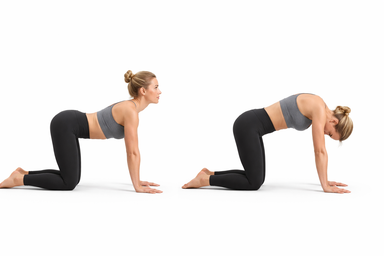
How to
A gentle spine mobility move that alternates rounding and arching your back on hands and knees.
- Start on hands and knees with wrists under shoulders and knees under hips.
- Inhale and drop your belly as you lift your chest and tailbone.
- Exhale and round your back, tucking your chin and tailbone.
- Move slowly between both positions with your breath.
- Move one vertebra at a time.
- Keep your shoulders away from your ears.
- Forcing your neck up or down.
- Rushing through the movement.
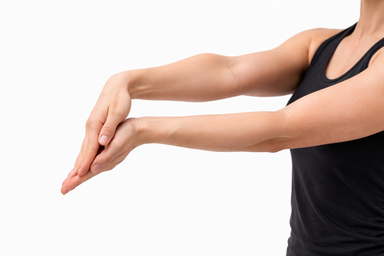
How to
A forearm stretch that targets the wrist flexors on one arm at a time.
- Extend one arm in front of you, palm up.
- Keep your elbow straight and gently pull your fingers back.
- Hold the stretch and breathe slowly.
- Release gently, then switch sides.
- Keep your shoulder relaxed
- Use gentle pressure
- Bending your elbow
- Pulling into sharp pain
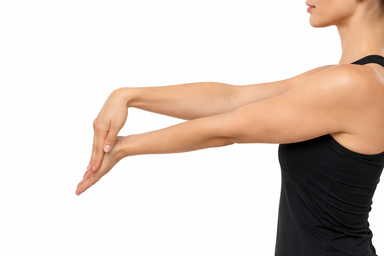
How to
A forearm stretch that targets the wrist extensors on the top of your forearm.
- Extend one arm in front with your palm down.
- Use your other hand to gently bend your wrist down.
- Keep your elbow straight and hold while breathing slowly.
- Release slowly, then switch sides.
- Use gentle pressure
- Keep your shoulder relaxed
- Forcing the wrist into pain
- Bending your elbow during the stretch
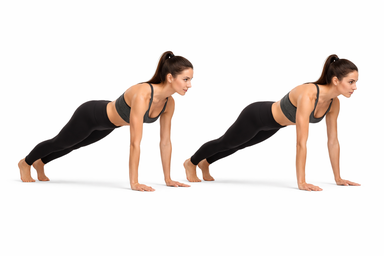
How to
A straight-arm push-up variation that trains shoulder blade control and upper back stability.
- Start in a high plank with hands under shoulders and arms straight.
- Let your chest sink slightly as your shoulder blades move together.
- Push the floor away to spread your shoulder blades apart.
- Keep your body in one straight line as you repeat.
- Keep your elbows straight
- Move only at your shoulder blades
- Bending your elbows like a regular push-up
- Letting your hips sag or pike
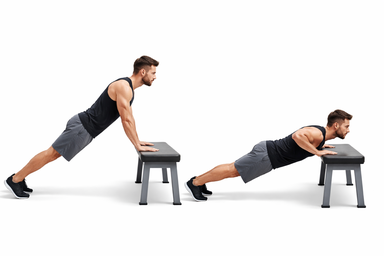
How to
A push-up with your hands elevated. It trains your chest, shoulders, triceps, and core.
- Place your hands on a sturdy elevated surface, slightly wider than shoulders.
- Step your feet back and make a straight line from head to heels.
- Bend your elbows and lower your chest toward the surface.
- Press through your hands to return to the start.
- Repeat for the set.
- Keep your body in one straight line.
- Brace your core as you move.
- Letting your hips sag or pike up.
- Flaring your elbows straight out to the sides.
Push Pull Circuit
Push with control; pull with elbows. Keep your neck relaxed.
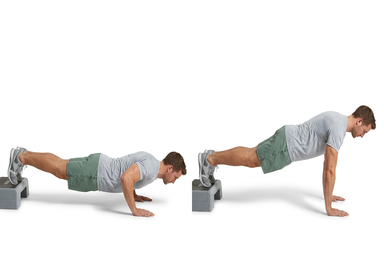
How to
A push-up with your feet elevated that trains your chest, shoulders, triceps, and core.
- Place your feet on a stable raised surface and hands under your shoulders.
- Brace your core and make a straight line from head to heels.
- Bend your elbows and lower your chest toward the floor.
- Press the floor away until your arms are straight.
- Repeat for your planned reps.
- Keep your body in one straight line.
- Let your elbows angle slightly back.
- Letting your hips sag or pike up.
- Flaring your elbows straight out.
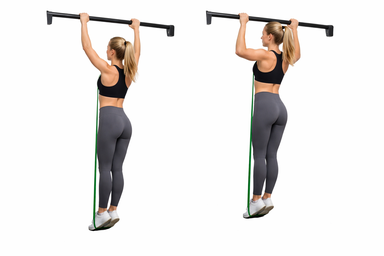
How to
A supported vertical pull that trains your back, biceps, and grip with less body weight.
- Set the assistance and grip the bar slightly wider than shoulders.
- Start hanging with arms straight and shoulders active.
- Pull your chest toward the bar, driving elbows down.
- Lower with control until your arms are straight again.
- Repeat for your reps.
- Keep your ribs down
- Lead with your chest
- Kicking or swinging to get up
- Shrugging your shoulders toward your ears
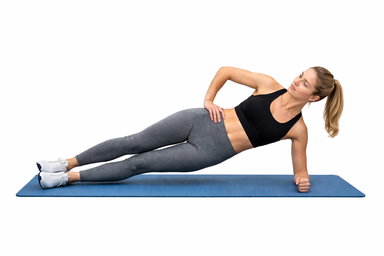
How to
A side hold that trains your obliques, hips, and shoulder stability.
- Lie on one side with your elbow under your shoulder and legs stacked.
- Lift your hips until your body forms a straight line.
- Hold the position and breathe steadily.
- Lower your hips with control.
- Finish your hold, then switch sides.
- Keep your hips stacked
- Press the floor away
- Letting your hips sag
- Rolling your chest toward the floor
Harder Finish
Short, high-control reps. Reduce range or assistance if your wrists/neck flare.
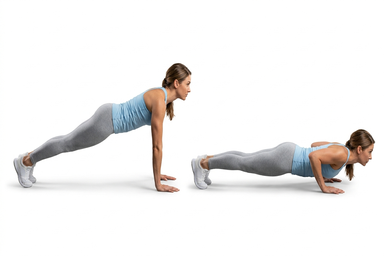
How to
A push-up with a pause that trains your chest, shoulders, triceps, and core control.
- Start in a high plank with hands under your shoulders.
- Lower your chest toward the floor with control.
- Pause just above the floor and hold your body straight.
- Breathe steadily during the pause.
- Press back up to the start position.
- Keep your body in one line
- Brace your core
- Letting your hips sag during the pause
- Flaring your elbows too wide
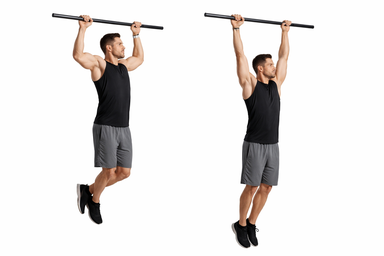
How to
A slow lowering pull-up that trains your back, shoulders, and arms with control.
- Stand under the bar and grip it with both hands.
- Jump or step to the top with your chin over the bar.
- Hold your body tight and lower as slowly as you can.
- Reach straight arms at the bottom, then step down and reset.
- Keep your ribs down
- Lower with control
- Dropping quickly from the top
- Shrugging your shoulders toward your ears
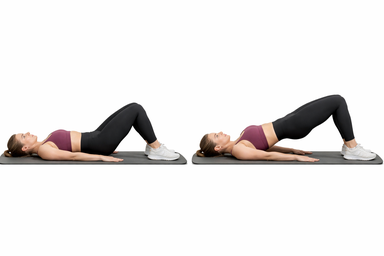
How to
A floor hip lift that trains your glutes and hamstrings with both feet planted.
- Lie on your back with knees bent and feet flat, hip-width apart.
- Brace your core and press your arms lightly into the floor.
- Drive through your heels and lift your hips until your body forms a straight line.
- Squeeze your glutes at the top, then lower with control.
- Repeat for your reps.
- Keep your ribs down
- Drive through your heels
- Arching your lower back at the top
- Pushing through your toes
Core and Control
Brace to protect your neck and keep the ribs down.
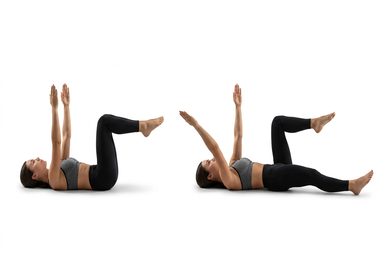
How to
A core move on your back that trains control while you move opposite arm and leg.
- Lie on your back with arms up and knees bent over hips.
- Press your lower back gently toward the floor.
- Lower one arm and the opposite leg with control.
- Return to the start, then repeat on the other side.
- Keep alternating sides for each rep.
- Move slow and stay braced
- Keep your ribs down
- Letting your lower back arch
- Rushing through the reps
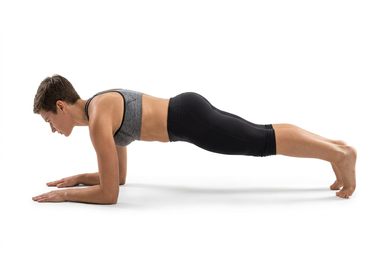
How to
A core hold that trains your abs, shoulders, and glutes while you keep a straight body line.
- Place your forearms on the floor with elbows under shoulders.
- Step both feet back and lift into a straight line from head to heels.
- Brace your abs and squeeze your glutes.
- Hold the position and breathe steadily.
- Lower your knees to the floor to finish.
- Keep your ribs pulled down
- Push the floor away
- Letting your hips sag
- Lifting your hips too high
Cool-Down
Gentle mobility for wrists, hips, and neck.
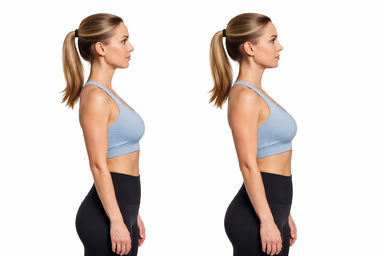
How to
A small neck position hold that trains the front of your neck and helps control head position.
- Sit or stand tall with your eyes looking straight ahead.
- Gently slide your chin straight back, like making a double chin.
- Keep your head level and your jaw relaxed.
- Hold the tuck and breathe slowly.
- Release to neutral, then repeat for the set.
- Move straight back, not down.
- Keep your shoulders relaxed.
- Tilting your head up or down.
- Forcing the tuck or clenching your jaw.
How to
A gentle spine mobility move that alternates rounding and arching your back on hands and knees.
- Start on hands and knees with wrists under shoulders and knees under hips.
- Inhale and drop your belly as you lift your chest and tailbone.
- Exhale and round your back, tucking your chin and tailbone.
- Move slowly between both positions with your breath.
- Move one vertebra at a time.
- Keep your shoulders away from your ears.
- Forcing your neck up or down.
- Rushing through the movement.
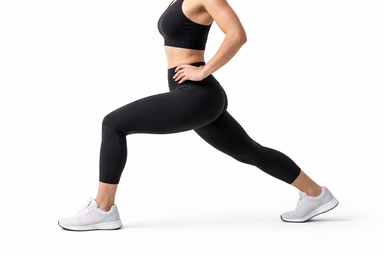
How to
A standing stretch for the front of your hip and thigh on one side.
- Stand tall and hold a wall or sturdy support for balance.
- Step one foot back and tuck that hip slightly under you.
- Bend your front knee until you feel a stretch in the back hip.
- Hold the stretch and breathe slowly.
- Finish the hold, then switch sides.
- Keep your torso tall
- Squeeze the back-side glute
- Arching your lower back
- Letting the back foot turn far outward
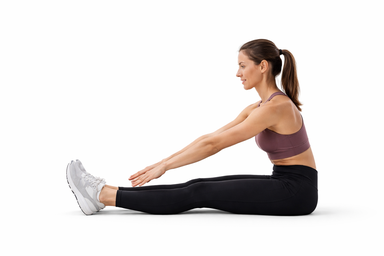
How to
A seated stretch for your hamstrings that helps you practice a relaxed forward fold.
- Sit tall with your legs extended in front of you.
- Flex your feet and keep a soft bend in your knees.
- Hinge forward from your hips and reach toward your feet.
- Hold the stretch and breathe slowly.
- Ease back up to seated when the hold is done.
- Keep your spine long
- Relax your shoulders
- Rounding hard through your back
- Forcing the reach or bouncing
How to
A forearm stretch that targets the wrist extensors on the top of your forearm.
- Extend one arm in front with your palm down.
- Use your other hand to gently bend your wrist down.
- Keep your elbow straight and hold while breathing slowly.
- Release slowly, then switch sides.
- Use gentle pressure
- Keep your shoulder relaxed
- Forcing the wrist into pain
- Bending your elbow during the stretch

Neutral Grip Logic in Push-Pull Work
Scapular push-ups and negative pull-ups anchor this routine because they build the serratus anterior and lower trapezius before load increases — muscles most beginners skip entirely. Incline and decline variations shift pectoral fiber recruitment across the clavicular and sternal heads, building balanced pressing strength without joint stress.

Why Beginners Stall on Pull Movements
The pulling chain — lats, rhomboids, biceps brachii — is chronically underdeveloped relative to pushing muscles in untrained individuals, making assisted and negative pull-ups the smartest entry points. Negatives specifically exploit the eccentric strength advantage, letting you train the full range of motion before concentric strength catches up.

Dead Bug and Side Plank Aren't Filler
Dead bug trains anti-extension while side plank targets anti-lateral flexion — together they build the spinal stiffness that transfers directly into stable push and pull mechanics. Progress this routine by reducing incline on push-ups and decreasing assistance on pull-ups every 2–3 weeks, using the pause push-up tempo as your benchmark for control before advancing load.