
Clean & Minimal AI Powered Fitness Routines
Download AppIntermediate Speed Skating Session
On-ice warm-up, technique-focused intervals, and a short cool-down (~25 min).
Intermediate Speed Skating Session
On-ice warm-up, technique-focused intervals, and a short cool-down (~25 min).
Progressive Warm-Up
Start easy and gradually increase cadence while staying relaxed.
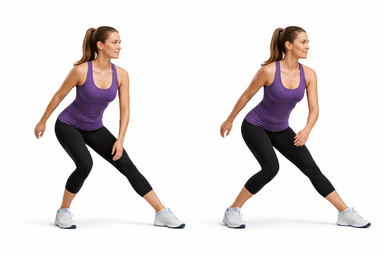
How to
A low-impact side-to-side skate that trains your legs and glutes while building lateral control.
- Stand tall with feet hip-width apart and knees soft.
- Step wide to one side and bend that knee slightly.
- Tap your other foot behind or beside you for balance.
- Push off the bent leg and step to the other side.
- Keep alternating sides with smooth control.
- Keep your chest lifted
- Land softly with a bent knee
- Letting your knee collapse inward
- Twisting your hips instead of moving side to side
Technique Prep
Smooth pushes, full recovery under hips, stable torso.
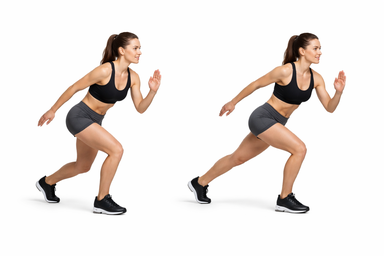
How to
A side-to-side stride drill that trains your glutes, legs, and lateral control.
- Stand tall with feet hip-width apart and knees slightly bent.
- Push off your left foot and step or glide to the right.
- Land softly on your right foot, keeping your chest up.
- Push off your right foot and move back to the left.
- Alternate sides with smooth, controlled strides.
- Keep your hips level.
- Land softly with a bent knee.
- Letting your knee cave inward on landing.
- Twisting your shoulders side to side.
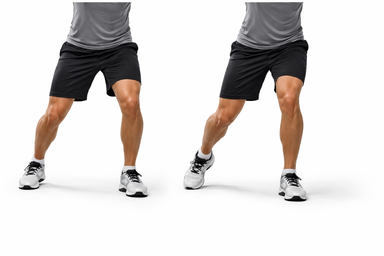
How to
A dynamic crossover drill that trains coordination, agility, and hip control.
- Stand tall with feet under you.
- Step one foot across your body and shift your weight.
- Push off and cross the other foot over.
- Keep alternating sides at a quick, smooth pace.
- Stay light on your feet
- Keep your chest up
- Twisting your torso too much
- Letting your feet cross and tangle
Technique-Speed Intervals
Work: strong edges and quick recovery. Rest: easy glide.
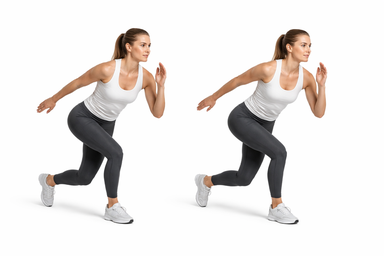
How to
A lateral skating move that trains your legs and glutes while raising your heart rate.
- Stand with feet hip-width apart and knees slightly bent.
- Push off one foot and hop sideways to the other foot.
- Land softly with your knee bent and your free leg behind you.
- Push back the other way and keep alternating sides.
- Move at a steady pace for the interval.
- Land softly
- Keep your chest up
- Letting your knee cave inward
- Landing stiff-legged
How to
A low-impact side-to-side skate that trains your legs and glutes while building lateral control.
- Stand tall with feet hip-width apart and knees soft.
- Step wide to one side and bend that knee slightly.
- Tap your other foot behind or beside you for balance.
- Push off the bent leg and step to the other side.
- Keep alternating sides with smooth control.
- Keep your chest lifted
- Land softly with a bent knee
- Letting your knee collapse inward
- Twisting your hips instead of moving side to side
Fast Finish
Slightly higher intensity; keep form clean. Rest is easy glide.
How to
A lateral skating move that trains your legs and glutes while raising your heart rate.
- Stand with feet hip-width apart and knees slightly bent.
- Push off one foot and hop sideways to the other foot.
- Land softly with your knee bent and your free leg behind you.
- Push back the other way and keep alternating sides.
- Move at a steady pace for the interval.
- Land softly
- Keep your chest up
- Letting your knee cave inward
- Landing stiff-legged
How to
A low-impact side-to-side skate that trains your legs and glutes while building lateral control.
- Stand tall with feet hip-width apart and knees soft.
- Step wide to one side and bend that knee slightly.
- Tap your other foot behind or beside you for balance.
- Push off the bent leg and step to the other side.
- Keep alternating sides with smooth control.
- Keep your chest lifted
- Land softly with a bent knee
- Letting your knee collapse inward
- Twisting your hips instead of moving side to side
Cool-Down
Bring heart rate down and reset technique with relaxed skating.
How to
A low-impact side-to-side skate that trains your legs and glutes while building lateral control.
- Stand tall with feet hip-width apart and knees soft.
- Step wide to one side and bend that knee slightly.
- Tap your other foot behind or beside you for balance.
- Push off the bent leg and step to the other side.
- Keep alternating sides with smooth control.
- Keep your chest lifted
- Land softly with a bent knee
- Letting your knee collapse inward
- Twisting your hips instead of moving side to side

Why Crossovers Build Real Speed
Crossover Drill targets the hip abductors and adductors in a way no straight-line drill can, training the lateral force production that generates centripetal acceleration through turns. Skating Stride Drill reinforces full glute and quad extension, maximizing each push cycle's power output. Together, they address both linear and rotational skating mechanics.

What Ice Demands From Your Hips
Speed skating punishes hip flexor tightness and rewards deep single-leg stability — your edge control lives in the gluteus medius, not your quads. The low skating posture sustained through Skating Intervals creates prolonged isometric demand on the hip extensors and spinal erectors that most athletes underestimate. Fatigue here is why form collapses in the final laps, not cardiovascular failure.

Interval Density at the 25-Minute Mark
This session uses an on-ice warm-up to elevate core temperature before neuromuscular demands peak in the Skating Interval block — a deliberate sequencing choice that reduces injury risk and primes fast-twitch recruitment. The compressed 25-minute window applies the principle of quality over volume, keeping intensity honest. Personalize it by tracking your interval split times and targeting a 3–5%