
Clean & Minimal AI Powered Fitness Routines
Download AppIntermediate Rock Climbing Session
A 25-minute climbing-focused warm-up, strength, and mobility routine to support better movement on the wall.
Intermediate Rock Climbing Session
A 25-minute climbing-focused warm-up, strength, and mobility routine to support better movement on the wall.
Warm-Up
Prepare shoulders, elbows, and wrists for pulling and gripping. Focus on shoulders, wrists, and scapula.
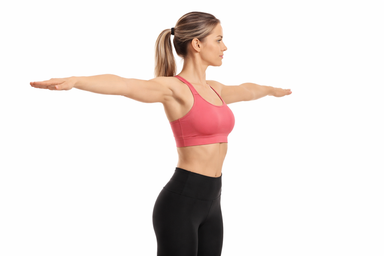
How to
A simple shoulder warm-up that moves both arms in circles and trains shoulder control.
- Stand tall with your feet about hip-width apart.
- Raise both arms out to your sides at shoulder height.
- Make small, controlled circles with both arms.
- Keep circling for the set time, then reverse direction if told.
- Lower your arms to finish.
- Keep your ribs down
- Move smoothly, not fast
- Shrugging your shoulders toward your ears
- Arching your back to keep the arms up
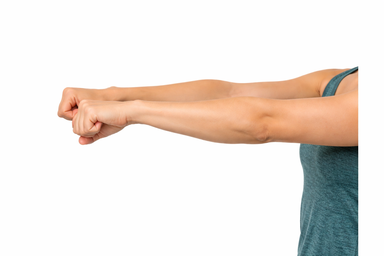
How to
A gentle wrist mobility drill that moves both wrists through circles to warm your forearms and hands.
- Stand or sit tall with your arms relaxed and elbows bent.
- Make slow circles with both wrists in one direction.
- Keep the movement smooth and controlled.
- Reverse direction and circle both wrists the other way.
- Move through a comfortable range
- Keep your shoulders relaxed
- Forcing a painful range
- Moving too fast or jerky
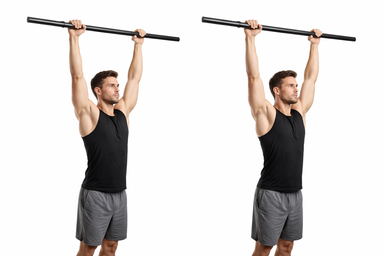
How to
A small pull-up prep that trains shoulder blade control and upper back strength from a dead hang.
- Hang from a bar with hands overhand and arms straight.
- Brace your body and let your shoulders rise toward your ears.
- Pull your shoulder blades down to lift your chest slightly.
- Keep your elbows straight as you pause at the top.
- Lower under control back to the hang and repeat.
- Move from your shoulder blades.
- Keep your ribs down.
- Bending your elbows to turn it into a pull-up.
- Swinging your body between reps.
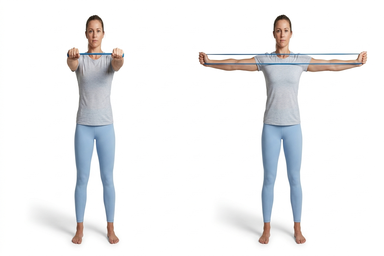
How to
A band upper-back move that trains your rear shoulders and mid-back.
- Stand tall and hold a band at chest height with both hands.
- Start with arms straight and hands shoulder-width apart.
- Pull the band apart until your hands move out to your sides.
- Pause briefly with shoulder blades squeezed together.
- Control the band back to the start and repeat.
- Keep your ribs down.
- Move from your shoulders, not your lower back.
- Shrugging your shoulders toward your ears.
- Arching your back to finish the pull.
Main Work
Build climbing-specific strength: grip endurance, scapular control, and trunk tension. Covers grip, pull, and core work.
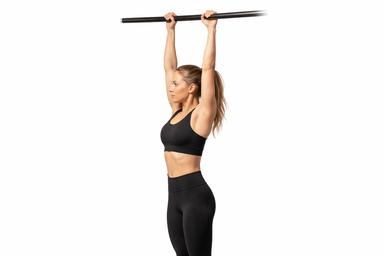
How to
A two-hand hang from an overhead bar that trains grip and upper-body hanging strength.
- Grip a sturdy overhead bar with both hands.
- Step or jump up so your arms are straight and feet are off the floor.
- Let your body hang long, with your ribs down.
- Hold for the set time and breathe slowly.
- Step down with control.
- Keep your grip firm.
- Stay still from shoulders to feet.
- Swinging or kicking your legs.
- Holding your breath during the hold.
How to
A small pull-up prep that trains shoulder blade control and upper back strength from a dead hang.
- Hang from a bar with hands overhand and arms straight.
- Brace your body and let your shoulders rise toward your ears.
- Pull your shoulder blades down to lift your chest slightly.
- Keep your elbows straight as you pause at the top.
- Lower under control back to the hang and repeat.
- Move from your shoulder blades.
- Keep your ribs down.
- Bending your elbows to turn it into a pull-up.
- Swinging your body between reps.
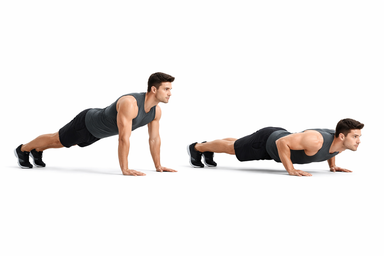
How to
A bodyweight press that trains your chest, shoulders, triceps, and core.
- Start in a high plank with hands just wider than shoulders.
- Brace your core and keep your body in a straight line.
- Bend your elbows and lower your chest toward the floor.
- Press the floor away until your arms are straight again.
- Repeat for your reps.
- Keep your ribs down
- Move your body as one piece
- Letting your hips sag
- Flaring your elbows straight out
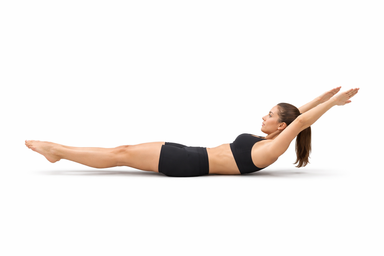
How to
A core hold on your back that trains bracing and body tension.
- Lie on your back with arms overhead and legs straight.
- Press your lower back into the floor and brace your core.
- Lift your shoulders, arms, and legs slightly off the floor.
- Hold the shape and breathe with control.
- Lower to the floor when the hold is done.
- Keep your lower back pressed down
- Reach long through hands and toes
- Letting your lower back arch off the floor
- Holding your breath
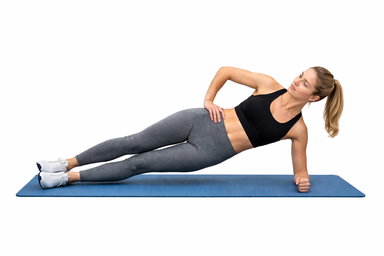
How to
A side hold that trains your obliques, hips, and shoulder stability.
- Lie on one side with your elbow under your shoulder and legs stacked.
- Lift your hips until your body forms a straight line.
- Hold the position and breathe steadily.
- Lower your hips with control.
- Finish your hold, then switch sides.
- Keep your hips stacked
- Press the floor away
- Letting your hips sag
- Rolling your chest toward the floor
Cool-Down
Reduce forearm tightness and relax shoulders after gripping/pulling. Focus on forearms and lats.
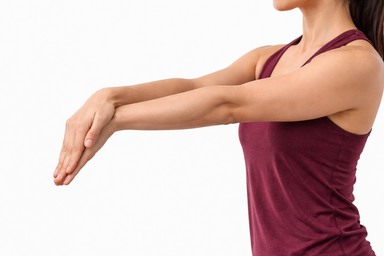
How to
A forearm stretch that targets the wrist extensors on the top side of your forearm.
- Extend one arm in front of you with your palm facing down.
- Use your other hand to gently bend your wrist down.
- Keep your elbow straight and shoulders relaxed.
- Hold the stretch and breathe slowly.
- Release gently, then switch sides.
- Keep the stretch gentle
- Relax your shoulder
- Forcing the wrist too far
- Bending the elbow during the hold
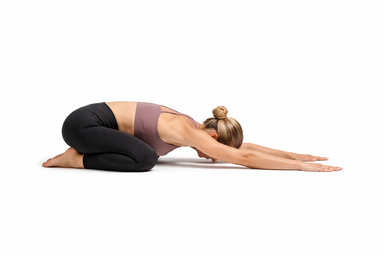
How to
A kneeling rest pose that gently stretches your back, hips, and shoulders.
- Kneel on the floor with your big toes together and knees apart.
- Sit your hips back toward your heels.
- Fold forward and reach your arms in front of you.
- Rest your forehead down and let your chest sink between your thighs.
- Hold the position and breathe slowly.
- Relax your shoulders
- Breathe into your back
- Forcing your hips down
- Holding your breath

Scapular Control as Your Movement Foundation
Scapular pull-ups directly train serratus anterior and lower trapezius — the muscles that stabilize your shoulder blade against the ribcage during every reach and lock-off on the wall. Dead hangs complement this by loading the passive structures of the shoulder under full bodyweight, building the connective tissue resilience that prevents the chronic shoulder impingement climbers develop from year

The Forearm Asymmetry Problem in Climbing
Climbing creates a severe strength imbalance between forearm flexors and extensors — your crimping muscles get relentlessly trained while the antagonists atrophy, leading to elbow tendinopathy and pulley strain. The band pull-apart and forearm extensor stretch here directly address this ratio, keeping the extensor chain functional and protecting the A2 pulley structures that take the most abuse on

Structuring 25 Minutes for Actual Transfer
This session front-loads mobility at the wrist and scapula before any loaded movement, which maps directly to the specificity principle — your joints need their full range before you train strength through that range. If this feels too easy, extend dead hang sets by 5-second increments weekly; if grip fatigue lingers into the next day, reduce hang duration and prioritize the hollow hold as your pr