
Clean & Minimal AI Powered Fitness Routines
Download AppWall-Supported Balance Builder
A gentle progression to rebuild single-leg balance, posture, and control with steady wall support.
Wall-Supported Balance Builder
A gentle progression to rebuild single-leg balance, posture, and control with steady wall support.
Warm-up
Prep your lower body with gentle balance and hip movement before standing work.
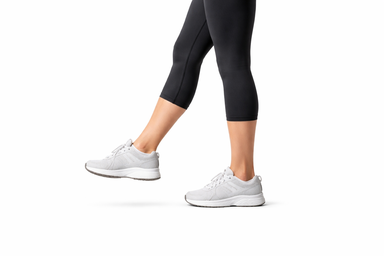
How to
A simple ankle mobility move that warms up your ankle through a full circle.
- Sit or stand tall and lift one foot slightly off the floor.
- Slowly circle your ankle in one direction.
- Reverse the circle and keep the motion smooth.
- Finish your reps, then switch legs.
- Move from your ankle, not your knee
- Keep the circles slow and controlled
- Rushing through small, choppy circles
- Letting your whole leg swing around
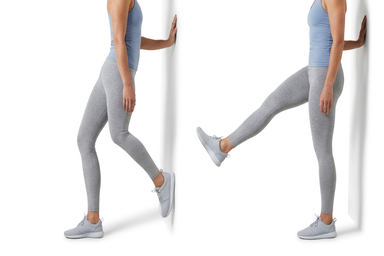
How to
A dynamic hip mobility move that swings each leg to warm up your hips, glutes, and hamstrings.
- Stand tall beside a wall or stable support.
- Brace lightly and shift your weight to one foot.
- Swing the other leg forward and back under control.
- Place it down, then repeat with the other leg.
- Alternate legs for the set.
- Keep your torso tall
- Move from the hip
- Arching your back to swing higher
- Letting the leg swing out of control
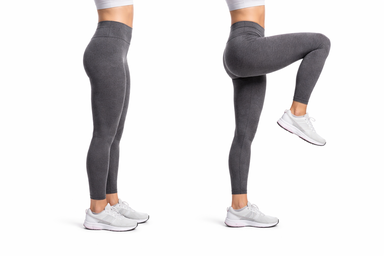
How to
A standing knee lift that warms up your hips, core, and balance.
- Stand tall with your feet hip-width apart and arms at your sides.
- Lift one knee toward hip height as the opposite arm swings forward.
- Lower that foot with control, then lift the other knee.
- Keep alternating sides at a steady marching pace.
- Stand tall through your chest
- Land softly under your hips
- Leaning back as you lift your knee
- Stomping your feet down
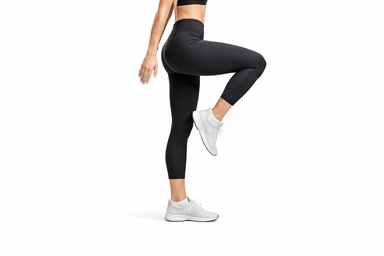
How to
A one-leg balance hold that trains stability in your foot, ankle, and hip.
- Stand tall with feet hip-width apart and arms relaxed.
- Shift your weight onto one foot and lift the other foot off the floor.
- Hold steady and breathe, keeping your body tall.
- Lower your foot with control when the hold is done.
- Finish your hold, then switch legs.
- Keep your hips level
- Stand tall through your crown
- Leaning your torso far to one side
- Letting your lifted foot rest on the floor
How to
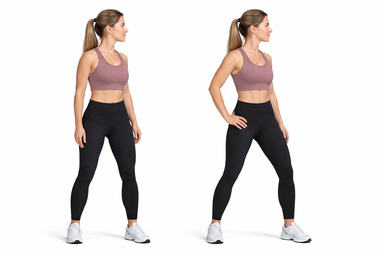
A simple balance drill that shifts your weight from foot to foot to train control and stability.
- Stand tall with your feet hip-width apart.
- Shift your weight slowly onto one foot.
- Let the other foot get light, but keep it near the floor.
- Shift back through center and repeat to the other side.
- Move slowly and stay tall.
- Keep your hips level.
- Leaning your chest far to the side.
- Rushing the shift or losing control.
Grounding Shifts
Keep one hand on the wall and shift slowly without leaning.
How to
A simple balance drill that shifts your weight from foot to foot to train control and stability.
- Stand tall with your feet hip-width apart.
- Shift your weight slowly onto one foot.
- Let the other foot get light, but keep it near the floor.
- Shift back through center and repeat to the other side.
- Move slowly and stay tall.
- Keep your hips level.
- Leaning your chest far to the side.
- Rushing the shift or losing control.
Kickstand Holds
Lightly unload one foot and keep your gaze level.
How to
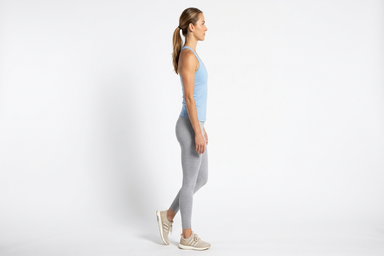
A staggered-stance hold that trains balance and control through your hips, legs, and core.
- Stand with one foot forward and the other foot back on the toes.
- Keep most of your weight in the front foot.
- Soften both knees and stand tall with your ribs stacked over your hips.
- Hold the position and breathe steadily.
- Finish the hold, then switch legs.
- Keep your hips square.
- Keep the back foot light.
- Leaning too far onto the back foot.
- Letting the front knee cave inward.
Supported Stance
Lift the free foot slightly and use fingertip support as needed.
How to
A one-leg balance hold that trains stability in your foot, ankle, and hip.
- Stand tall with feet hip-width apart and arms relaxed.
- Shift your weight onto one foot and lift the other foot off the floor.
- Hold steady and breathe, keeping your body tall.
- Lower your foot with control when the hold is done.
- Finish your hold, then switch legs.
- Keep your hips level
- Stand tall through your crown
- Leaning your torso far to one side
- Letting your lifted foot rest on the floor
March Control
Alternate slow knee lifts while staying tall and quiet through the trunk.
How to
A standing knee lift that warms up your hips, core, and balance.
- Stand tall with your feet hip-width apart and arms at your sides.
- Lift one knee toward hip height as the opposite arm swings forward.
- Lower that foot with control, then lift the other knee.
- Keep alternating sides at a steady marching pace.
- Stand tall through your chest
- Land softly under your hips
- Leaning back as you lift your knee
- Stomping your feet down

Why Each Exercise Earns Its Place
Weight Shifts and Kickstand Stances progressively load the soleus and tibialis anterior before demanding full single-leg activation, priming proprioceptive pathways without overloading stabilizers. Ankle Circles restore talocrural joint mobility, directly reducing the compensatory hip-hiking that undermines clean Single-Leg Stands.

Balance Is a Neuromuscular Skill
Single-leg stability degrades faster than strength after inactivity, injury, or aging — because it's the nervous system, not just muscle, that needs retraining. Standing March challenges your vestibular and somatosensory systems simultaneously, the exact combination that makes everyday terrain feel unpredictable and unsafe.

Wall Support Is a Tool, Not a Crutch
The wall contact here follows a fading assistance model — your hands provide only as much input as needed, allowing your ankle and hip stabilizers to do real work without fear of falling. As Single-Leg Stands feel steady, shift from full palm contact to fingertip touch to progressively reduce external feedback and accelerate neuromuscular independence.