
Clean & Minimal AI Powered Fitness Routines
Download AppIntermediate Surgeon Operating Room Routine
A 25-minute posture, shoulder, and core routine to offset long hours standing, leaning forward, and fine-motor work in the OR.
Intermediate Surgeon Operating Room Routine
A 25-minute posture, shoulder, and core routine to offset long hours standing, leaning forward, and fine-motor work in the OR.
Warm-Up
Reduce forward-head posture and open the upper back before strengthening work. Posture reset focus.
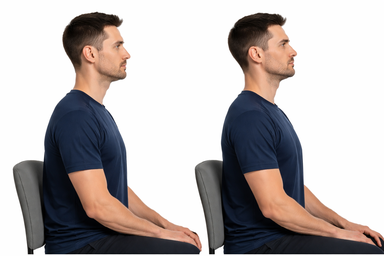
How to
An isometric neck exercise that trains deep neck control with a gentle chin tuck.
- Sit or stand tall with your eyes level.
- Gently draw your chin straight back, making a small double chin.
- Hold the tuck and breathe steadily.
- Relax back to neutral with control.
- Keep your gaze level
- Move straight back, not down
- Tilting your head up or down
- Forcing the tuck or holding your breath
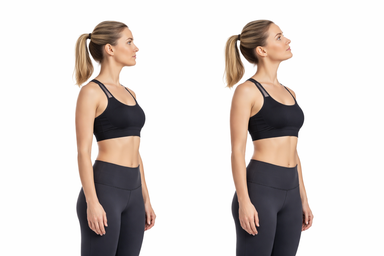
How to
A gentle side-bend stretch for the side of your neck, held still while you breathe.
- Sit or stand tall with your shoulders relaxed.
- Let your right ear move toward your right shoulder.
- Hold the stretch and breathe slowly.
- Return to center, then switch sides.
- Keep both shoulders down.
- Move slowly and gently.
- Lifting the shoulder toward your ear.
- Forcing your head into the stretch.
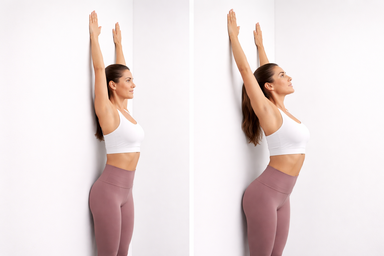
How to
A wall-supported upper-back extension hold that trains thoracic mobility and posture control.
- Stand facing a wall and place your forearms on it at shoulder width.
- Step back and hinge at your hips until your chest lowers.
- Press your forearms into the wall and sink your chest between your arms.
- Hold the position and breathe slowly.
- Walk back in and stand tall to finish.
- Keep your ribs gently tucked.
- Keep your neck long.
- Arching through your lower back.
- Shrugging your shoulders toward your ears.
Circuit A
Scapula and rotator cuff work. Keep ribs down; avoid shrugging. Use light-to-moderate band tension.
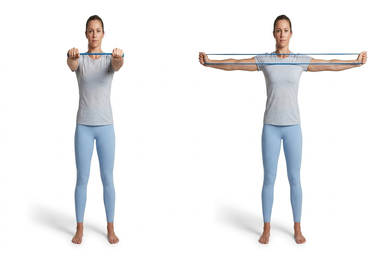
How to
A band upper-back move that trains your rear shoulders and mid-back.
- Stand tall and hold a band at chest height with both hands.
- Start with arms straight and hands shoulder-width apart.
- Pull the band apart until your hands move out to your sides.
- Pause briefly with shoulder blades squeezed together.
- Control the band back to the start and repeat.
- Keep your ribs down.
- Move from your shoulders, not your lower back.
- Shrugging your shoulders toward your ears.
- Arching your back to finish the pull.
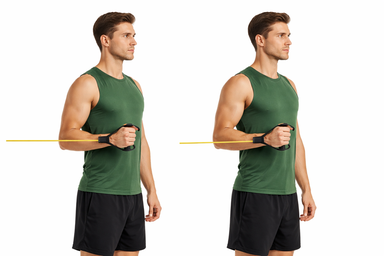
How to
A one-arm band rotation that trains your shoulder rotators.
- Stand tall with the band at your side and elbow bent 90 degrees.
- Keep your elbow tucked to your side.
- Rotate your forearm outward against the band.
- Slowly return to start under control.
- Finish your reps, then switch sides.
- Keep your elbow pinned to your side
- Move only your forearm
- Letting your elbow drift away from your body
- Twisting your torso to cheat the rep
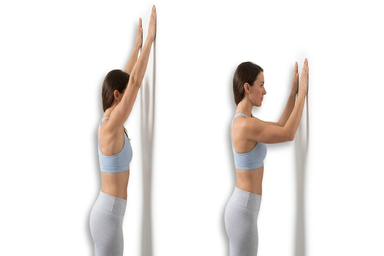
How to
A wall-based shoulder move that trains shoulder control and upper-back posture.
- Stand with your back to a wall and feet a small step out.
- Press your head, upper back, and hips gently into the wall.
- Place your arms on the wall in a goalpost shape.
- Slide your arms up the wall as far as you can control.
- Slide back down to the start and repeat.
- Keep your ribs down.
- Move slowly and stay in control.
- Arching your lower back to reach higher.
- Shrugging your shoulders toward your ears.
Circuit B
Core and posterior chain work. Slow tempo; exhale as you extend/brace. Maintain neutral spine.
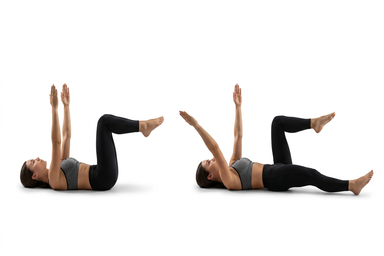
How to
A core move on your back that trains control while you move opposite arm and leg.
- Lie on your back with arms up and knees bent over hips.
- Press your lower back gently toward the floor.
- Lower one arm and the opposite leg with control.
- Return to the start, then repeat on the other side.
- Keep alternating sides for each rep.
- Move slow and stay braced
- Keep your ribs down
- Letting your lower back arch
- Rushing through the reps
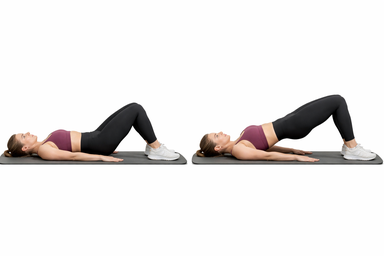
How to
A floor hip lift that trains your glutes and hamstrings with both feet planted.
- Lie on your back with knees bent and feet flat, hip-width apart.
- Brace your core and press your arms lightly into the floor.
- Drive through your heels and lift your hips until your body forms a straight line.
- Squeeze your glutes at the top, then lower with control.
- Repeat for your reps.
- Keep your ribs down
- Drive through your heels
- Arching your lower back at the top
- Pushing through your toes
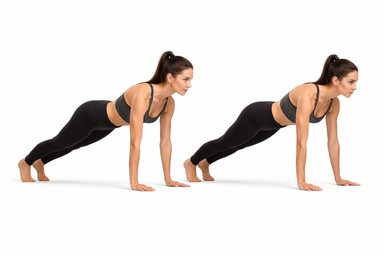
How to
A straight-arm push-up variation that trains shoulder blade control and upper back stability.
- Start in a high plank with hands under shoulders and arms straight.
- Let your chest sink slightly as your shoulder blades move together.
- Push the floor away to spread your shoulder blades apart.
- Keep your body in one straight line as you repeat.
- Keep your elbows straight
- Move only at your shoulder blades
- Bending your elbows like a regular push-up
- Letting your hips sag or pike
Lateral Core Finisher
Stay long through the crown of your head; keep hips stacked.
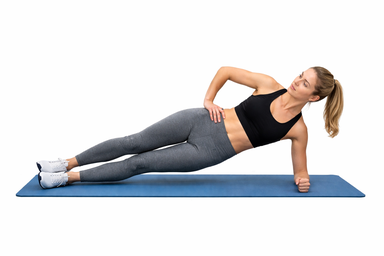
How to
A side hold that trains your obliques, hips, and shoulder stability.
- Lie on one side with your elbow under your shoulder and legs stacked.
- Lift your hips until your body forms a straight line.
- Hold the position and breathe steadily.
- Lower your hips with control.
- Finish your hold, then switch sides.
- Keep your hips stacked
- Press the floor away
- Letting your hips sag
- Rolling your chest toward the floor
Wrist + Forearm Release
Gentle stretch only—no pinching in the wrist.
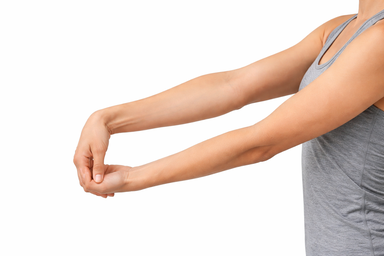
How to
A forearm stretch that targets the wrist flexors on one arm at a time.
- Extend one arm in front of you with palm up.
- Keep your elbow straight and shoulder relaxed.
- Use your other hand to gently pull your fingers back and down.
- Hold the stretch and breathe slowly.
- Release, then switch arms.
- Keep the pull gentle
- Do not lock your elbow hard
- Shrugging your shoulder
- Forcing the wrist into pain
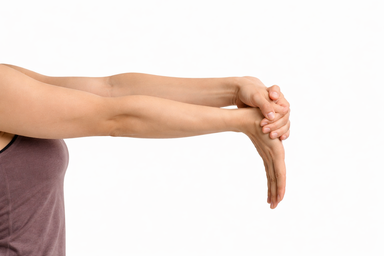
How to
A held forearm stretch that targets the wrist extensors along the top of your forearm.
- Extend one arm in front of you with your palm facing down.
- Use your other hand to gently bend your wrist and fingers down.
- Hold the stretch and breathe slowly.
- Release with control, then switch sides.
- Keep your elbow straight but not locked.
- Use gentle pressure only.
- Pulling into sharp pain.
- Shrugging your shoulder as you hold.
Final Neck Reset
Finish tall; shoulders relaxed.
How to
An isometric neck exercise that trains deep neck control with a gentle chin tuck.
- Sit or stand tall with your eyes level.
- Gently draw your chin straight back, making a small double chin.
- Hold the tuck and breathe steadily.
- Relax back to neutral with control.
- Keep your gaze level
- Move straight back, not down
- Tilting your head up or down
- Forcing the tuck or holding your breath
How to
A gentle side-bend stretch for the side of your neck, held still while you breathe.
- Sit or stand tall with your shoulders relaxed.
- Let your right ear move toward your right shoulder.
- Hold the stretch and breathe slowly.
- Return to center, then switch sides.
- Keep both shoulders down.
- Move slowly and gently.
- Lifting the shoulder toward your ear.
- Forcing your head into the stretch.

Reversing the OR Posture Pattern
Chin tucks and wall thoracic extensions directly counter the sustained cervical protrusion and thoracic flexion that come from hours over a surgical field. Band pull aparts and wall slides then retrain the lower trapezius and serratus anterior—the exact muscles that go silent when shoulders round forward under prolonged fine-motor demand.

What the OR Actually Does to Your Body
Sustained static loading in a forward-flexed stance compresses the thoracic discs, inhibits glute activation, and overloads the wrist flexors through constant instrument tension—often without the surgeon noticing fatigue until it's chronic. The asymmetry of dominant-hand precision work also creates rotator cuff imbalances that accumulate across years of cases.

25 Minutes Structured Around Tissue Priority
The sequencing follows a proximal-to-distal logic: restore spinal and scapular mechanics first with dead bugs and scapular push-ups before addressing the wrists, so distal mobility gains aren't limited by upstream tension. If one area demands more attention—say, wrist extensors after a long laparoscopic case—extend the cool-down stretches to 60-second holds on those tissues.