
Clean & Minimal AI Powered Fitness Routines
Download AppDaily Hamstring and Calf Reset
Two gentle holds to loosen the backs of your legs every day.
Daily Hamstring and Calf Reset
Two gentle holds to loosen the backs of your legs every day.
Warm-up
Loosen hamstrings and calves with gentle mobility and dynamic prep.
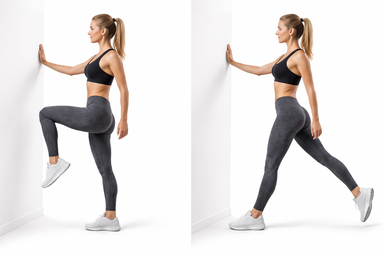
How to
A dynamic leg swing that warms up your hips, hamstrings, and hip flexors while challenging balance.
- Stand tall beside a wall or rail and use light support.
- Shift your weight to one foot and brace your core.
- Swing the other leg forward, then back in a smooth arc.
- Set it down and alternate legs each rep.
- Keep your torso tall
- Move from your hip
- Leaning back to kick higher
- Swinging with a bent, loose posture
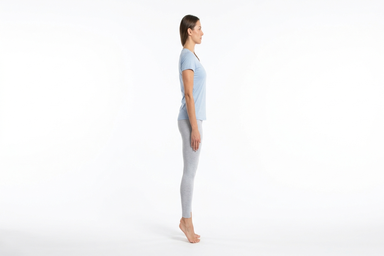
How to
A standing calf raise hold that trains your calves and foot control.
- Stand tall with feet hip-width apart and hands on a wall or rail if needed.
- Press through the balls of both feet and lift your heels as high as you can.
- Hold at the top with steady pressure through your big toes.
- Breathe slowly and keep your knees straight but not locked.
- Lower your heels with control to finish.
- Stay tall through your hips
- Keep weight over your big toes
- Letting your ankles roll outward
- Bouncing instead of holding still

How to
A bridge walkout that trains your hamstrings, glutes, and core control.
- Lie on your back with knees bent and heels under your knees.
- Lift your hips into a bridge and brace your core.
- Walk your heels away in small steps until your legs are almost straight.
- Walk your heels back under your knees with hips lifted.
- Lower your hips and repeat.
- Keep your hips level.
- Move with small, controlled steps.
- Letting your hips sag as you walk out.
- Arching your lower back at the top.
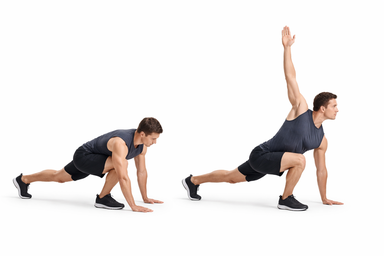
How to
A dynamic lunge stretch that opens your hips, hamstrings, and upper back as you alternate sides.
- Start in a high plank with hands under shoulders.
- Step your right foot outside your right hand.
- Drop your hips, then rotate your right arm up toward the ceiling.
- Place your hand down and step back to plank.
- Repeat on the left side, alternating sides each rep.
- Keep your front foot flat.
- Reach long through your top hand.
- Letting your front heel lift off the floor.
- Rushing the rotation without control.
Back of Leg Flexibility
Use simple static holds to open the hamstrings and calves.
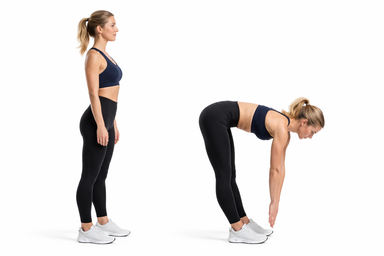
How to
A held stretch for the back of your thigh that targets your hamstrings.
- Sit tall with your target leg straight and toes up.
- Hinge at your hips and reach toward your foot.
- Stop when you feel a gentle stretch behind your thigh.
- Hold the stretch and breathe slowly.
- Release slowly, then switch sides if stretching one leg.
- Keep your back long.
- Hinge from your hips.
- Rounding your back to reach farther.
- Bouncing in the stretch.
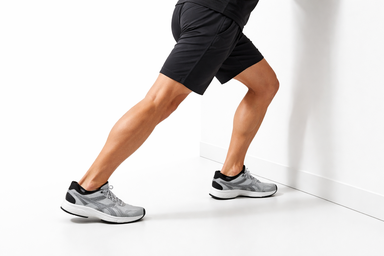
How to
A standing calf stretch that targets the back of your lower leg with a steady hold.
- Stand facing a wall and place your hands on it.
- Step one foot back and keep that heel on the floor.
- Bend your front knee until you feel a calf stretch.
- Hold and breathe slowly without bouncing.
- Finish the hold, then switch legs.
- Keep your back heel down
- Point both toes forward
- Bouncing in the stretch
- Letting the back heel lift

Tension-to-Length Ratio in Posterior Chain
Hamstring Walkouts load the hamstrings eccentrically while Leg Swings groove dynamic range through the hip flexor-hamstring opposition. Together they address both passive length and active motor control — the two failure points that cause posterior chain tightness to return daily.

Why Your Calves Never Stay Loose
The soleus and gastrocnemius attach above and below the knee, meaning seated posture shortens both simultaneously. Standing Calf Raise Isometrics rebuild resting tone at end-range, training the tissue to hold length rather than just borrow it temporarily during a stretch.

Daily Reset Requires Neural Priming First
The World's Greatest Stretch opens the hip capsule and thoracic rotation before isolated posterior chain work, ensuring your nervous system isn't guarding the tissue you're trying to lengthen. Shorten rest between movements to under 20 seconds to maintain the parasympathetic state that makes daily flexibility work actually accumulate.