
Clean & Minimal AI Powered Fitness Routines
Download AppIntermediate Post-Concussion Return Routine
A gradual return-to-activity session combining light cardio, balance, and neck/upper-back mobility in ~25 minutes.
Intermediate Post-Concussion Return Routine
A gradual return-to-activity session combining light cardio, balance, and neck/upper-back mobility in ~25 minutes.
Warm-Up
Settle symptoms, mobilize spine/neck, and prepare for light activity without provoking dizziness. Mobility and calm start focus.
How to
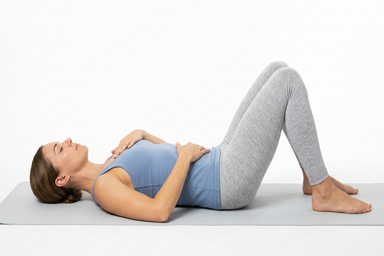
A slow breathing drill that trains relaxed belly breathing and helps you control your breath.
- Lie on your back or sit tall with one hand on your belly.
- Inhale through your nose and let your belly rise.
- Exhale slowly and let your belly fall.
- Keep your chest and shoulders quiet.
- Continue for the set time with smooth breaths.
- Breathe low into your belly
- Keep your shoulders relaxed
- Shrugging your shoulders as you inhale
- Forcing the breath or holding tension
How to
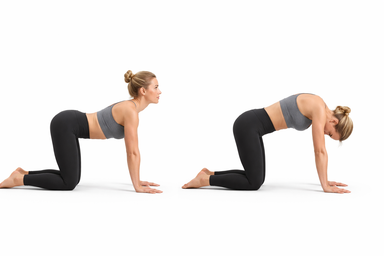
A gentle spine mobility move that alternates rounding and arching your back on hands and knees.
- Start on hands and knees with wrists under shoulders and knees under hips.
- Inhale and drop your belly as you lift your chest and tailbone.
- Exhale and round your back, tucking your chin and tailbone.
- Move slowly between both positions with your breath.
- Move one vertebra at a time.
- Keep your shoulders away from your ears.
- Forcing your neck up or down.
- Rushing through the movement.
How to
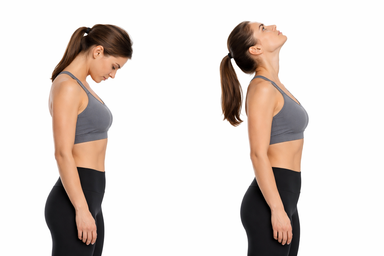
A gentle neck mobility drill that moves your head through flexion, rotation, and side bends.
- Sit or stand tall with your shoulders relaxed.
- Lower your chin toward your chest, then return to center.
- Turn your head slowly left and right, returning to center each time.
- Tilt one ear toward your shoulder, then repeat on the other side.
- Move smoothly and breathe as you continue for the set time.
- Move slowly and stay relaxed
- Keep your shoulders down
- Forcing past a comfortable range
- Shrugging your shoulders as you move
Circuit A
Keep effort moderate; take extra rest if symptoms rise above baseline.
How to
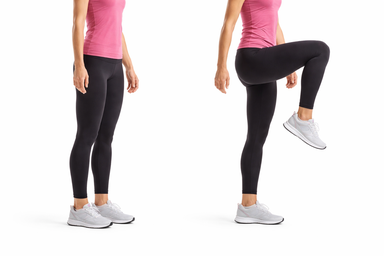
A low-impact cardio move that warms up your legs and hips while raising your heart rate.
- Stand tall with your feet hip-width apart and arms at your sides.
- Lift one knee to hip height as you swing the opposite arm forward.
- Lower that foot, then lift the other knee and switch arms.
- Keep alternating sides at a steady pace.
- Slow down and plant both feet to finish.
- Stand tall with your chest up
- Land softly under your hips
- Leaning back as you lift your knees
- Stomping your feet on each step
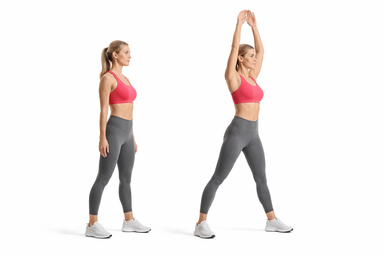
How to
A low-impact jack variation that trains your legs, shoulders, and coordination.
- Stand tall with feet together and arms at your sides.
- Step one foot out as you sweep both arms overhead.
- Step back to center as you lower your arms.
- Repeat to the other side and keep a steady rhythm.
- Stay light on your feet.
- Keep your chest lifted.
- Letting your knees cave in as you step.
- Swinging your arms without control.
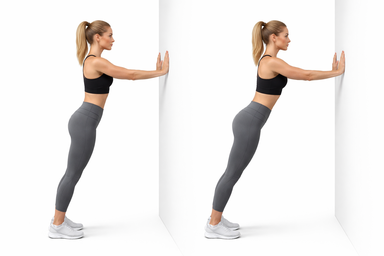
How to
A standing push-up against a wall that trains your chest, shoulders, and triceps.
- Stand facing a wall and place your hands at chest height.
- Step your feet back so your body forms a straight line.
- Bend your elbows and lower your chest toward the wall.
- Press the wall away to return to the start.
- Repeat for your planned reps.
- Keep your body straight
- Keep elbows about 45 degrees
- Letting your hips sag
- Shrugging your shoulders toward your ears
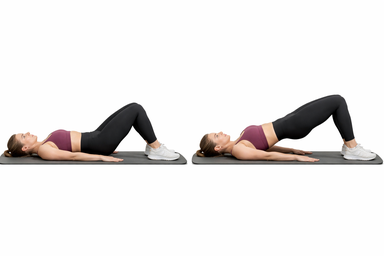
How to
A floor hip lift that trains your glutes and hamstrings with both feet planted.
- Lie on your back with knees bent and feet flat, hip-width apart.
- Brace your core and press your arms lightly into the floor.
- Drive through your heels and lift your hips until your body forms a straight line.
- Squeeze your glutes at the top, then lower with control.
- Repeat for your reps.
- Keep your ribs down
- Drive through your heels
- Arching your lower back at the top
- Pushing through your toes
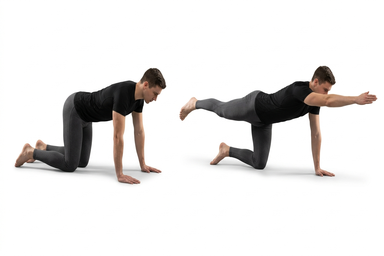
How to
A core stability move from all fours that trains your abs, back, glutes, and balance.
- Start on hands and knees with your hands under shoulders and knees under hips.
- Brace your core and keep your back flat.
- Reach one arm forward and the opposite leg back until they are straight.
- Pause briefly, then bring your hand and knee back under you.
- Repeat on the other side, alternating each rep.
- Keep your hips square
- Move slow and controlled
- Arching or sagging your lower back
- Rotating your hips as you reach
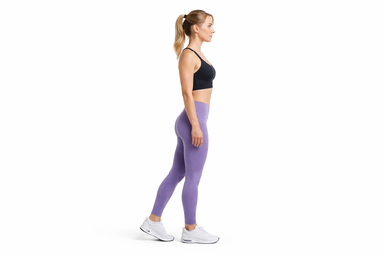
How to
A narrow heel-to-toe balance hold that trains steady posture and control.
- Stand tall near support if needed.
- Place one foot directly in front of the other, heel to toe.
- Keep your weight even and eyes forward.
- Hold the stance and breathe slowly.
- Stand tall through your head
- Keep your feet in one line
- Leaning your body to one side
- Looking down the whole time
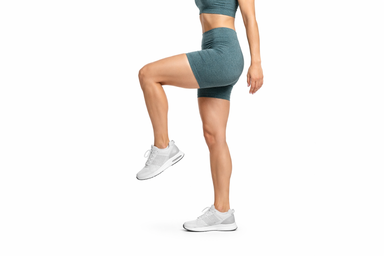
How to
A one-leg balance hold that trains foot, ankle, hip, and core control.
- Stand tall with your feet hip-width apart.
- Shift your weight onto one foot and lift the other foot off the floor.
- Hold steady and breathe slowly.
- Lower your foot with control.
- Finish your hold, then switch legs.
- Keep your hips level.
- Stand tall through your head.
- Leaning your body to one side.
- Letting your lifted foot touch down repeatedly.
Strength Reset
Controlled reps; exhale on effort. Use the chair for support if needed.
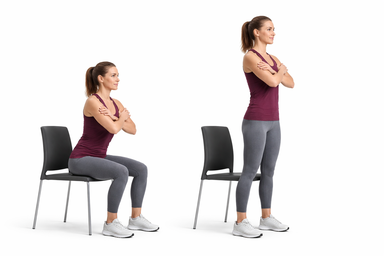
How to
A chair-based squat pattern that trains your thighs and glutes for standing strength.
- Sit near the front of a chair with feet flat and hip-width apart.
- Lean slightly forward and brace your core.
- Press through both feet and stand tall.
- Push your hips back and sit down with control.
- Keep your knees tracking over your toes
- Stand tall at the top
- Letting your knees cave inward
- Dropping hard onto the chair
Cool-Down
Downshift the nervous system and gently mobilize the upper back. Breathing and mobility focus.
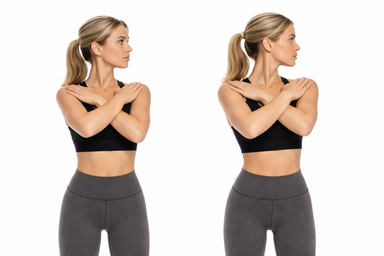
How to
A controlled upper-back rotation that trains thoracic mobility and trunk control.
- Sit or stand tall with your feet steady.
- Cross your arms over your chest or reach them forward.
- Rotate your chest to one side while your hips stay still.
- Return to center, then rotate to the other side.
- Move slowly and breathe through each turn.
- Keep your hips still
- Rotate through your upper back
- Letting your hips follow the turn
- Twisting mostly from your lower back
How to
A slow breathing drill that trains relaxed belly breathing and helps you control your breath.
- Lie on your back or sit tall with one hand on your belly.
- Inhale through your nose and let your belly rise.
- Exhale slowly and let your belly fall.
- Keep your chest and shoulders quiet.
- Continue for the set time with smooth breaths.
- Breathe low into your belly
- Keep your shoulders relaxed
- Shrugging your shoulders as you inhale
- Forcing the breath or holding tension

Vestibular Load Sequencing in Recovery
Diaphragmatic breathing and Cat-Cow prime the autonomic nervous system before any vestibular demand is introduced. Bird Dog and Single-Leg Stance progressively challenge the cerebellum's balance integration without triggering symptom spikes — each earns its place by adding postural complexity only after the nervous system is settled.

Why Concussion Recovery Isn't Just Rest
Post-concussion syndrome taxes the cervical spine's proprioceptive role in gaze stabilization — which is why Neck ROM and Thoracic Rotation appear here, not just for mobility. Sit to Stand and Glute Bridge restore neuromuscular sequencing in the kinetic chain, addressing the deconditioning that accumulates during symptom-driven inactivity.

Symptom-Threshold Training Explained
This routine is structured around the 'just below threshold' principle — effort stays sub-symptomatic so the brain adapts without inflammatory setback. Step Jacks replace jumping to control intracranial pressure fluctuation. If Tandem Stance feels easy with eyes open, close them to increase vestibular demand without changing a single exercise.