
Clean & Minimal AI Powered Fitness Routines
Download AppIntermediate Fencing Footwork & Conditioning
Footwork, blade-free conditioning, and agility work to support fencing performance.
Intermediate Fencing Footwork & Conditioning
Footwork, blade-free conditioning, and agility work to support fencing performance.
Warm-Up
Raise temperature and prep ankles/hips for fencing footwork. 5 minutes.
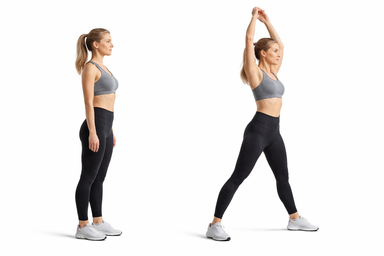
How to
A full-body cardio move that trains coordination, calves, shoulders, and hips.
- Stand tall with feet together and arms at your sides.
- Jump your feet out as you raise your arms overhead.
- Jump your feet back together as you lower your arms.
- Repeat at a steady pace, landing softly each time.
- Stay light on your toes
- Keep your chest tall
- Landing hard with locked knees
- Letting your arms swing out of control
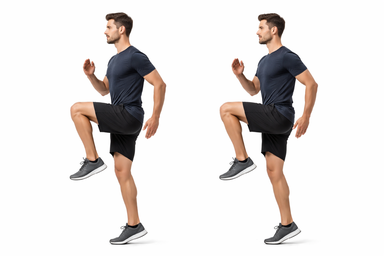
How to
A fast marching or running move that raises each knee to train your legs and raise your heart rate.
- Stand tall with feet under your hips and arms at your sides.
- Drive one knee up toward hip height as the opposite arm swings forward.
- Land softly on the ball of that foot.
- Switch quickly to the other knee and keep alternating.
- Keep a steady rhythm until the set ends.
- Stay tall through your chest
- Land light and quick
- Leaning back as your knees lift
- Stomping your feet into the floor
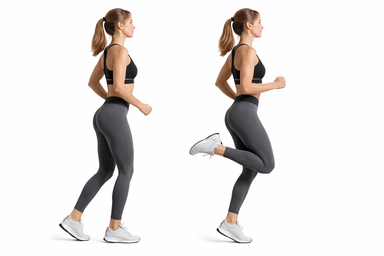
How to
A cardio drill where you jog in place and kick your heels toward your glutes. It warms your legs and raises your heart rate.
- Stand tall with your feet hip-width apart and arms relaxed.
- Jog in place, alternating heels up toward your glutes.
- Pump your arms naturally as your feet move quickly.
- Land softly on the balls of your feet each time.
- Slow down, then stand tall to finish.
- Stay tall through your chest
- Keep the steps light
- Leaning far forward as you kick
- Slapping your feet hard on the floor
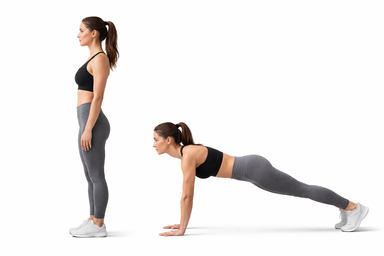
How to
A full-body walkout that trains your core, shoulders, and hamstrings.
- Stand tall with feet hip-width apart.
- Hinge at your hips and place your hands on the floor.
- Walk your hands forward to a high plank.
- Pause with your body in a straight line.
- Walk your hands back to your feet and stand up.
- Brace your core in the plank.
- Keep your legs as straight as you can.
- Letting your hips sag in the plank.
- Rushing the hand walkout.
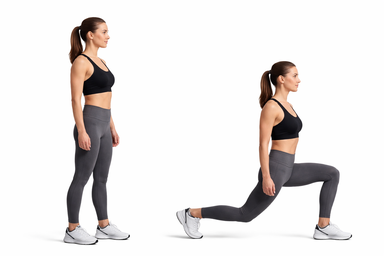
How to
A forward step lunge that trains your legs and glutes, one side at a time.
- Stand tall with your feet hip-width apart.
- Step one foot forward and plant it flat.
- Bend both knees until your back knee moves toward the floor.
- Push through your front foot to return to standing.
- Finish your reps, then switch legs.
- Keep your chest tall.
- Track your front knee over your toes.
- Letting your front knee cave inward.
- Pushing off your back foot to stand up.
Footwork Conditioning
Intervals to build fencing-specific legs and quick direction changes. 15 minutes.
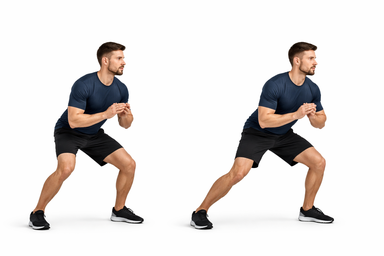
How to
A side-to-side cardio move that trains quick feet, hips, and legs.
- Stand with feet hip-width apart and knees slightly bent.
- Step quickly to one side, then bring your other foot in.
- Shuffle a few steps, staying low and light on your feet.
- Push off and shuffle back the other way.
- Keep alternating sides for the set.
- Stay low with your chest up
- Keep your feet quick and light
- Standing tall between shuffles
- Letting your feet cross over
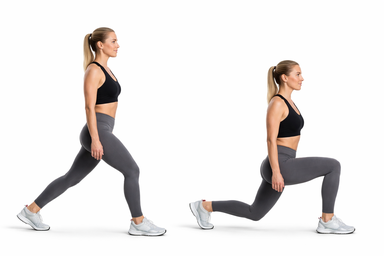
How to
A staggered-stance squat that trains your quads, glutes, and balance one leg at a time.
- Stand in a long split stance with your front foot flat.
- Keep your chest tall and bend both knees to lower down.
- Lower until your front thigh is near parallel, if comfortable.
- Press through your front foot to stand back up.
- Finish your reps, then switch legs.
- Keep your front knee tracking over your toes.
- Stay tall through your torso.
- Letting your front heel lift off the floor.
- Pushing your front knee far inward.
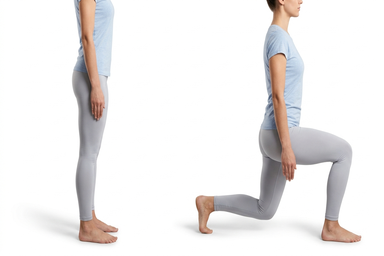
How to
A backward-stepping lunge that trains your quads, glutes, and balance.
- Stand tall with your feet hip-width apart.
- Step one foot back and lower until both knees bend.
- Push through your front foot to stand back up.
- Finish your reps, then switch legs.
- Keep your chest tall.
- Track your front knee over your toes.
- Letting your front knee cave inward.
- Pushing off the back foot to stand.
Finisher
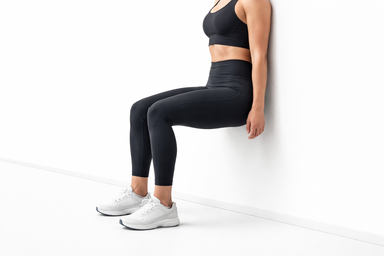
Stay steady—no bouncing on the wall sit.
How to
An isometric squat hold against a wall that trains your quads, glutes, and endurance.
- Stand with your back against a wall and feet hip-width apart.
- Walk your feet forward and slide down until your thighs are near parallel.
- Keep your back on the wall and knees over your ankles.
- Hold the position and breathe steadily.
- Stand up by pressing through your feet when finished.
- Keep your chest tall
- Press your back into the wall
- Letting your knees cave inward
- Holding your breath
Core Reset
Brace gently; keep hips level.
How to
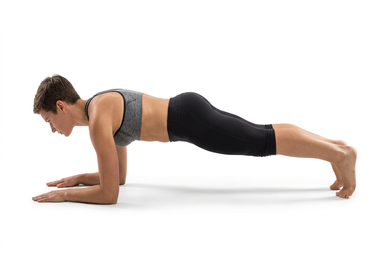
A core hold that trains your abs, shoulders, and glutes while you keep a straight body line.
- Place your forearms on the floor with elbows under shoulders.
- Step both feet back and lift into a straight line from head to heels.
- Brace your abs and squeeze your glutes.
- Hold the position and breathe steadily.
- Lower your knees to the floor to finish.
- Keep your ribs pulled down
- Push the floor away
- Letting your hips sag
- Lifting your hips too high

En Garde Muscles Behind Every Move
Split squats and reverse lunges directly load the quads, glutes, and hip flexors in the asymmetrical stance fencing demands for hours. Lateral shuffles train the abductors and adductors in the exact lateral plane of advance-retreat sequences, while wall sits build the isometric quad endurance that keeps your en garde position sharp in the final bout.

Why Fencing Destroys Untrained Legs
Fencing imposes relentless eccentric quad loading through repeated lunge-recovery cycles, often in a semi-flexed position that few athletes train specifically. The hip flexors and posterior chain must fire explosively then absorb force within milliseconds — a demand that exposes weaknesses in athletes who only train linear movement patterns.

Layering Speed onto a Strength Base
This routine sequences general cardiovascular priming (high knees, butt kicks) before neuromuscular specificity (lateral shuffles, split squats), mirroring the specificity principle — broad stimulus first, fencing-specific patterns second. To personalize, increase lateral shuffle duration by 10 seconds each week to progressively overload your change-of-direction capacity without adding joint stres