
Clean & Minimal AI Powered Fitness Routines
Download AppIntermediate Orienteering Conditioning
A 25-minute session to build map-reading focus, trail agility, and steady endurance for orienteering.
Intermediate Orienteering Conditioning
A 25-minute session to build map-reading focus, trail agility, and steady endurance for orienteering.
Warm-Up
5 minutes. Raise heart rate and prep ankles/hips for uneven terrain.

How to
A faster walk that raises your heart rate and trains your legs and endurance.
- Stand tall and look ahead.
- Walk at a quick, steady pace you can control.
- Swing your arms naturally by your sides.
- Step heel to toe and keep your breathing steady.
- Slow down gradually to finish.
- Keep your chest tall
- Take quick, smooth steps
- Leaning far forward as you walk
- Overstriding with long, heavy steps
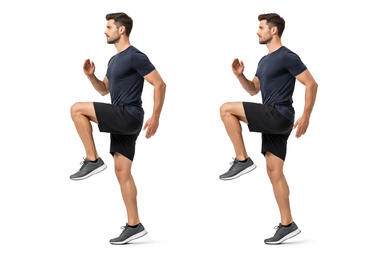
How to
A fast marching or running move that raises each knee to train your legs and raise your heart rate.
- Stand tall with feet under your hips and arms at your sides.
- Drive one knee up toward hip height as the opposite arm swings forward.
- Land softly on the ball of that foot.
- Switch quickly to the other knee and keep alternating.
- Keep a steady rhythm until the set ends.
- Stay tall through your chest
- Land light and quick
- Leaning back as your knees lift
- Stomping your feet into the floor
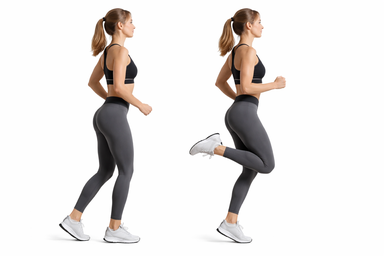
How to
A cardio drill where you jog in place and kick your heels toward your glutes. It warms your legs and raises your heart rate.
- Stand tall with your feet hip-width apart and arms relaxed.
- Jog in place, alternating heels up toward your glutes.
- Pump your arms naturally as your feet move quickly.
- Land softly on the balls of your feet each time.
- Slow down, then stand tall to finish.
- Stay tall through your chest
- Keep the steps light
- Leaning far forward as you kick
- Slapping your feet hard on the floor
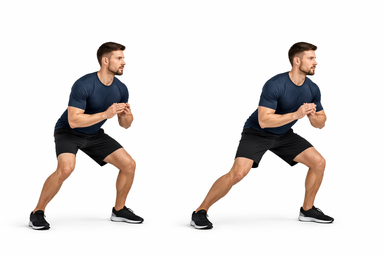
How to
A side-to-side cardio move that trains quick feet, hips, and legs.
- Stand with feet hip-width apart and knees slightly bent.
- Step quickly to one side, then bring your other foot in.
- Shuffle a few steps, staying low and light on your feet.
- Push off and shuffle back the other way.
- Keep alternating sides for the set.
- Stay low with your chest up
- Keep your feet quick and light
- Standing tall between shuffles
- Letting your feet cross over
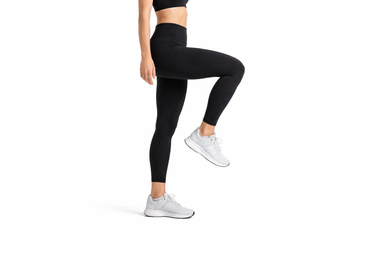
How to
A one-leg standing hold that trains balance and stability in your foot, ankle, and hips.
- Stand tall with feet hip-width apart and arms relaxed.
- Shift your weight onto one foot and lift the other foot off the floor.
- Hold steady, keep your torso tall, and breathe slowly.
- Lower your foot with control, then switch legs.
- Keep your hips level
- Look at one spot ahead
- Letting your hips twist or drop
- Holding your breath
Run Intervals
Fast but controlled. Focus on quick cadence and scanning ahead.
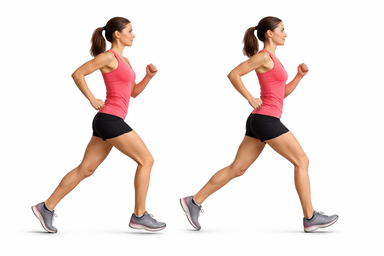
How to
A run that alternates hard and easy efforts to train speed, stamina, and pacing.
- Start with an easy jog to get into rhythm.
- Run fast for the work interval, staying controlled.
- Slow to an easy jog or walk for the recovery interval.
- Repeat the fast and easy intervals for the set time.
- Finish by easing back to a comfortable pace.
- Stay tall and relaxed
- Land lightly under your body
- Starting too fast to hold your pace
- Tensing your shoulders or clenching your fists
Terrain Strength and Agility
Steady effort. Keep knees tracking over toes; stay light on your feet.
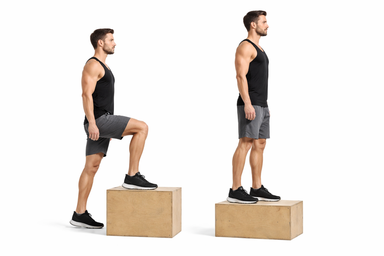
How to
A single-leg climb onto a step that trains your quads, glutes, and balance.
- Stand facing a sturdy step with one foot fully on top.
- Lean slightly forward and drive through the front foot to stand up.
- Bring your back foot onto the step with control.
- Step back down with the same back foot, then lower the front foot.
- Finish your reps, then switch legs.
- Keep your chest tall
- Drive through your whole front foot
- Pushing off too much with the back foot
- Letting your front knee cave inward
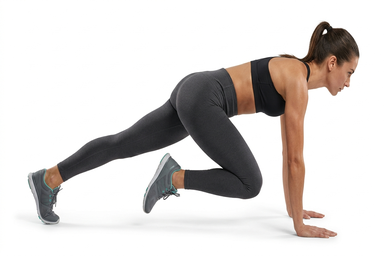
How to
A fast plank move that trains your core, shoulders, and hip flexors.
- Start in a high plank with hands under shoulders and legs straight.
- Brace your core and keep your body in a straight line.
- Drive one knee toward your chest, then quickly step it back.
- Alternate knees at a steady pace for the set.
- Keep your hips low
- Push the floor away
- Letting your hips bounce high
- Dropping your head or rounding your shoulders
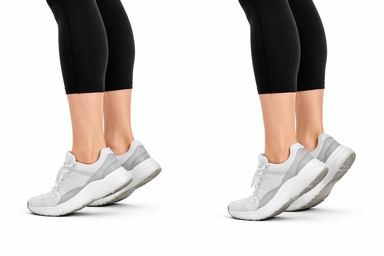
How to
A standing lower-leg move that trains your calves by lifting and lowering your heels.
- Stand tall with feet hip-width apart and toes pointing forward.
- Press through the balls of your feet and lift your heels high.
- Pause briefly at the top without leaning forward.
- Lower your heels with control to the floor.
- Keep your knees softly straight.
- Rise straight up, not forward.
- Bouncing through the reps.
- Letting your ankles roll outward.
How to
A side-to-side cardio move that trains quick feet, hips, and legs.
- Stand with feet hip-width apart and knees slightly bent.
- Step quickly to one side, then bring your other foot in.
- Shuffle a few steps, staying low and light on your feet.
- Push off and shuffle back the other way.
- Keep alternating sides for the set.
- Stay low with your chest up
- Keep your feet quick and light
- Standing tall between shuffles
- Letting your feet cross over
Cool-Down
2 minutes. Lower heart rate and reset breathing.
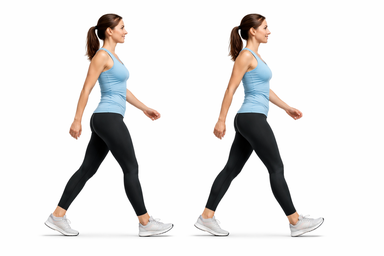
How to
A relaxed walk that warms up your body and trains easy cardio endurance.
- Stand tall with your eyes forward and arms relaxed.
- Walk at a comfortable pace you can keep steady.
- Let your arms swing naturally with each step.
- Keep breathing smoothly as you continue for the set time.
- Slow down gradually before you stop.
- Stand tall
- Use a relaxed stride
- Hunching your shoulders
- Taking steps that feel forced

Agility & Proprioception Over Pure Speed
Lateral shuffles and single-leg balance directly train the ankle stabilizers and hip abductors you rely on when navigating uneven terrain mid-stride. Mountain climbers then bridge that stability into dynamic hip flexor drive, mimicking the explosive push-off needed when attacking a control point on a slope.

The Cognitive-Physical Load of Orienteering
Orienteering uniquely demands sustained aerobic output while your prefrontal cortex processes map symbols, compass bearings, and terrain features simultaneously. This dual-task fatigue is why steady-state endurance alone fails you — your navigation accuracy degrades the moment lactate accumulates and breathing becomes labored.

Interval Structure Mirrors Race Terrain Variation
The interval run sandwiched between step-ups and calf raises mirrors orienteering's natural rhythm: surges between controls, elevation changes, and recovery on flat approach legs. Apply progressive overload by shortening rest intervals weekly or adding a weighted vest to step-ups once your perceived exertion at tempo pace drops below a 7 out of 10.