
Clean & Minimal AI Powered Fitness Routines
Download AppIntermediate Frozen Shoulder Routine
A 25-minute shoulder mobility + gentle strengthening session to support frozen shoulder recovery.
Intermediate Frozen Shoulder Routine
A 25-minute shoulder mobility + gentle strengthening session to support frozen shoulder recovery.
Warm-Up
Reduce stiffness and prepare the joint for range-of-motion work. — Gentle motion to stay relaxed; keep swings small and pain-free.
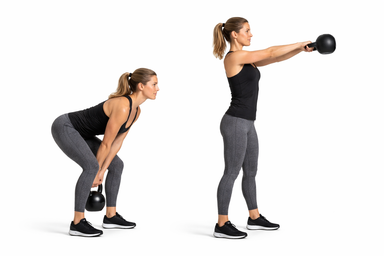
How to
A dynamic leg swing that warms up your hips and trains balance as you alternate sides.
- Stand tall with light support if needed.
- Brace your core and lift one foot slightly off the floor.
- Swing the leg forward and back like a pendulum.
- Set it down, then repeat with the other leg.
- Keep alternating sides with smooth control.
- Stand tall through your chest
- Move from your hip, not your lower back
- Swinging so high your torso leans back
- Rushing the switch between legs
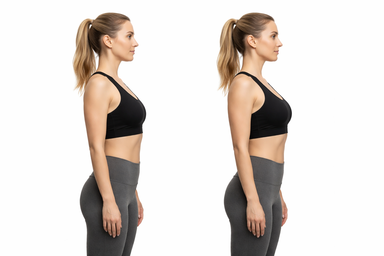
How to
A small shoulder blade squeeze that trains your upper back and shoulder control.
- Stand or sit tall with your arms relaxed by your sides.
- Pull your shoulder blades back and slightly down.
- Pause briefly while keeping your ribs stacked.
- Release with control to the start position.
- Repeat for the set.
- Keep your neck relaxed
- Move from your shoulder blades
- Shrugging your shoulders toward your ears
- Arching your lower back to create the squeeze
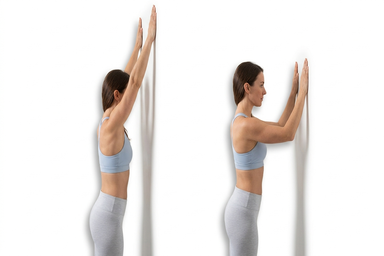
How to
A wall-based shoulder move that trains shoulder control and upper-back posture.
- Stand with your back to a wall and feet a small step out.
- Press your head, upper back, and hips gently into the wall.
- Place your arms on the wall in a goalpost shape.
- Slide your arms up the wall as far as you can control.
- Slide back down to the start and repeat.
- Keep your ribs down.
- Move slowly and stay in control.
- Arching your lower back to reach higher.
- Shrugging your shoulders toward your ears.
Mobility and Stretching
Improve tolerance to overhead and cross-body positions without forcing range. Move slowly and pause 1–2 seconds at your comfortable end range.
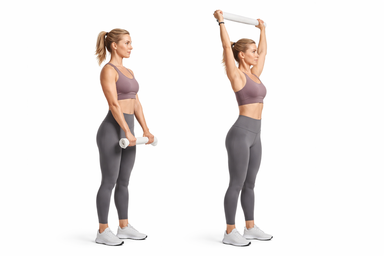
How to
A towel-assisted arm raise that trains shoulder flexion and overhead control.
- Hold a towel with both hands in front of your thighs.
- Stand tall and keep light tension on the towel.
- Raise both arms forward and overhead as far as comfortable.
- Pause briefly, then lower the towel with control.
- Repeat for the set.
- Keep your ribs down.
- Move smoothly.
- Arching your back to reach overhead.
- Shrugging your shoulders toward your ears.
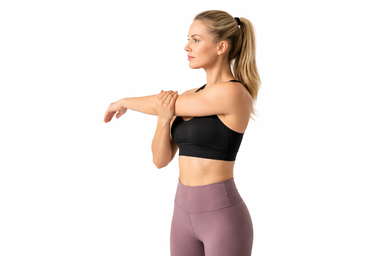
How to
A simple shoulder stretch across your chest that targets the back of your shoulder.
- Stand tall or sit upright with your shoulders relaxed.
- Bring one arm across your chest at shoulder height.
- Use your other arm to gently pull it closer to your chest.
- Hold and breathe, keeping your neck relaxed.
- Release slowly, then switch sides.
- Keep your shoulder down
- Pull gently, not hard
- Shrugging your shoulder toward your ear
- Twisting your torso to force the stretch
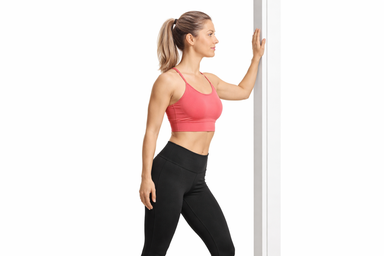
How to
A doorway chest stretch that opens your pecs and front shoulders.
- Stand in a doorway and place one forearm on the frame.
- Step one foot through and gently turn your body away.
- Hold the stretch and breathe slowly.
- Finish your reps, then switch sides.
- Keep your shoulder down
- Breathe into the stretch
- Forcing the stretch too hard
- Shrugging your shoulder up
Band Rotations
Elbow pinned to your side; rotate from the shoulder, not the wrist.
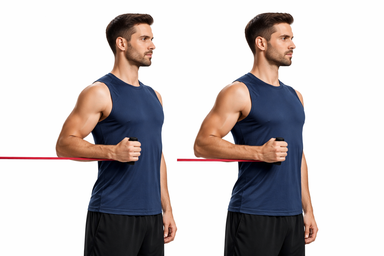
How to
A band shoulder rotation that trains the small muscles around your shoulder.
- Stand sideways to the anchor and hold the band in your outside hand.
- Bend your elbow 90 degrees and keep it tucked by your side.
- Rotate your forearm out away from your body.
- Slowly return to the start with control.
- Finish your reps, then switch sides.
- Keep your elbow close to your side.
- Move only from your shoulder.
- Letting your elbow drift away from your ribs.
- Twisting your torso to move the band.
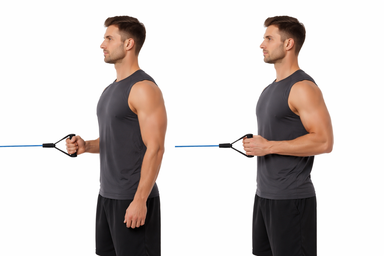
How to
A band shoulder rotation that trains the rotator cuff and shoulder control on one side at a time.
- Anchor the band at elbow height and stand side-on with your working arm closest.
- Hold the band with your elbow bent 90 degrees and tucked by your side.
- Rotate your forearm in toward your belly without moving your elbow.
- Slowly return until your forearm points out again.
- Finish your reps, then switch sides.
- Keep your elbow pinned to your side.
- Move slow and stay tall.
- Letting your elbow drift away from your ribs.
- Twisting your torso to pull the band.
Isometric Holds
Press gently into the wall (about 30–50% effort). No pain spikes.
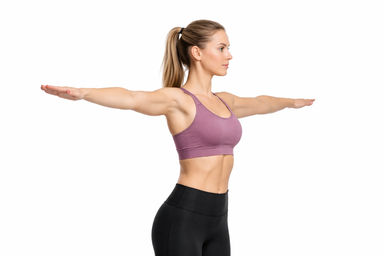
How to
A static side-arm raise that trains your shoulders by holding tension without movement.
- Stand tall with feet under your hips.
- Raise both arms out to your sides to shoulder height.
- Hold this position and breathe steadily.
- Lower your arms with control when the hold is done.
- Keep your ribs down
- Keep shoulders away from ears
- Shrugging your shoulders up
- Leaning back to hold your arms up
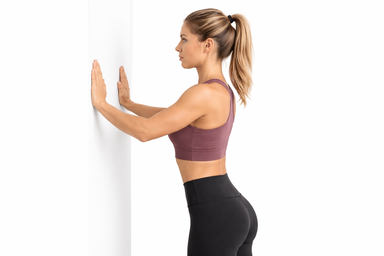
How to
An isometric shoulder extension that trains your back and rear shoulders.
- Stand tall with your arms by your sides.
- Press your hands back against an immovable object.
- Keep the tension and breathe steadily.
- Hold for the set, then relax.
- Keep your ribs down
- Squeeze your shoulder blades gently
- Shrugging your shoulders up
- Arching your lower back

Capsular Mobility Before Load
Pendulum Swings use gravity-assisted traction to gently distract the glenohumeral joint, reducing capsular stiffness before any active demand is placed on the tissue. Wall Slides and Towel-Assisted Flexion then progressively reclaim overhead range by targeting the inferior and posterior capsule — the two regions most restricted in adhesive capsulitis.

Why Frozen Shoulder Fights Back
Adhesive capsulitis thickens and contracts the joint capsule in three distinct layers, which is why passive stretching alone rarely unlocks range — the tissue needs graded mechanical stress to remodel collagen. The Doorway Pec Stretch and Cross-Body Stretch address the anterior and posterior capsule respectively, targeting the exact tissue planes that limit your internal and external rotation arcs

Isometrics as Your Re-Entry Point
Isometric Wall Presses for abduction and extension recruit the rotator cuff without compressing the inflamed capsule, building neuromuscular control at safe joint angles before dynamic loading begins. Pair the Band External Rotation with deliberate 3-second eccentrics to accelerate infraspinatus remodeling — if a rep causes sharp pain rather than a dull ache, reduce band tension by one level.