
Clean & Minimal AI Powered Fitness Routines
Download App25-Minute Retail Worker Reset
A 25-minute mobility + strength routine to offset standing, repetitive reaching, and posture fatigue.
25-Minute Retail Worker Reset
A 25-minute mobility + strength routine to offset standing, repetitive reaching, and posture fatigue.
Warm-Up
5 minutes. Increase circulation and prep shoulders/hips for standing and reaching.
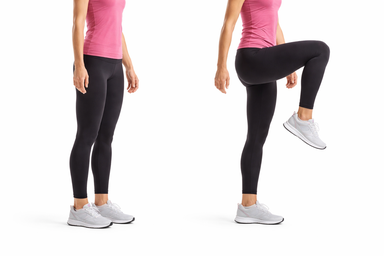
How to
A low-impact cardio move that warms up your legs and hips while raising your heart rate.
- Stand tall with your feet hip-width apart and arms at your sides.
- Lift one knee to hip height as you swing the opposite arm forward.
- Lower that foot, then lift the other knee and switch arms.
- Keep alternating sides at a steady pace.
- Slow down and plant both feet to finish.
- Stand tall with your chest up
- Land softly under your hips
- Leaning back as you lift your knees
- Stomping your feet on each step
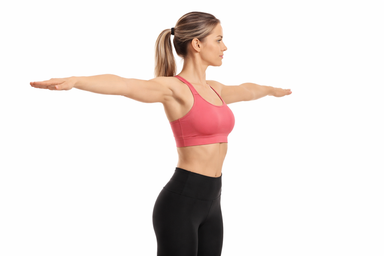
How to
A simple shoulder warm-up that moves both arms in circles and trains shoulder control.
- Stand tall with your feet about hip-width apart.
- Raise both arms out to your sides at shoulder height.
- Make small, controlled circles with both arms.
- Keep circling for the set time, then reverse direction if told.
- Lower your arms to finish.
- Keep your ribs down
- Move smoothly, not fast
- Shrugging your shoulders toward your ears
- Arching your back to keep the arms up
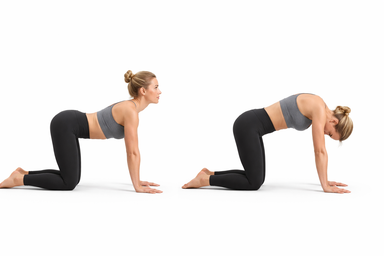
How to
A gentle spine mobility move that alternates rounding and arching your back on hands and knees.
- Start on hands and knees with wrists under shoulders and knees under hips.
- Inhale and drop your belly as you lift your chest and tailbone.
- Exhale and round your back, tucking your chin and tailbone.
- Move slowly between both positions with your breath.
- Move one vertebra at a time.
- Keep your shoulders away from your ears.
- Forcing your neck up or down.
- Rushing through the movement.
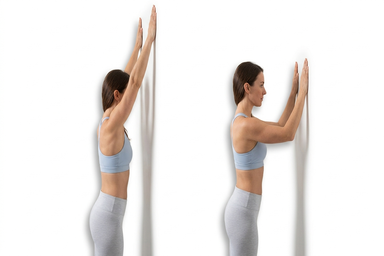
How to
A wall-based shoulder move that trains shoulder control and upper-back posture.
- Stand with your back to a wall and feet a small step out.
- Press your head, upper back, and hips gently into the wall.
- Place your arms on the wall in a goalpost shape.
- Slide your arms up the wall as far as you can control.
- Slide back down to the start and repeat.
- Keep your ribs down.
- Move slowly and stay in control.
- Arching your lower back to reach higher.
- Shrugging your shoulders toward your ears.
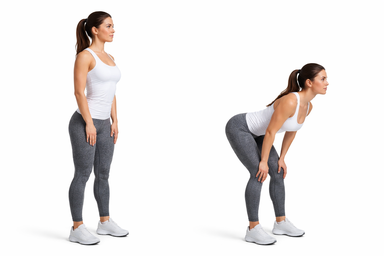
How to
A standing hip hinge that trains your glutes and hamstrings and builds the pattern for deadlifts.
- Stand with feet hip-width apart and knees slightly bent.
- Brace your core and keep your chest open.
- Push your hips back as your torso tips forward.
- Lower until you feel your hamstrings, keeping your back flat.
- Drive your hips forward to stand tall again.
- Move from your hips, not your waist.
- Keep your back long.
- Squatting instead of hinging your hips back.
- Rounding your back as you lower.
Circuit A
Move station-to-station with minimal setup. Focus on form and steady pace.
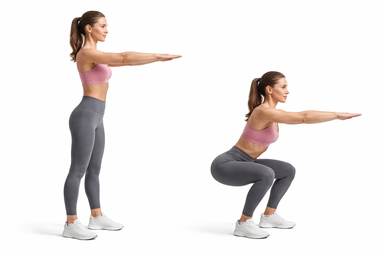
How to
A bodyweight lower-body move that trains your quads, glutes, and hips.
- Stand with feet about shoulder-width apart and toes slightly out.
- Brace your core and keep your chest tall.
- Bend your knees and hips to lower into a squat.
- Push through your feet to stand back up.
- Keep your knees tracking over your toes
- Keep your chest up
- Letting your knees cave in
- Rounding your back as you lower
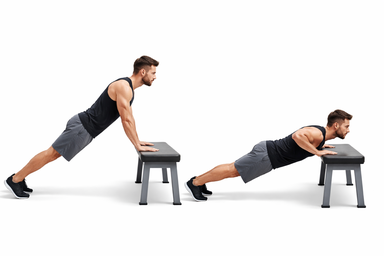
How to
A push-up with your hands elevated. It trains your chest, shoulders, triceps, and core.
- Place your hands on a sturdy elevated surface, slightly wider than shoulders.
- Step your feet back and make a straight line from head to heels.
- Bend your elbows and lower your chest toward the surface.
- Press through your hands to return to the start.
- Repeat for the set.
- Keep your body in one straight line.
- Brace your core as you move.
- Letting your hips sag or pike up.
- Flaring your elbows straight out to the sides.
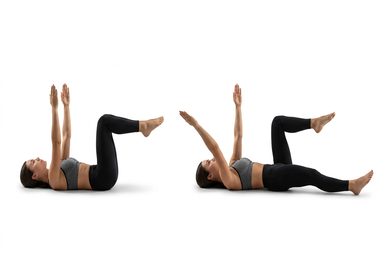
How to
A core move on your back that trains control while you move opposite arm and leg.
- Lie on your back with arms up and knees bent over hips.
- Press your lower back gently toward the floor.
- Lower one arm and the opposite leg with control.
- Return to the start, then repeat on the other side.
- Keep alternating sides for each rep.
- Move slow and stay braced
- Keep your ribs down
- Letting your lower back arch
- Rushing through the reps
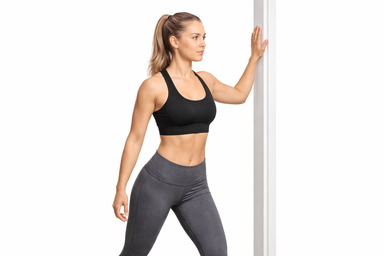
How to
A doorway hold that stretches your chest and front shoulders.
- Stand in a doorway with forearms on the frame at shoulder height.
- Step one foot forward until you feel a gentle chest stretch.
- Hold the position and breathe slowly.
- Step back to release the stretch.
- Keep your ribs down
- Relax your neck and shoulders
- Leaning your head forward
- Pushing into sharp pain
Circuit B
Unilateral strength and lateral core stability to balance repetitive work patterns.
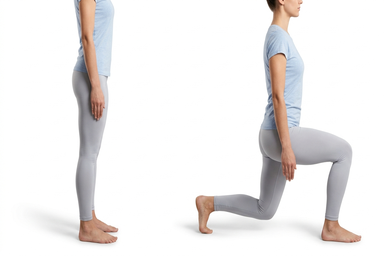
How to
A backward-stepping lunge that trains your quads, glutes, and balance.
- Stand tall with your feet hip-width apart.
- Step one foot back and lower until both knees bend.
- Push through your front foot to stand back up.
- Finish your reps, then switch legs.
- Keep your chest tall.
- Track your front knee over your toes.
- Letting your front knee cave inward.
- Pushing off the back foot to stand.
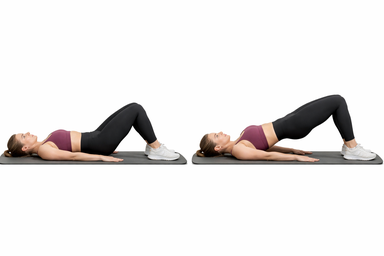
How to
A floor hip lift that trains your glutes and hamstrings with both feet planted.
- Lie on your back with knees bent and feet flat, hip-width apart.
- Brace your core and press your arms lightly into the floor.
- Drive through your heels and lift your hips until your body forms a straight line.
- Squeeze your glutes at the top, then lower with control.
- Repeat for your reps.
- Keep your ribs down
- Drive through your heels
- Arching your lower back at the top
- Pushing through your toes
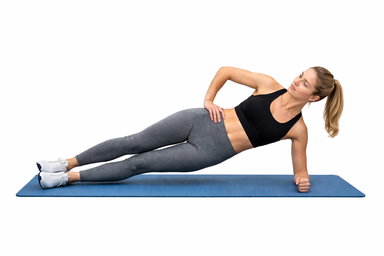
How to
A side hold that trains your obliques, hips, and shoulder stability.
- Lie on one side with your elbow under your shoulder and legs stacked.
- Lift your hips until your body forms a straight line.
- Hold the position and breathe steadily.
- Lower your hips with control.
- Finish your hold, then switch sides.
- Keep your hips stacked
- Press the floor away
- Letting your hips sag
- Rolling your chest toward the floor
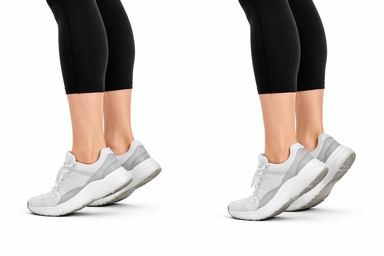
How to
A standing lower-leg move that trains your calves by lifting and lowering your heels.
- Stand tall with feet hip-width apart and toes pointing forward.
- Press through the balls of your feet and lift your heels high.
- Pause briefly at the top without leaning forward.
- Lower your heels with control to the floor.
- Keep your knees softly straight.
- Rise straight up, not forward.
- Bouncing through the reps.
- Letting your ankles roll outward.
Cool-Down
4 minutes. Downshift and open up chest/neck after a long day on your feet.
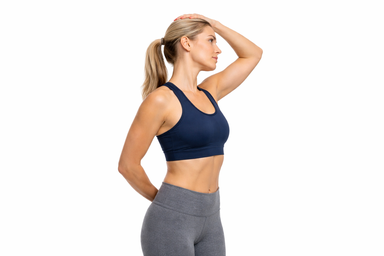
How to
A gentle neck stretch for one upper trapezius at a time. Hold it and breathe.
- Sit or stand tall with your shoulders relaxed.
- Hold a chair with the hand on the side you will stretch.
- Tilt your ear away from that shoulder until you feel a gentle stretch.
- Add light pressure with your other hand, if needed.
- Hold and breathe slowly, then switch sides.
- Keep both shoulders down.
- Use gentle pressure only.
- Pulling your head hard with your hand.
- Lifting the shoulder you are stretching.
How to
A doorway hold that stretches your chest and front shoulders.
- Stand in a doorway with forearms on the frame at shoulder height.
- Step one foot forward until you feel a gentle chest stretch.
- Hold the position and breathe slowly.
- Step back to release the stretch.
- Keep your ribs down
- Relax your neck and shoulders
- Leaning your head forward
- Pushing into sharp pain

Why Your Shift's Damage Gets Undone Here
Wall Slides directly counter the rounded-shoulder posture from register work by retraining serratus anterior and lower trapezius activation. Hip Hinges and Glute Bridges rebuild posterior chain strength lost to prolonged standing, where glutes chronically underfire and hip flexors adaptively shorten.

What Eight Hours on Concrete Does to Tissue
Retail standing loads the plantar fascia, Achilles, and soleus under near-constant low-grade tension — Standing Calf Raises rebuild elastic stiffness rather than just stretching it out. Repetitive unilateral reaching creates rotational asymmetry through the thoracic spine, which Cat-Cow and the Doorway Chest Stretch directly address by restoring segmental mobility.

Compressing Maximum Adaptation Into 25 Minutes
The sequencing follows a mobility-to-stability-to-strength arc — Dead Bug and Side Plank lock in the spinal control unlocked by Cat-Cow before loading it with Reverse Lunges. To personalize, add one extra set of Glute Bridges on your longest shift days, as extended standing accelerates lumbar extensor fatigue faster than any other retail demand.