
Clean & Minimal AI Powered Fitness Routines
Download AppIntermediate Soccer Routine
A 25-minute intermediate session to build soccer-specific speed, agility, and conditioning.
Intermediate Soccer Routine
A 25-minute intermediate session to build soccer-specific speed, agility, and conditioning.
Warm-Up
Raise heart rate and prep hips/ankles for cutting and sprinting. 6 minutes.
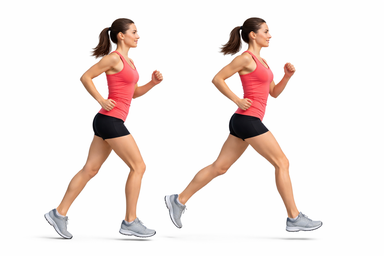
How to
A steady running movement that raises your heart rate and trains your legs and endurance.
- Stand tall with your feet under your hips and arms bent.
- Start with small, quick steps at an easy pace.
- Land softly under your body and keep your chest lifted.
- Swing your arms naturally as your legs move.
- Keep jogging for the planned time or distance.
- Stay light on your feet
- Breathe at a steady rhythm
- Overstriding with your foot far in front
- Hunching your shoulders as you jog
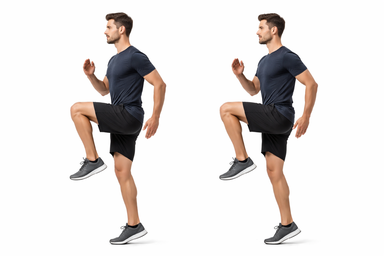
How to
A fast marching or running move that raises each knee to train your legs and raise your heart rate.
- Stand tall with feet under your hips and arms at your sides.
- Drive one knee up toward hip height as the opposite arm swings forward.
- Land softly on the ball of that foot.
- Switch quickly to the other knee and keep alternating.
- Keep a steady rhythm until the set ends.
- Stay tall through your chest
- Land light and quick
- Leaning back as your knees lift
- Stomping your feet into the floor
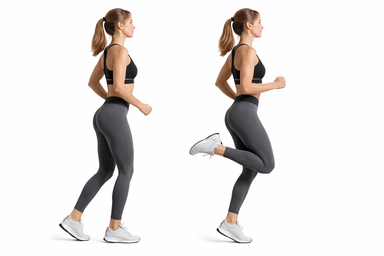
How to
A cardio drill where you jog in place and kick your heels toward your glutes. It warms your legs and raises your heart rate.
- Stand tall with your feet hip-width apart and arms relaxed.
- Jog in place, alternating heels up toward your glutes.
- Pump your arms naturally as your feet move quickly.
- Land softly on the balls of your feet each time.
- Slow down, then stand tall to finish.
- Stay tall through your chest
- Keep the steps light
- Leaning far forward as you kick
- Slapping your feet hard on the floor
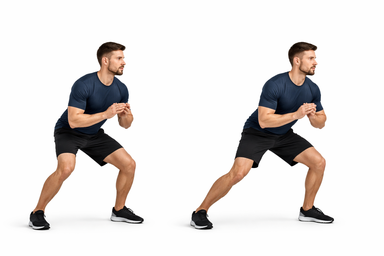
How to
A side-to-side cardio move that trains quick feet, hips, and legs.
- Stand with feet hip-width apart and knees slightly bent.
- Step quickly to one side, then bring your other foot in.
- Shuffle a few steps, staying low and light on your feet.
- Push off and shuffle back the other way.
- Keep alternating sides for the set.
- Stay low with your chest up
- Keep your feet quick and light
- Standing tall between shuffles
- Letting your feet cross over
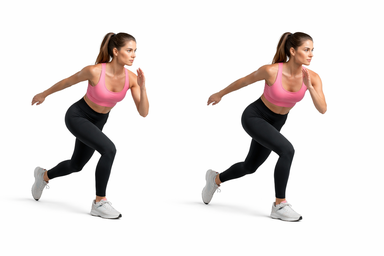
How to
A side-to-side jump that trains your legs, glutes, and lateral power.
- Stand tall with knees soft and arms ready.
- Jump sideways onto one foot, letting the other leg sweep behind you.
- Land softly with your knee bent and chest up.
- Push off and jump back to the other side.
- Keep alternating sides for the set.
- Land softly on the whole foot
- Keep your chest up
- Letting your knee cave inward
- Rushing the landing before you are balanced
Agility Change-of-Direction
Set cones if available. Stay low on shuffles and explode out of turns.
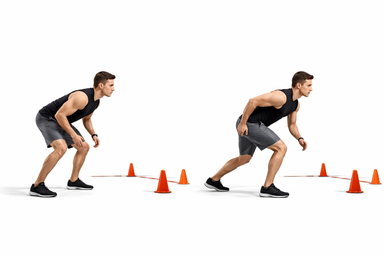
How to
An agility drill in a T pattern that trains quick changes of direction, footwork, and control.
- Set 4 markers in a T shape and start at the base.
- Sprint forward to the middle marker.
- Shuffle to one side, then all the way to the other side.
- Shuffle back to the middle marker.
- Backpedal to the start and alternate your first side each rep.
- Stay low and light on your feet.
- Keep your chest up.
- Crossing your feet during the shuffle.
- Standing tall before each direction change.
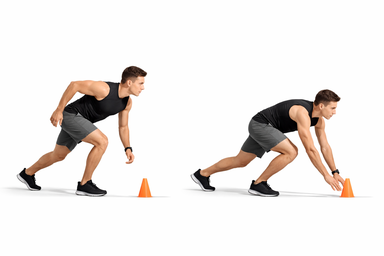
How to
A fast back-and-forth sprint that trains speed, agility, and quick changes of direction.
- Set two markers a short distance apart and stand at one marker.
- Sprint to the far marker with quick, controlled steps.
- Touch the marker or line, then turn and sprint back.
- Repeat for the set time or distance.
- Stay low as you turn
- Drive your arms fast
- Standing tall during each turn
- Stopping hard instead of changing direction smoothly
How to
A side-to-side cardio move that trains quick feet, hips, and legs.
- Stand with feet hip-width apart and knees slightly bent.
- Step quickly to one side, then bring your other foot in.
- Shuffle a few steps, staying low and light on your feet.
- Push off and shuffle back the other way.
- Keep alternating sides for the set.
- Stay low with your chest up
- Keep your feet quick and light
- Standing tall between shuffles
- Letting your feet cross over
Ball Control & Passing
Keep touches light and frequent. For wall passes, use both feet.
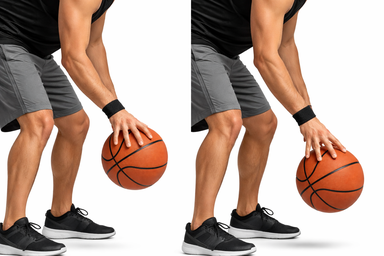
How to
A ball-control drill that alternates hands and trains coordination, core control, and quick reactions.
- Stand in an athletic stance with the ball in one hand.
- Bounce the ball low at your side with a relaxed wrist.
- Push the ball across your body to the other hand.
- Keep alternating hands for the set.
- Slow the ball, catch it, and stand tall to finish.
- Stay low and light on your feet
- Keep your eyes forward
- Standing upright with stiff knees
- Slapping the ball instead of guiding it
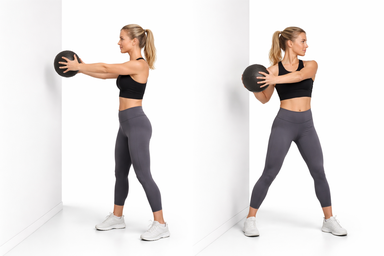
How to
A two-hand wall throw that trains your chest, shoulders, arms, and core control.
- Stand facing a wall, holding the ball at chest height with both hands.
- Brace your core and set your feet about hip-width apart.
- Push the ball straight into the wall with both hands.
- Catch it at chest height and reset your stance.
- Repeat for smooth, controlled reps.
- Keep your ribs down
- Catch with soft elbows
- Letting the ball drop below chest height
- Arching your back as you throw
Soccer Intervals
Fast sprint, then controlled walk. Keep sprint mechanics crisp.
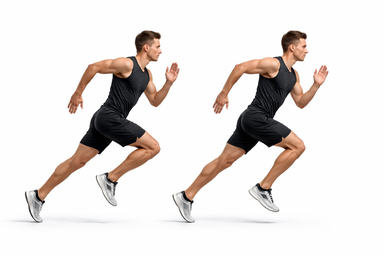
How to
A fast run that trains your legs, hips, and cardio power.
- Stand tall with feet hip-width and eyes forward.
- Lean slightly from your ankles and drive one knee up.
- Push the ground back hard and swing your arms cheek to hip.
- Run fast with quick, powerful steps for the set distance or time.
- Slow down gradually after the sprint.
- Stay tall and relaxed.
- Drive arms straight forward and back.
- Overstriding far in front of your body.
- Tensing your shoulders or jaw.
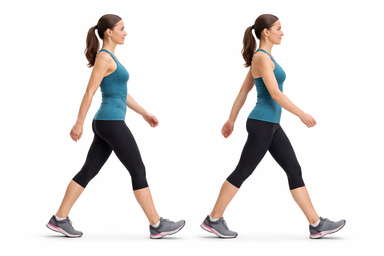
How to
A simple walking movement that trains your legs and builds steady full-body rhythm.
- Stand tall with your feet under your hips.
- Step forward with one foot and roll from heel to toe.
- Swing the opposite arm naturally as you step.
- Push off your back foot and step forward with the other foot.
- Keep alternating steps at a steady pace.
- Stand tall
- Let your arms swing naturally
- Looking down the whole time
- Taking steps that feel too long
Cool-Down
Bring heart rate down and loosen major lower-body muscles. 3 minutes.
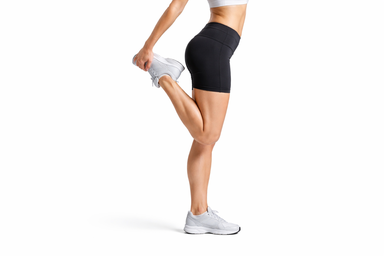
How to
A standing thigh stretch that targets the front of your hip and quad on one leg.
- Stand tall and hold a wall or chair for balance if needed.
- Bend one knee and hold your ankle or foot behind you.
- Keep your knees close and gently draw your heel toward your glute.
- Hold the stretch and breathe slowly.
- Release with control, then switch legs.
- Stand tall through your chest
- Keep your knees close
- Arching your lower back
- Pulling the knee out to the side
How to
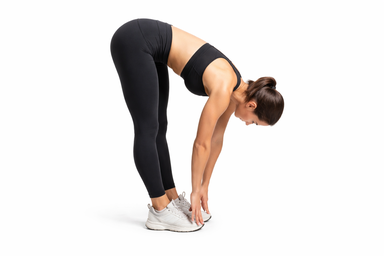
A standing hamstring stretch that uses a hip hinge to stretch the back of your thigh.
- Stand tall and step one foot forward with your heel down and toes up.
- Bend your back knee slightly and hinge at your hips.
- Keep your back long as you lower your chest toward your thigh.
- Hold the stretch and breathe slowly.
- Release, then switch legs.
- Keep your hips square
- Point your toes up
- Rounding your back to reach lower
- Locking the standing knee
How to
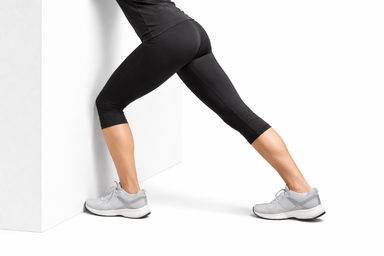
A standing calf stretch for one leg that targets the back of your lower leg.
- Stand facing a wall and place both hands on it.
- Step one foot back and keep that heel on the floor.
- Bend your front knee until you feel a stretch in the back calf.
- Hold the stretch and breathe slowly.
- Release, step in, then switch legs.
- Keep your back heel down
- Point both toes forward
- Letting the back heel lift
- Turning the back foot out

Multi-Plane Mechanics Behind Each Drill
High Knees and Butt Kicks prime your hip flexors and hamstrings for the explosive stride cycle soccer demands, while Lateral Shuffles and Skater Jumps load your glute medius and adductors — the muscles that control deceleration and direction change during live play. Every movement here mirrors an action you'll perform under pressure on the pitch.

Why Soccer Destroys Unprepared Legs
Soccer players average 1,000+ direction changes per match, placing repeated eccentric stress on the quads, hamstrings, and ankle stabilizers. The T-Drill and Shuttle Runs in this session directly train your neuromuscular system to absorb and redirect force quickly — the exact demand that separates players who pull muscles from those who accelerate through tackles.

Compressing Elite Training Into 25 Minutes
This session follows a specificity-first structure: general locomotion in the warm-up progressively narrows to soccer-specific outputs like Close Control Dribbling and Wall Passes, maximizing transfer to match performance. To personalize progressive overload, reduce your Shuttle Run rest intervals by five seconds each week as your lactate threshold improves.