
Clean & Minimal AI Powered Fitness Routines
Download AppIntermediate Quadriceps Strength
A focused quad-strength session using controlled tempo and isometrics in ~25 minutes.
Intermediate Quadriceps Strength
A focused quad-strength session using controlled tempo and isometrics in ~25 minutes.
Warm-Up
Increase blood flow and prep knees/hips for quad-focused work. 5 minutes.
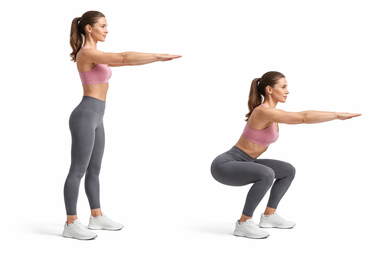
How to
A bodyweight lower-body move that trains your quads, glutes, and hips.
- Stand with feet about shoulder-width apart and toes slightly out.
- Brace your core and keep your chest tall.
- Bend your knees and hips to lower into a squat.
- Push through your feet to stand back up.
- Keep your knees tracking over your toes
- Keep your chest up
- Letting your knees cave in
- Rounding your back as you lower
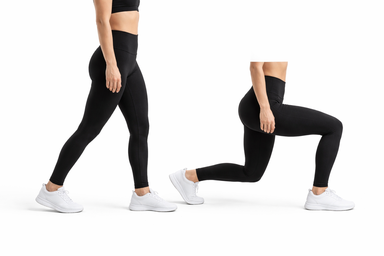
How to
A forward stepping lunge that trains your legs and glutes while challenging balance.
- Stand tall with your feet hip-width apart.
- Step forward with one foot and lower into a lunge.
- Keep your front knee over your foot as your back knee lowers.
- Push through your front foot and bring your back foot forward.
- Step into the next lunge with the other leg and keep alternating.
- Keep your chest tall
- Take controlled steps
- Letting your front knee cave inward
- Pushing off mostly from your back foot
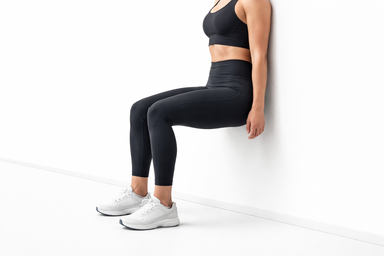
How to
An isometric squat hold against a wall that trains your quads, glutes, and endurance.
- Stand with your back against a wall and feet hip-width apart.
- Walk your feet forward and slide down until your thighs are near parallel.
- Keep your back on the wall and knees over your ankles.
- Hold the position and breathe steadily.
- Stand up by pressing through your feet when finished.
- Keep your chest tall
- Press your back into the wall
- Letting your knees cave inward
- Holding your breath
Circuit A
Controlled tempo. If using weight, keep it moderate and stable.
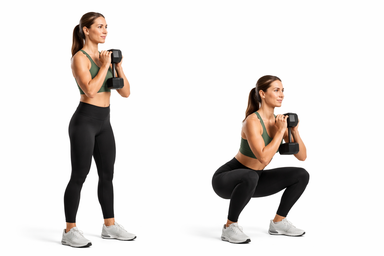
How to
A squat holding a weight at your chest. It trains your quads, glutes, and core.
- Stand with feet about shoulder-width and hold the weight at your chest.
- Brace your core and keep your chest tall.
- Bend your knees and hips to squat down under control.
- Lower until comfortable, with knees tracking over toes.
- Drive through your feet to stand back up.
- Keep your chest tall
- Knees track over toes
- Letting your knees cave inward
- Rounding your back at the bottom
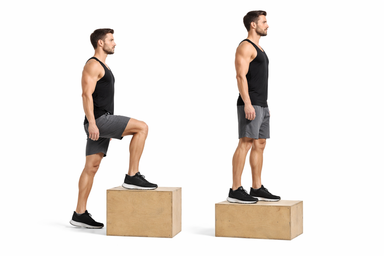
How to
A single-leg climb onto a step that trains your quads, glutes, and balance.
- Stand facing a sturdy step with one foot fully on top.
- Lean slightly forward and drive through the front foot to stand up.
- Bring your back foot onto the step with control.
- Step back down with the same back foot, then lower the front foot.
- Finish your reps, then switch legs.
- Keep your chest tall
- Drive through your whole front foot
- Pushing off too much with the back foot
- Letting your front knee cave inward
How to
An isometric squat hold against a wall that trains your quads, glutes, and endurance.
- Stand with your back against a wall and feet hip-width apart.
- Walk your feet forward and slide down until your thighs are near parallel.
- Keep your back on the wall and knees over your ankles.
- Hold the position and breathe steadily.
- Stand up by pressing through your feet when finished.
- Keep your chest tall
- Press your back into the wall
- Letting your knees cave inward
- Holding your breath
Circuit B
Burnout set—keep form strict. Reduce depth if knees feel irritated. Finisher.
How to
A bodyweight lower-body move that trains your quads, glutes, and hips.
- Stand with feet about shoulder-width apart and toes slightly out.
- Brace your core and keep your chest tall.
- Bend your knees and hips to lower into a squat.
- Push through your feet to stand back up.
- Keep your knees tracking over your toes
- Keep your chest up
- Letting your knees cave in
- Rounding your back as you lower
How to
A forward stepping lunge that trains your legs and glutes while challenging balance.
- Stand tall with your feet hip-width apart.
- Step forward with one foot and lower into a lunge.
- Keep your front knee over your foot as your back knee lowers.
- Push through your front foot and bring your back foot forward.
- Step into the next lunge with the other leg and keep alternating.
- Keep your chest tall
- Take controlled steps
- Letting your front knee cave inward
- Pushing off mostly from your back foot
How to
An isometric squat hold against a wall that trains your quads, glutes, and endurance.
- Stand with your back against a wall and feet hip-width apart.
- Walk your feet forward and slide down until your thighs are near parallel.
- Keep your back on the wall and knees over your ankles.
- Hold the position and breathe steadily.
- Stand up by pressing through your feet when finished.
- Keep your chest tall
- Press your back into the wall
- Letting your knees cave inward
- Holding your breath
Cool-Down
Bring heart rate down and recover after quad work. 2 minutes.
How to
A bodyweight lower-body move that trains your quads, glutes, and hips.
- Stand with feet about shoulder-width apart and toes slightly out.
- Brace your core and keep your chest tall.
- Bend your knees and hips to lower into a squat.
- Push through your feet to stand back up.
- Keep your knees tracking over your toes
- Keep your chest up
- Letting your knees cave in
- Rounding your back as you lower

Terminal Knee Extension Without a Cable
Goblet squats and step-ups target the vastus medialis oblique at end-range extension—the fiber most responsible for knee tracking and lockout power. Wall sits add time-under-tension isometric loading that builds tendon stiffness, while walking lunges train single-leg quad dominance under dynamic stability demands.

Why Quad Isolation Is Harder Than It Looks
Pure quadriceps strength requires suppressing dominant hip extensor compensation—your glutes and hamstrings want to take over every time load increases. The anterior knee stress in step-ups and lunges exposes this imbalance immediately, making controlled tempo non-negotiable for honest quad recruitment rather than hip-dominant cheating.

Isometrics as the Periodization Anchor
Wall sits function as the intensity anchor here—isometric holds at 60–90° knee flexion build force output at the angle where most quad weakness lives. Pair that with the progressive overload lever of goblet squat load and step-up height, and you have a session structure that scales linearly. To personalize, increase wall sit duration by 5 seconds each week before adding external load elsewhere.