
Clean & Minimal AI Powered Fitness Routines
Download App25-Minute Anxiety & Depression Support
A 25-minute movement + breath routine to reduce stress, lift mood, and reset your nervous system.
25-Minute Anxiety & Depression Support
A 25-minute movement + breath routine to reduce stress, lift mood, and reset your nervous system.
Warm-Up
Raise your heart rate gently and loosen the spine/shoulders while keeping breathing steady. (5 min)
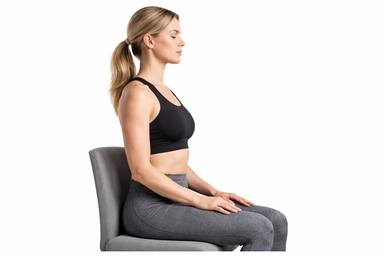
How to
A steady breathing pattern that trains control and helps you settle your breathing.
- Sit or stand tall with relaxed shoulders.
- Inhale through your nose for 4 counts.
- Hold your breath for 4 counts.
- Exhale slowly for 4 counts.
- Hold with your lungs empty for 4 counts, then repeat.
- Keep your face and jaw relaxed.
- Breathe smoothly and quietly.
- Rushing the counts.
- Tensing your shoulders or neck.
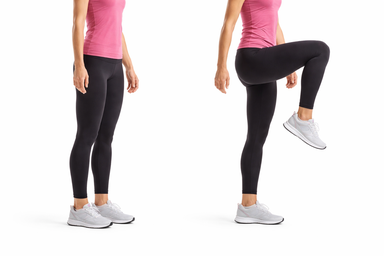
How to
A low-impact cardio move that warms up your legs and hips while raising your heart rate.
- Stand tall with your feet hip-width apart and arms at your sides.
- Lift one knee to hip height as you swing the opposite arm forward.
- Lower that foot, then lift the other knee and switch arms.
- Keep alternating sides at a steady pace.
- Slow down and plant both feet to finish.
- Stand tall with your chest up
- Land softly under your hips
- Leaning back as you lift your knees
- Stomping your feet on each step
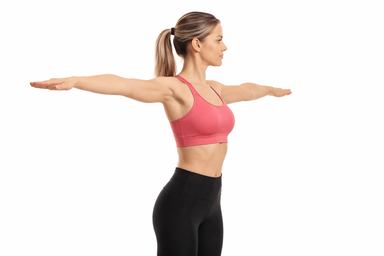
How to
A simple shoulder warm-up that moves both arms in circles and trains shoulder control.
- Stand tall with your feet about hip-width apart.
- Raise both arms out to your sides at shoulder height.
- Make small, controlled circles with both arms.
- Keep circling for the set time, then reverse direction if told.
- Lower your arms to finish.
- Keep your ribs down
- Move smoothly, not fast
- Shrugging your shoulders toward your ears
- Arching your back to keep the arms up
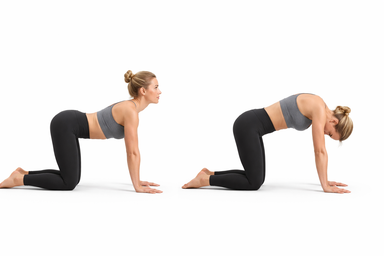
How to
A gentle spine mobility move that alternates rounding and arching your back on hands and knees.
- Start on hands and knees with wrists under shoulders and knees under hips.
- Inhale and drop your belly as you lift your chest and tailbone.
- Exhale and round your back, tucking your chin and tailbone.
- Move slowly between both positions with your breath.
- Move one vertebra at a time.
- Keep your shoulders away from your ears.
- Forcing your neck up or down.
- Rushing through the movement.
Main Circuit
Rhythmic, posture-focused strength and light cardio to support mood and reduce anxious energy. (15 min)
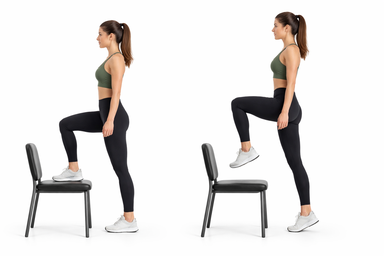
How to
Step onto a sturdy chair to train your legs and glutes while raising your heart rate.
- Stand facing a sturdy chair with your feet hip-width apart.
- Place one foot fully on the chair.
- Drive through that foot and stand tall on the chair.
- Step down with control, then repeat with the other leg.
- Keep alternating legs for all reps.
- Keep your chest up.
- Place your whole foot on the chair.
- Pushing off too much with the back foot.
- Letting your knee cave inward.
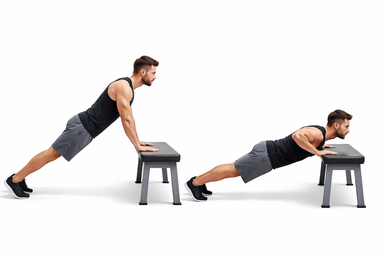
How to
A push-up with your hands elevated. It trains your chest, shoulders, triceps, and core.
- Place your hands on a sturdy elevated surface, slightly wider than shoulders.
- Step your feet back and make a straight line from head to heels.
- Bend your elbows and lower your chest toward the surface.
- Press through your hands to return to the start.
- Repeat for the set.
- Keep your body in one straight line.
- Brace your core as you move.
- Letting your hips sag or pike up.
- Flaring your elbows straight out to the sides.
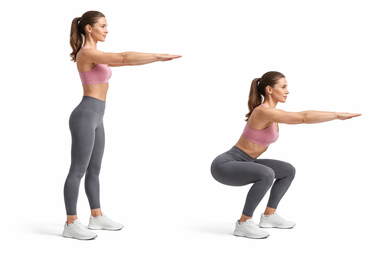
How to
A bodyweight lower-body move that trains your quads, glutes, and hips.
- Stand with feet about shoulder-width apart and toes slightly out.
- Brace your core and keep your chest tall.
- Bend your knees and hips to lower into a squat.
- Push through your feet to stand back up.
- Keep your knees tracking over your toes
- Keep your chest up
- Letting your knees cave in
- Rounding your back as you lower
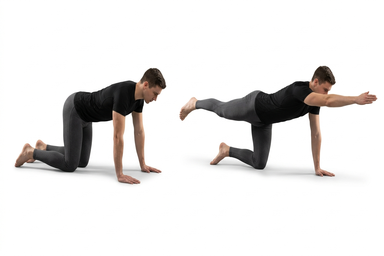
How to
A core stability move from all fours that trains your abs, back, glutes, and balance.
- Start on hands and knees with your hands under shoulders and knees under hips.
- Brace your core and keep your back flat.
- Reach one arm forward and the opposite leg back until they are straight.
- Pause briefly, then bring your hand and knee back under you.
- Repeat on the other side, alternating each rep.
- Keep your hips square
- Move slow and controlled
- Arching or sagging your lower back
- Rotating your hips as you reach
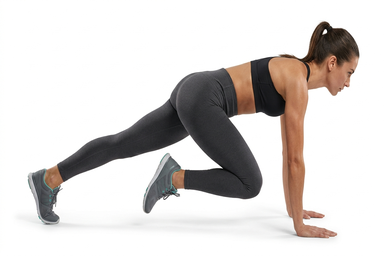
How to
A fast plank move that trains your core, shoulders, and hip flexors.
- Start in a high plank with hands under shoulders and legs straight.
- Brace your core and keep your body in a straight line.
- Drive one knee toward your chest, then quickly step it back.
- Alternate knees at a steady pace for the set.
- Keep your hips low
- Push the floor away
- Letting your hips bounce high
- Dropping your head or rounding your shoulders
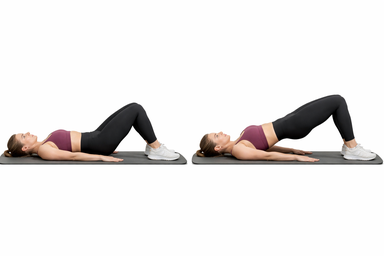
How to
A floor hip lift that trains your glutes and hamstrings with both feet planted.
- Lie on your back with knees bent and feet flat, hip-width apart.
- Brace your core and press your arms lightly into the floor.
- Drive through your heels and lift your hips until your body forms a straight line.
- Squeeze your glutes at the top, then lower with control.
- Repeat for your reps.
- Keep your ribs down
- Drive through your heels
- Arching your lower back at the top
- Pushing through your toes
Cool-Down
Downshift your nervous system with gentle stretching and slower breathing. (5 min)
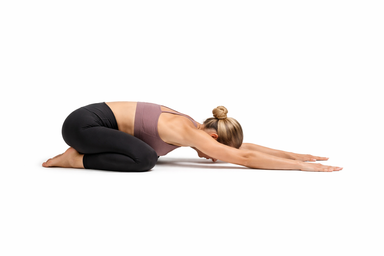
How to
A kneeling rest pose that gently stretches your back, hips, and shoulders.
- Kneel on the floor with your big toes together and knees apart.
- Sit your hips back toward your heels.
- Fold forward and reach your arms in front of you.
- Rest your forehead down and let your chest sink between your thighs.
- Hold the position and breathe slowly.
- Relax your shoulders
- Breathe into your back
- Forcing your hips down
- Holding your breath
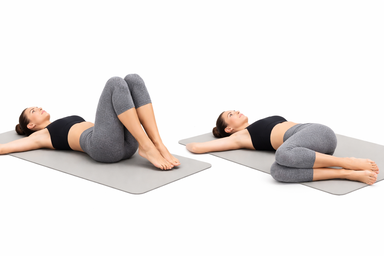
How to
A lying spinal twist that stretches your trunk and hips while you hold and breathe.
- Lie on your back with arms out and knees bent.
- Draw one knee toward your chest.
- Guide that knee across your body toward the floor.
- Keep both shoulders heavy and hold while breathing slowly.
- Return to center, then switch sides.
- Keep both shoulders down
- Move into the twist gently
- Forcing your knee to the floor
- Letting your shoulder lift and roll over
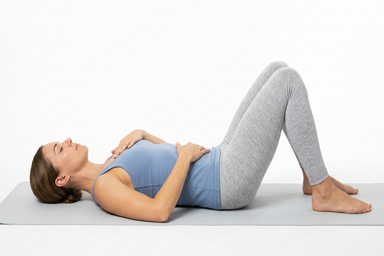
How to
A slow breathing drill that trains relaxed belly breathing and helps you control your breath.
- Lie on your back or sit tall with one hand on your belly.
- Inhale through your nose and let your belly rise.
- Exhale slowly and let your belly fall.
- Keep your chest and shoulders quiet.
- Continue for the set time with smooth breaths.
- Breathe low into your belly
- Keep your shoulders relaxed
- Shrugging your shoulders as you inhale
- Forcing the breath or holding tension

Vagal Tone & Movement, Not Just Mood
Box Breathing and Diaphragmatic Breathing directly stimulate the vagus nerve, shifting your autonomic nervous system toward parasympathetic dominance. Sandwiching the circuit between these breath anchors means your cortisol response is actively managed — not just worked off. Every exercise here earns its place by keeping heart rate in the mood-regulating aerobic zone.

What Anxiety Actually Does to Your Body
Chronic stress chronically tightens the hip flexors, compresses the thoracic spine, and disrupts diaphragmatic breathing — which is why Cat-Cow, Supine Spinal Twist, and Child's Pose aren't just cooldown filler. They directly reverse the physical posture of anxiety. The Glute Bridge and Bird Dog rebuild the posterior chain stability that stress-induced tension quietly erodes.

Rhythm Over Intensity, Always
This circuit applies the principle of rhythmic bilateral movement — Marching, Mountain Climbers, Bodyweight Squats — which research links to increased serotonin synthesis and reduced amygdala reactivity. The 15-minute circuit length is deliberate: long enough to trigger endorphin release, short enough to stay below the cortisol spike threshold. To personalize, slow any exercise by 30% on high-anxi