
Clean & Minimal AI Powered Fitness Routines
Download AppIntermediate Shoulder Impingement Relief
A shoulder-friendly mobility + strengthening session to reduce impingement symptoms and improve overhead mechanics.
Intermediate Shoulder Impingement Relief
A shoulder-friendly mobility + strengthening session to reduce impingement symptoms and improve overhead mechanics.
Warm-Up
Prepare the upper back, ribcage, and shoulder blade mechanics to reduce pinching and improve movement quality. Focus on mobility and positioning.
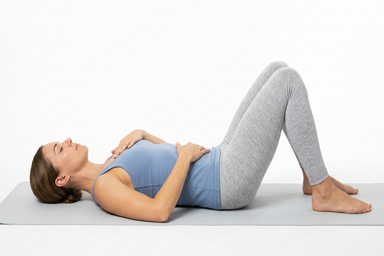
How to
A slow breathing drill that trains relaxed belly breathing and helps you control your breath.
- Lie on your back or sit tall with one hand on your belly.
- Inhale through your nose and let your belly rise.
- Exhale slowly and let your belly fall.
- Keep your chest and shoulders quiet.
- Continue for the set time with smooth breaths.
- Breathe low into your belly
- Keep your shoulders relaxed
- Shrugging your shoulders as you inhale
- Forcing the breath or holding tension
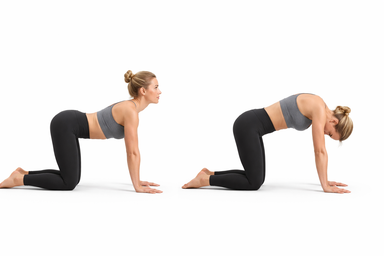
How to
A gentle spine mobility move that alternates rounding and arching your back on hands and knees.
- Start on hands and knees with wrists under shoulders and knees under hips.
- Inhale and drop your belly as you lift your chest and tailbone.
- Exhale and round your back, tucking your chin and tailbone.
- Move slowly between both positions with your breath.
- Move one vertebra at a time.
- Keep your shoulders away from your ears.
- Forcing your neck up or down.
- Rushing through the movement.
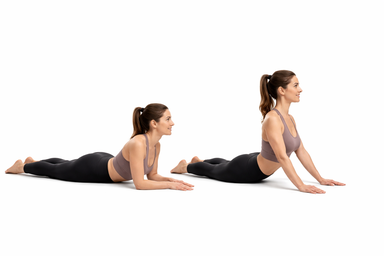
How to
A floor hold that trains upper-back extension and posture muscles.
- Lie face down with legs long and forehead near the floor.
- Place your hands by your temples with elbows wide.
- Brace lightly, then lift your chest a few inches from the floor.
- Hold the lift and breathe slowly.
- Lower with control when the hold is done.
- Keep your neck long.
- Lift from your upper back.
- Cranking your neck to look forward.
- Overarching your lower back.
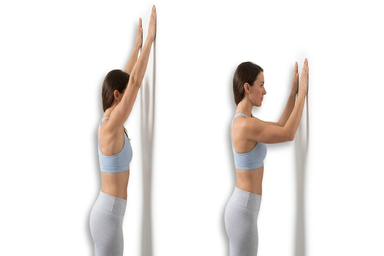
How to
A wall-based shoulder move that trains shoulder control and upper-back posture.
- Stand with your back to a wall and feet a small step out.
- Press your head, upper back, and hips gently into the wall.
- Place your arms on the wall in a goalpost shape.
- Slide your arms up the wall as far as you can control.
- Slide back down to the start and repeat.
- Keep your ribs down.
- Move slowly and stay in control.
- Arching your lower back to reach higher.
- Shrugging your shoulders toward your ears.
Circuit A
Use light-to-moderate band tension. Keep shoulder down and back; avoid shrugging.
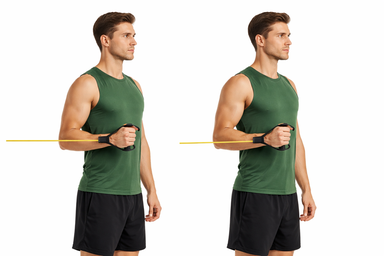
How to
A one-arm band rotation that trains your shoulder rotators.
- Stand tall with the band at your side and elbow bent 90 degrees.
- Keep your elbow tucked to your side.
- Rotate your forearm outward against the band.
- Slowly return to start under control.
- Finish your reps, then switch sides.
- Keep your elbow pinned to your side
- Move only your forearm
- Letting your elbow drift away from your body
- Twisting your torso to cheat the rep
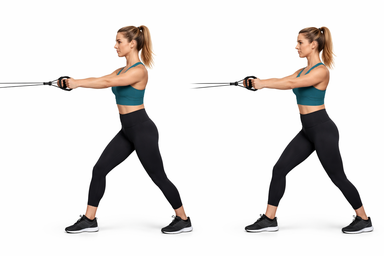
How to
A standing pull that trains your back, shoulders, and arms.
- Stand tall and hold the band at chest height.
- Brace your core and pull your elbows back.
- Squeeze your shoulder blades together.
- Slowly return with control and repeat.
- Keep your chest up
- Pull with your elbows
- Shrugging your shoulders up
- Leaning back to cheat the pull
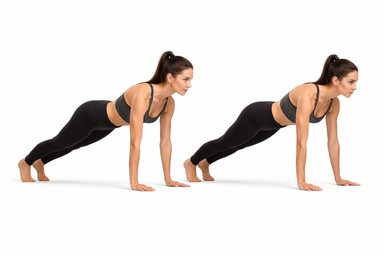
How to
A straight-arm push-up variation that trains shoulder blade control and upper back stability.
- Start in a high plank with hands under shoulders and arms straight.
- Let your chest sink slightly as your shoulder blades move together.
- Push the floor away to spread your shoulder blades apart.
- Keep your body in one straight line as you repeat.
- Keep your elbows straight
- Move only at your shoulder blades
- Bending your elbows like a regular push-up
- Letting your hips sag or pike
Circuit B
Focus on smooth shoulder blade rotation and control. Stop short of any pinch.
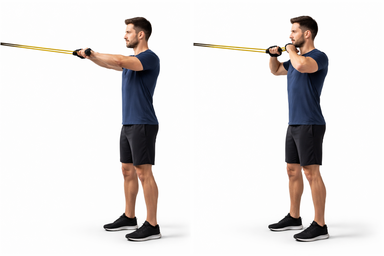
How to
A band pull to your face that trains your upper back, rear shoulders, and shoulder control.
- Anchor the band at face height and hold one end in each hand.
- Step back with arms straight and palms facing down or in.
- Pull the band toward your face, leading with your elbows.
- Squeeze your shoulder blades, then slowly extend your arms.
- Repeat for all reps with steady control.
- Keep your ribs down
- Pull elbows high and wide
- Shrugging your shoulders toward your ears
- Leaning back to move the band
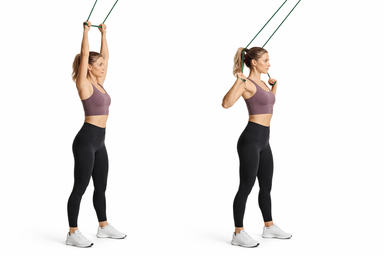
How to
A band pulling move that trains your upper back and lats with both arms.
- Anchor the band overhead and hold one end in each hand.
- Step back or kneel until the band is lightly stretched.
- Start with arms overhead and ribs down.
- Pull your elbows down toward your sides.
- Control the band back overhead and repeat.
- Pull elbows toward your pockets
- Keep your chest tall
- Shrugging your shoulders as you pull
- Leaning back to move the band
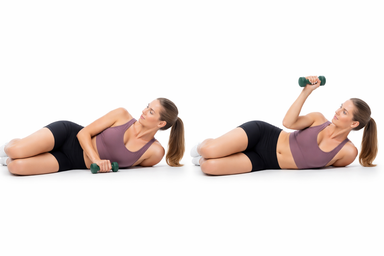
How to
A side-lying shoulder rotation that trains your rotator cuff and upper back control.
- Lie on one side with your working elbow bent 90 degrees at your ribs.
- Keep your wrist straight and rotate your forearm up toward the ceiling.
- Pause briefly at the top without rolling your body back.
- Lower with control to the start position.
- Finish your reps, then switch sides.
- Keep your elbow pinned to your side.
- Move slow and stay stacked.
- Rolling your torso back to lift higher.
- Letting your elbow drift away from your ribs.
Cool-Down
Downshift the nervous system and gently open the chest/shoulder without forcing range. Decompress and stretch.
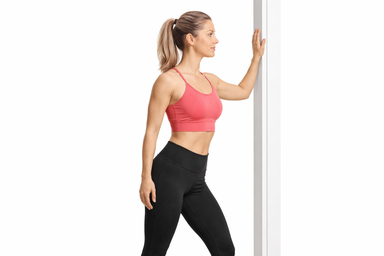
How to
A doorway chest stretch that opens your pecs and front shoulders.
- Stand in a doorway and place one forearm on the frame.
- Step one foot through and gently turn your body away.
- Hold the stretch and breathe slowly.
- Finish your reps, then switch sides.
- Keep your shoulder down
- Breathe into the stretch
- Forcing the stretch too hard
- Shrugging your shoulder up
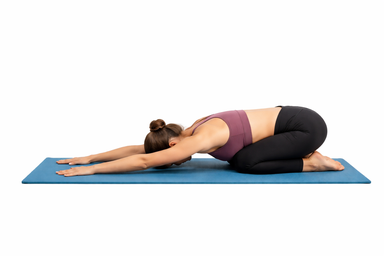
How to
A kneeling rest stretch that relaxes your back, hips, and shoulders while you breathe.
- Kneel with your big toes together and knees apart.
- Sit your hips back toward your heels.
- Reach your arms forward and lower your chest to the floor.
- Rest your forehead down and relax your neck.
- Hold the stretch and breathe slowly.
- Let your hips sink back
- Keep your neck relaxed
- Forcing your hips down
- Holding your breath

Restoring Space Before Adding Load
Thoracic extension and cat-cow directly address the kyphotic posture that collapses subacromial space, while diaphragmatic breathing resets rib position to allow true scapular upward rotation. Every mobility drill here creates the mechanical prerequisite for the strengthening work that follows.

Why Impingement Is a Movement Problem
Shoulder impingement rarely originates at the shoulder — it's driven by scapular dyskinesis and rotator cuff underactivation that lets the humeral head migrate superiorly during elevation. This routine targets the exact deficit pattern: weak lower trapezius, tight pectorals, and inhibited external rotators conspiring to close off subacromial space.

Load Sequencing That Protects While It Builds
Band face pulls and side-lying external rotation isolate the infraspinatus and teres minor at low load before scapular push-ups demand integrated serratus anterior control — a deliberate progression from isolated to compound. If the banded rows feel effortless at 3 sets, increase band resistance before adding reps to maintain neuromuscular specificity.