
Clean & Minimal AI Powered Fitness Routines
Download AppIntermediate Scuba Diving Conditioning
A 25-minute intermediate session to build breath control, finning endurance, and core stability for scuba diving.
Intermediate Scuba Diving Conditioning
A 25-minute intermediate session to build breath control, finning endurance, and core stability for scuba diving.
Warm-Up
Prep your spine, ribs, and hips for efficient movement and calm breathing control. Focus on mobility and breathing techniques.
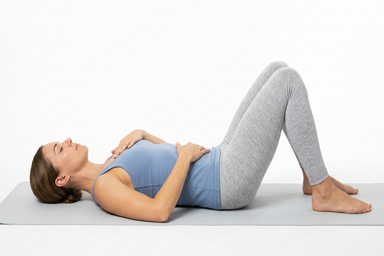
How to
A slow breathing drill that trains relaxed belly breathing and helps you control your breath.
- Lie on your back or sit tall with one hand on your belly.
- Inhale through your nose and let your belly rise.
- Exhale slowly and let your belly fall.
- Keep your chest and shoulders quiet.
- Continue for the set time with smooth breaths.
- Breathe low into your belly
- Keep your shoulders relaxed
- Shrugging your shoulders as you inhale
- Forcing the breath or holding tension
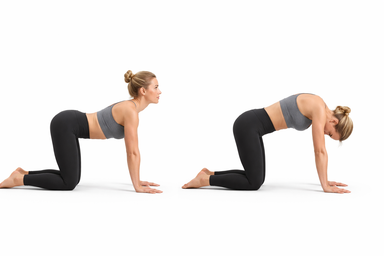
How to
A gentle spine mobility move that alternates rounding and arching your back on hands and knees.
- Start on hands and knees with wrists under shoulders and knees under hips.
- Inhale and drop your belly as you lift your chest and tailbone.
- Exhale and round your back, tucking your chin and tailbone.
- Move slowly between both positions with your breath.
- Move one vertebra at a time.
- Keep your shoulders away from your ears.
- Forcing your neck up or down.
- Rushing through the movement.
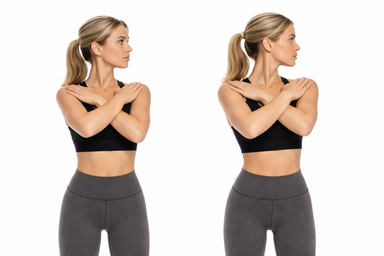
How to
A controlled upper-back rotation that trains thoracic mobility and trunk control.
- Sit or stand tall with your feet steady.
- Cross your arms over your chest or reach them forward.
- Rotate your chest to one side while your hips stay still.
- Return to center, then rotate to the other side.
- Move slowly and breathe through each turn.
- Keep your hips still
- Rotate through your upper back
- Letting your hips follow the turn
- Twisting mostly from your lower back
Finning and Core Circuit
Keep your lower back neutral. For flutter kicks, keep small controlled kicks from the hips.
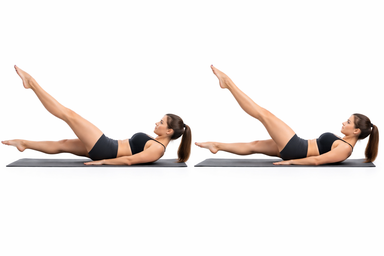
How to
A floor core move that trains your abs and hip flexors with quick alternating leg kicks.
- Lie on your back with legs straight and hands by your sides or under your hips.
- Brace your core and lift your heels a few inches off the floor.
- Kick one leg up as the other lowers, then alternate in small, fast motions.
- Keep your lower back close to the floor and breathe steadily.
- Finish the set, then lower both legs with control.
- Keep kicks small and controlled
- Press your low back down
- Letting your lower back arch
- Kicking too high or losing control
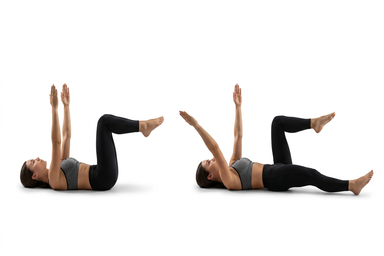
How to
A core move on your back that trains control while you move opposite arm and leg.
- Lie on your back with arms up and knees bent over hips.
- Press your lower back gently toward the floor.
- Lower one arm and the opposite leg with control.
- Return to the start, then repeat on the other side.
- Keep alternating sides for each rep.
- Move slow and stay braced
- Keep your ribs down
- Letting your lower back arch
- Rushing through the reps
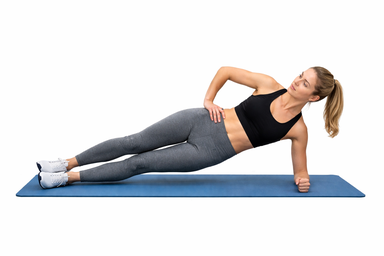
How to
A side hold that trains your obliques, hips, and shoulder stability.
- Lie on one side with your elbow under your shoulder and legs stacked.
- Lift your hips until your body forms a straight line.
- Hold the position and breathe steadily.
- Lower your hips with control.
- Finish your hold, then switch sides.
- Keep your hips stacked
- Press the floor away
- Letting your hips sag
- Rolling your chest toward the floor
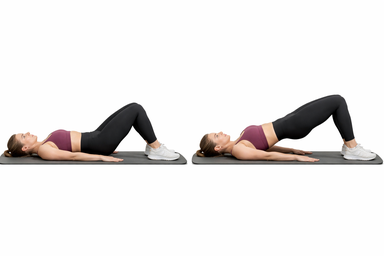
How to
A floor hip lift that trains your glutes and hamstrings with both feet planted.
- Lie on your back with knees bent and feet flat, hip-width apart.
- Brace your core and press your arms lightly into the floor.
- Drive through your heels and lift your hips until your body forms a straight line.
- Squeeze your glutes at the top, then lower with control.
- Repeat for your reps.
- Keep your ribs down
- Drive through your heels
- Arching your lower back at the top
- Pushing through your toes
Leg Stamina Hold
Sit tall, knees roughly over ankles, steady exhale to mimic calm exertion underwater.
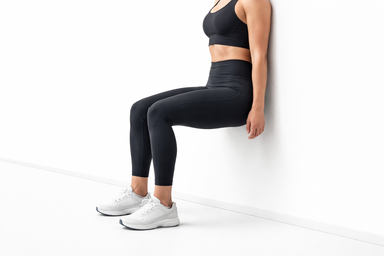
How to
An isometric squat hold against a wall that trains your quads, glutes, and endurance.
- Stand with your back against a wall and feet hip-width apart.
- Walk your feet forward and slide down until your thighs are near parallel.
- Keep your back on the wall and knees over your ankles.
- Hold the position and breathe steadily.
- Stand up by pressing through your feet when finished.
- Keep your chest tall
- Press your back into the wall
- Letting your knees cave inward
- Holding your breath
Cool-Down
Downshift your heart rate and practice calm, controlled breathing patterns. Focus on breath control.
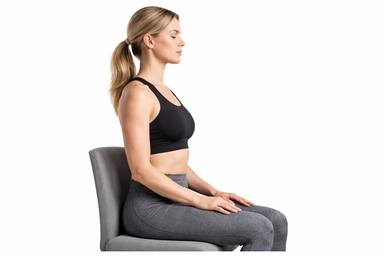
How to
A steady breathing pattern that trains control and helps you settle your breathing.
- Sit or stand tall with relaxed shoulders.
- Inhale through your nose for 4 counts.
- Hold your breath for 4 counts.
- Exhale slowly for 4 counts.
- Hold with your lungs empty for 4 counts, then repeat.
- Keep your face and jaw relaxed.
- Breathe smoothly and quietly.
- Rushing the counts.
- Tensing your shoulders or neck.

Finning Power Meets Spinal Decompression
Flutter kicks target the hip flexors and rectus femoris for propulsive endurance, while dead bug and glute bridge co-activate the transverse abdominis and posterior chain — the exact muscles that stabilize your torso against buoyancy shifts underwater. Cat-cow and thoracic rotation prep the spine for the extended prone position held during every dive.

What Neutral Buoyancy Really Costs Your Body
Maintaining trim at depth demands sustained isometric output from your deep core stabilizers, not just your abs — a fatigued diver compensates with fin overcorrection, burning through air faster. The lateral chain work in side plank directly addresses the lateral stability lost when current or uneven weighting pulls you off axis.

Box Breathing as a Performance Variable
Structuring the cool-down around box breathing trains the parasympathetic response that controls surface interval recovery and pre-dive anxiety regulation — both directly tied to air consumption rates. Progressive overload here means extending the hold phases by one count per week, turning breath control from a relaxation tool into a measurable performance metric.