
Clean & Minimal AI Powered Fitness Routines
Download AppPre-Bed Wrist Relief
A short, low-impact wrist routine to reduce irritation and calm symptoms before sleep (no equipment).
Pre-Bed Wrist Relief
A short, low-impact wrist routine to reduce irritation and calm symptoms before sleep (no equipment).
Wind Down & Wrist Relief
Gentle wrist mobility, stretching, and light isometrics to calm irritated tissues before bed (no equipment). — 6 minutes.
How to
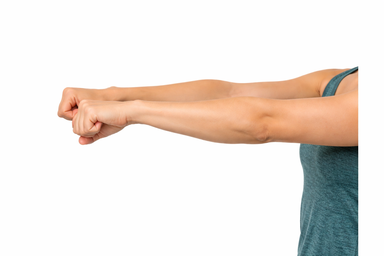
A gentle wrist mobility drill that moves both wrists through circles to warm your forearms and hands.
- Stand or sit tall with your arms relaxed and elbows bent.
- Make slow circles with both wrists in one direction.
- Keep the movement smooth and controlled.
- Reverse direction and circle both wrists the other way.
- Move through a comfortable range
- Keep your shoulders relaxed
- Forcing a painful range
- Moving too fast or jerky
How to
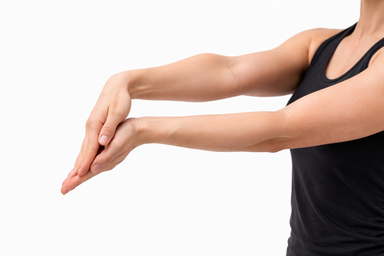
A forearm stretch that targets the wrist flexors on one arm at a time.
- Extend one arm in front of you, palm up.
- Keep your elbow straight and gently pull your fingers back.
- Hold the stretch and breathe slowly.
- Release gently, then switch sides.
- Keep your shoulder relaxed
- Use gentle pressure
- Bending your elbow
- Pulling into sharp pain
How to
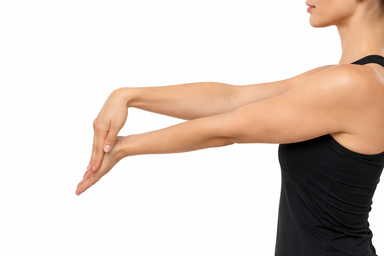
A forearm stretch that targets the wrist extensors on the top of your forearm.
- Extend one arm in front with your palm down.
- Use your other hand to gently bend your wrist down.
- Keep your elbow straight and hold while breathing slowly.
- Release slowly, then switch sides.
- Use gentle pressure
- Keep your shoulder relaxed
- Forcing the wrist into pain
- Bending your elbow during the stretch
How to
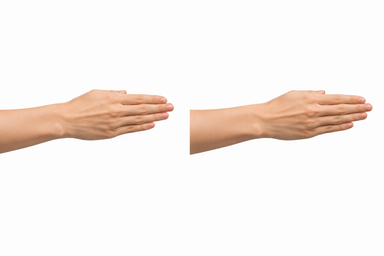
A finger mobility drill for both hands that trains finger control through several fist shapes.
- Hold both hands up with wrists straight and fingers long.
- Bend your fingertips into a hook, then straighten.
- Make a full fist, then straighten your fingers.
- Bend at the big knuckles into a flat fist, then open fully.
- Move slowly through each shape for your reps.
- Keep your wrists straight.
- Move with control.
- Rushing through the finger positions.
- Letting your wrists bend or collapse.
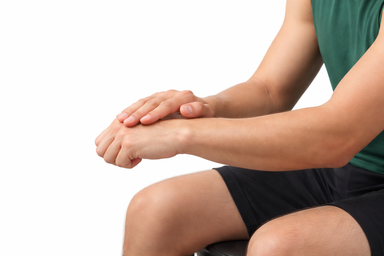
How to
An isometric wrist extension hold that trains the wrist and forearm extensors on both sides.
- Sit with both forearms under a table, palms facing down.
- Keep your wrists straight and elbows close to your sides.
- Press the backs of both hands up into the table without moving them.
- Hold steady and breathe for the set time.
- Ease off slowly and relax your hands.
- Keep your wrists straight.
- Use steady pressure, not a jerk.
- Bending your wrists during the hold.
- Shrugging your shoulders or tensing your neck.
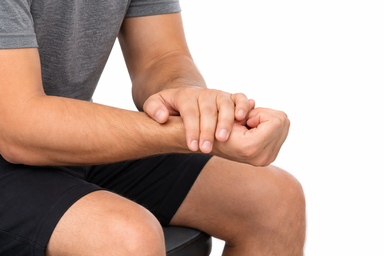
How to
An isometric wrist flexion hold that trains the forearm flexors without moving the wrists.
- Sit with forearms supported and palms up under a firm surface.
- Keep your wrists straight and fingers relaxed.
- Press your palms upward into the surface without letting your wrists move.
- Hold for the set time and breathe steadily, then relax.
- Keep your wrists still
- Use steady, even pressure
- Letting your wrists bend during the hold
- Shrugging your shoulders or tensing your neck

Isometrics Last: The Calming Signal
The closing isometrics—palm-down extension and palm-up flexion—use sub-maximal tension to flush metabolic waste from the flexor and extensor compartments without aggravating irritated tissue. Ending on held contractions signals the nervous system to downregulate, making them ideal final exercises before sleep.

Why Wrist Pain Peaks at Night
Carpal tunnel and tendon irritation often intensify at night because fluid redistributes when you're horizontal and wrists curl during sleep. This sequence directly addresses that window—tendon glides mobilize the median nerve and flexor tendons through their sheaths before they're compressed for hours in a fixed position.

Six Minutes, Sequenced With Intent
The routine moves from global mobility (circles) to tissue-specific lengthening (flexor and extensor stretches) to neuromuscular control (isometrics)—a deliberate load progression that respects irritated tissue. To personalize it, spend an extra 20–30 seconds on whichever stretch reproduces your familiar tightness.