
Clean & Minimal AI Powered Fitness Routines
Download AppIntermediate Camping Setup & Carry
A 25-minute functional routine to build carry strength, core stability, and endurance for camping setup.
Intermediate Camping Setup & Carry
A 25-minute functional routine to build carry strength, core stability, and endurance for camping setup.
Warm-Up
5 minutes. Raise temperature and prep shoulders, hips, and legs for carrying and lifting.
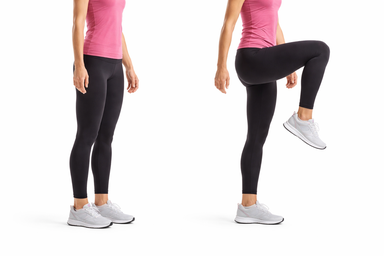
How to
A low-impact cardio move that warms up your legs and hips while raising your heart rate.
- Stand tall with your feet hip-width apart and arms at your sides.
- Lift one knee to hip height as you swing the opposite arm forward.
- Lower that foot, then lift the other knee and switch arms.
- Keep alternating sides at a steady pace.
- Slow down and plant both feet to finish.
- Stand tall with your chest up
- Land softly under your hips
- Leaning back as you lift your knees
- Stomping your feet on each step
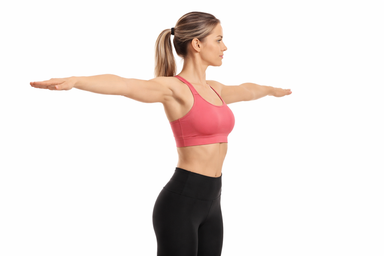
How to
A simple shoulder warm-up that moves both arms in circles and trains shoulder control.
- Stand tall with your feet about hip-width apart.
- Raise both arms out to your sides at shoulder height.
- Make small, controlled circles with both arms.
- Keep circling for the set time, then reverse direction if told.
- Lower your arms to finish.
- Keep your ribs down
- Move smoothly, not fast
- Shrugging your shoulders toward your ears
- Arching your back to keep the arms up
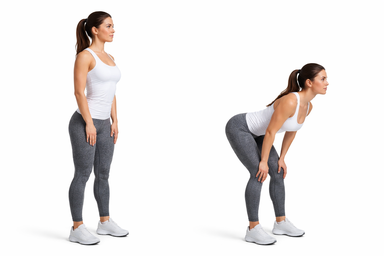
How to
A standing hip hinge that trains your glutes and hamstrings and builds the pattern for deadlifts.
- Stand with feet hip-width apart and knees slightly bent.
- Brace your core and keep your chest open.
- Push your hips back as your torso tips forward.
- Lower until you feel your hamstrings, keeping your back flat.
- Drive your hips forward to stand tall again.
- Move from your hips, not your waist.
- Keep your back long.
- Squatting instead of hinging your hips back.
- Rounding your back as you lower.
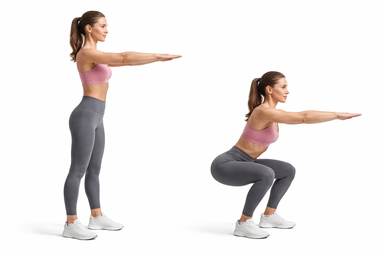
How to
A bodyweight lower-body move that trains your quads, glutes, and hips.
- Stand with feet about shoulder-width apart and toes slightly out.
- Brace your core and keep your chest tall.
- Bend your knees and hips to lower into a squat.
- Push through your feet to stand back up.
- Keep your knees tracking over your toes
- Keep your chest up
- Letting your knees cave in
- Rounding your back as you lower
Circuit A
Carry and legs focus. Keep the load controlled and posture tall. Use a hallway or loop outside.
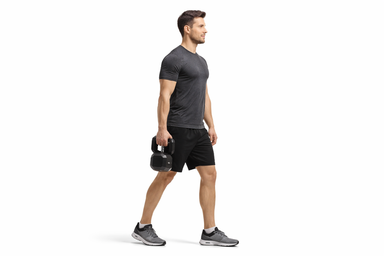
How to
A one-arm loaded carry that trains grip, core, and posture while you walk.
- Hold a weight at one side with your arm straight.
- Stand tall with ribs down and shoulders level.
- Walk forward with slow, controlled steps.
- Keep the weight off your thigh as you move.
- Finish the distance or time, then switch sides.
- Stay tall and level
- Brace like you expect a bump
- Leaning away from the weight
- Letting the weight swing or rest on your leg
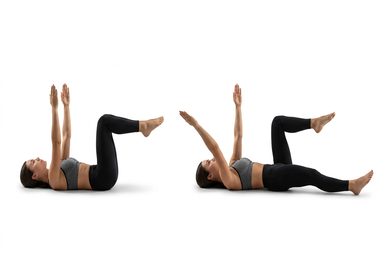
How to
A core move on your back that trains control while you move opposite arm and leg.
- Lie on your back with arms up and knees bent over hips.
- Press your lower back gently toward the floor.
- Lower one arm and the opposite leg with control.
- Return to the start, then repeat on the other side.
- Keep alternating sides for each rep.
- Move slow and stay braced
- Keep your ribs down
- Letting your lower back arch
- Rushing through the reps
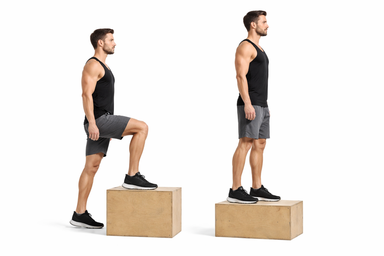
How to
A single-leg climb onto a step that trains your quads, glutes, and balance.
- Stand facing a sturdy step with one foot fully on top.
- Lean slightly forward and drive through the front foot to stand up.
- Bring your back foot onto the step with control.
- Step back down with the same back foot, then lower the front foot.
- Finish your reps, then switch legs.
- Keep your chest tall
- Drive through your whole front foot
- Pushing off too much with the back foot
- Letting your front knee cave inward
Circuit B
Carry and core focus. Aim for steady breathing; avoid leaning or shrugging during carries.
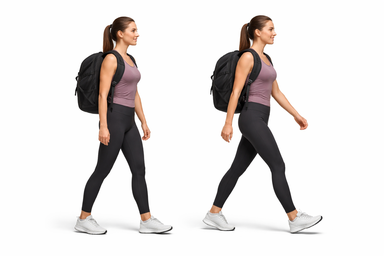
How to
A one-sided loaded carry that trains your grip, core, shoulders, and posture while you walk.
- Stand tall with the backpack in one hand at your side.
- Brace your core and pull your shoulders down and back.
- Walk forward with short, steady steps.
- Keep your torso upright and avoid leaning toward the load.
- Finish the distance or time, then switch sides.
- Stay tall and level
- Keep the bag close
- Leaning or twisting as you walk
- Letting the backpack swing away from you
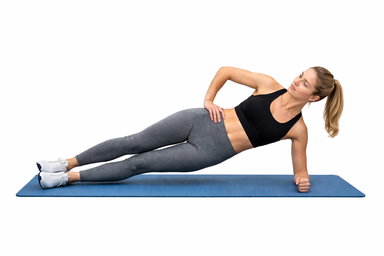
How to
A side hold that trains your obliques, hips, and shoulder stability.
- Lie on one side with your elbow under your shoulder and legs stacked.
- Lift your hips until your body forms a straight line.
- Hold the position and breathe steadily.
- Lower your hips with control.
- Finish your hold, then switch sides.
- Keep your hips stacked
- Press the floor away
- Letting your hips sag
- Rolling your chest toward the floor
Cool-Down
2 minutes. Bring heart rate down and reset posture.
How to
A low-impact cardio move that warms up your legs and hips while raising your heart rate.
- Stand tall with your feet hip-width apart and arms at your sides.
- Lift one knee to hip height as you swing the opposite arm forward.
- Lower that foot, then lift the other knee and switch arms.
- Keep alternating sides at a steady pace.
- Slow down and plant both feet to finish.
- Stand tall with your chest up
- Land softly under your hips
- Leaning back as you lift your knees
- Stomping your feet on each step

Loaded Carry Progression for Trail Demands
Farmer, suitcase, and backpack carries train the trapezius, erector spinae, and obliques under asymmetrical and bilateral load — mirroring real campsite conditions. The hip hinge primes posterior chain mechanics so your lumbar spine stays neutral when hoisting gear bags off the ground.

What Camping Actually Costs Your Body
Repeated step-ups, uneven terrain, and prolonged load-bearing fatigue the glutes and stabilizing ankle musculature long before campers notice — making unilateral strength the hidden performance factor. The suitcase carry specifically targets the quadratus lumborum, the muscle most taxed when carrying a single heavy pack to a remote site.

Stability Before Strength, Every Session
Dead bug and side plank are sequenced post-carry to reinforce anti-rotation and anti-extension control while the core is already fatigued — accelerating neuromuscular adaptation under realistic conditions. To personalize, add 1–2 lbs to your farmer carry each week, or extend side plank holds by 5 seconds as your lateral chain strengthens.