
Clean & Minimal AI Powered Fitness Routines
Download AppIntermediate Neck Mobility
A 25-minute neck mobility session to improve range of motion, posture, and upper-back comfort.
Intermediate Neck Mobility
A 25-minute neck mobility session to improve range of motion, posture, and upper-back comfort.
Warm-Up
Prepare the neck and upper back with low-intensity breathing and control. Breath work and gentle activation.
How to
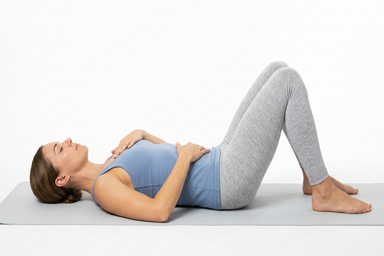
A slow breathing drill that trains relaxed belly breathing and helps you control your breath.
- Lie on your back or sit tall with one hand on your belly.
- Inhale through your nose and let your belly rise.
- Exhale slowly and let your belly fall.
- Keep your chest and shoulders quiet.
- Continue for the set time with smooth breaths.
- Breathe low into your belly
- Keep your shoulders relaxed
- Shrugging your shoulders as you inhale
- Forcing the breath or holding tension
How to
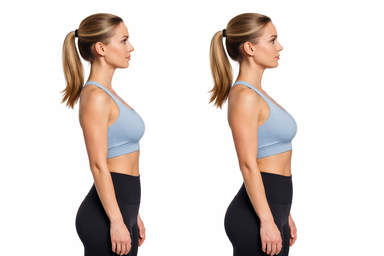
A small neck position hold that trains the front of your neck and helps control head position.
- Sit or stand tall with your eyes looking straight ahead.
- Gently slide your chin straight back, like making a double chin.
- Keep your head level and your jaw relaxed.
- Hold the tuck and breathe slowly.
- Release to neutral, then repeat for the set.
- Move straight back, not down.
- Keep your shoulders relaxed.
- Tilting your head up or down.
- Forcing the tuck or clenching your jaw.
How to
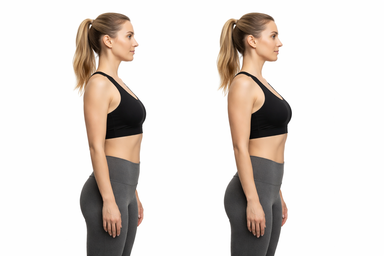
A small shoulder blade squeeze that trains your upper back and shoulder control.
- Stand or sit tall with your arms relaxed by your sides.
- Pull your shoulder blades back and slightly down.
- Pause briefly while keeping your ribs stacked.
- Release with control to the start position.
- Repeat for the set.
- Keep your neck relaxed
- Move from your shoulder blades
- Shrugging your shoulders toward your ears
- Arching your lower back to create the squeeze
Mobility Circuit A
Slow, controlled reps. Pause briefly at comfortable end range.
How to
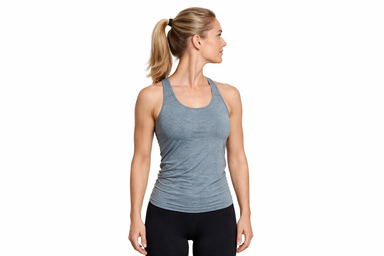
A gentle neck mobility move that trains controlled rotation and warms up your neck.
- Sit or stand tall with your shoulders relaxed.
- Slowly turn your head to the right as far as comfortable.
- Return to center, then slowly turn your head to the left.
- Keep alternating sides with smooth, controlled reps.
- Keep your chin level.
- Move slowly and breathe.
- Forcing the range of motion.
- Shrugging your shoulders as you turn.
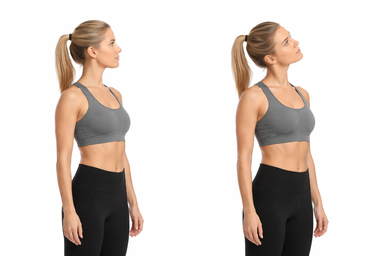
How to
A gentle neck side bend hold done one side at a time. It targets the side of your neck.
- Sit or stand tall with your shoulders relaxed.
- Slowly tilt one ear toward the same-side shoulder.
- Hold the side bend and breathe steadily.
- Lift your head back to center, then switch sides.
- Keep your shoulders down.
- Move slowly and gently.
- Shrugging the shoulder toward your ear.
- Forcing your head past comfort.
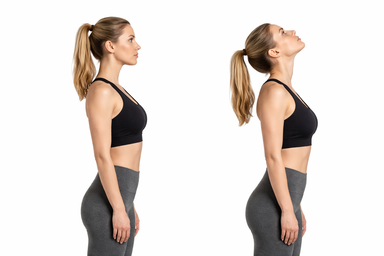
How to
A gentle neck movement that trains control as you flex and extend your neck.
- Sit or stand tall with your shoulders relaxed.
- Lower your chin toward your chest slowly.
- Lift your chin and look up gently.
- Return to neutral and repeat with control.
- Move slowly and stay relaxed.
- Keep your chest lifted.
- Forcing the end range.
- Shrugging your shoulders as you move.
Posture Support Circuit B
Keep chin gently tucked and ribs down; avoid shrugging.
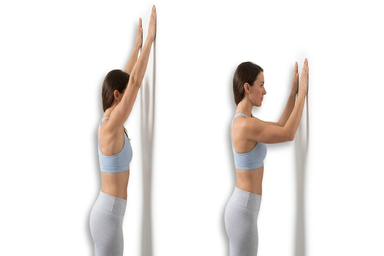
How to
A wall-based shoulder move that trains shoulder control and upper-back posture.
- Stand with your back to a wall and feet a small step out.
- Press your head, upper back, and hips gently into the wall.
- Place your arms on the wall in a goalpost shape.
- Slide your arms up the wall as far as you can control.
- Slide back down to the start and repeat.
- Keep your ribs down.
- Move slowly and stay in control.
- Arching your lower back to reach higher.
- Shrugging your shoulders toward your ears.
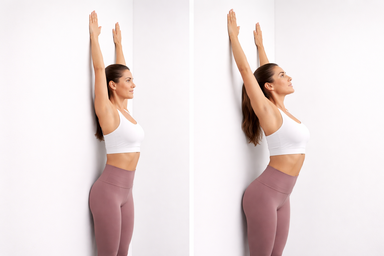
How to
A wall-supported upper-back extension hold that trains thoracic mobility and posture control.
- Stand facing a wall and place your forearms on it at shoulder width.
- Step back and hinge at your hips until your chest lowers.
- Press your forearms into the wall and sink your chest between your arms.
- Hold the position and breathe slowly.
- Walk back in and stand tall to finish.
- Keep your ribs gently tucked.
- Keep your neck long.
- Arching through your lower back.
- Shrugging your shoulders toward your ears.
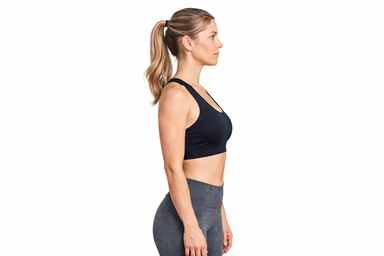
How to
An isometric neck hold that trains your neck muscles with steady tension.
- Sit or stand tall with your neck neutral.
- Press your head gently into your hand.
- Hold the pressure and breathe steadily.
- Stop, relax, then repeat on each direction.
- Keep your chin level
- Use steady, gentle pressure
- Pushing hard or holding your breath
- Letting your head jut forward
Cool-Down
Gentle stretching to finish; keep intensity low and breathing calm. Stretch and downshift.
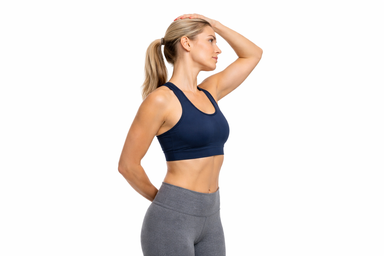
How to
A gentle neck stretch for one upper trapezius at a time. Hold it and breathe.
- Sit or stand tall with your shoulders relaxed.
- Hold a chair with the hand on the side you will stretch.
- Tilt your ear away from that shoulder until you feel a gentle stretch.
- Add light pressure with your other hand, if needed.
- Hold and breathe slowly, then switch sides.
- Keep both shoulders down.
- Use gentle pressure only.
- Pulling your head hard with your hand.
- Lifting the shoulder you are stretching.
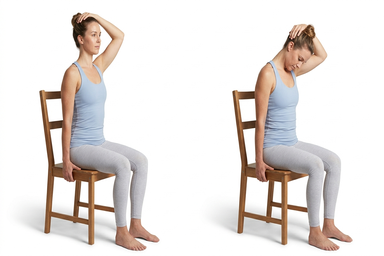
How to
A seated neck stretch for one side that targets the levator scapulae near the neck and upper shoulder.
- Sit tall and place one hand behind your back to anchor that shoulder.
- Turn your head about 45 degrees away from that shoulder.
- Look down toward your opposite armpit.
- Use your other hand to gently guide your head down.
- Hold and breathe slowly, then switch sides.
- Keep the stretch gentle
- Keep your anchored shoulder down
- Pulling hard on your head
- Rounding your upper back
How to
A slow breathing drill that trains relaxed belly breathing and helps you control your breath.
- Lie on your back or sit tall with one hand on your belly.
- Inhale through your nose and let your belly rise.
- Exhale slowly and let your belly fall.
- Keep your chest and shoulders quiet.
- Continue for the set time with smooth breaths.
- Breathe low into your belly
- Keep your shoulders relaxed
- Shrugging your shoulders as you inhale
- Forcing the breath or holding tension

Cervical Mobility Starts at the Diaphragm
Diaphragmatic breathing opens this session because chronic neck tension is often driven by accessory breathing patterns that overload the scalenes and upper trapezius. Chin tucks and isometric holds then restore deep cervical flexor activation — the muscles most inhibited by forward-head posture — before rotation and side-bend work demands full range.

The Forward-Head Posture Feedback Loop
Every degree of forward head carriage adds roughly 10 lbs of effective load on the cervical spine, progressively fatiguing the levator scapulae and upper traps — exactly the tissues targeted in your cool-down stretches. Scapular retraction and wall slides address the thoracic rounding that silently perpetuates this pattern from below.

Isometrics Before Stretching — Not After
Placing neck isometric holds before passive stretching exploits post-isometric relaxation: brief muscular contraction followed by a stretch yields greater range than stretching alone. To personalize this session, increase isometric hold duration by 5 seconds each week — a simple progressive overload cue that builds cervical stabilizer endurance without adding volume.