
Clean & Minimal AI Powered Fitness Routines
Download AppIntermediate Vertical Jump Routine
A jump-focused session to build power and takeoff mechanics with controlled plyometrics.
Intermediate Vertical Jump Routine
A jump-focused session to build power and takeoff mechanics with controlled plyometrics.
Warm-Up
Raise temperature, prep ankles/hips, and groove landing mechanics. Prep & elasticity focus.
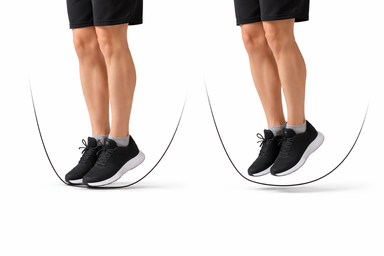
How to
A light bouncing cardio move that trains rhythm, calves, and coordination.
- Stand tall with the rope behind your heels and handles at your sides.
- Turn the rope with small wrist circles.
- Hop lightly as the rope passes under your feet.
- Land softly on the balls of your feet and keep a steady rhythm.
- Stop the rope and step out when your set is done.
- Stay tall and relaxed
- Keep jumps low
- Swinging from your shoulders
- Jumping too high or landing heavy
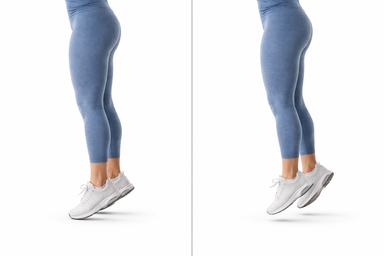
How to
Small, quick hops on both feet that train your calves, ankles, and foot control.
- Stand tall with feet hip-width apart and knees slightly bent.
- Rise onto the balls of your feet.
- Hop lightly in place using mostly your ankles.
- Land softly on the balls of your feet and repeat.
- Keep hops small and quick.
- Stay tall through your torso.
- Landing hard on your heels.
- Bending your knees deeply on each hop.
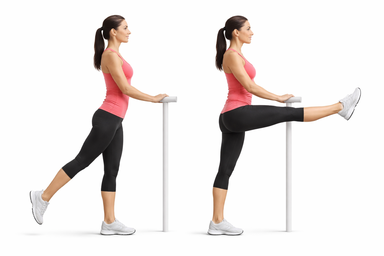
How to
A dynamic leg swing that warms up your hips, hamstrings, and glutes while challenging balance.
- Stand tall and hold a wall or rail for light support if needed.
- Lift one leg slightly off the floor with a soft knee.
- Swing it forward and back with control.
- Set it down, then switch legs on the next rep.
- Keep your torso tall.
- Swing from the hip, not the low back.
- Leaning back as the leg swings forward.
- Forcing the range of motion.
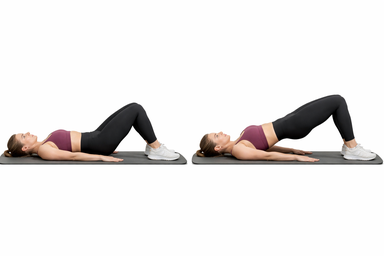
How to
A floor hip lift that trains your glutes and hamstrings with both feet planted.
- Lie on your back with knees bent and feet flat, hip-width apart.
- Brace your core and press your arms lightly into the floor.
- Drive through your heels and lift your hips until your body forms a straight line.
- Squeeze your glutes at the top, then lower with control.
- Repeat for your reps.
- Keep your ribs down
- Drive through your heels
- Arching your lower back at the top
- Pushing through your toes
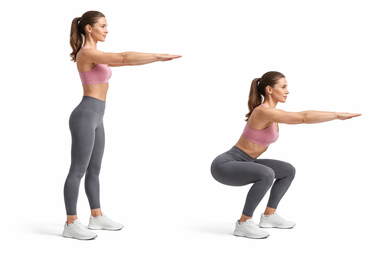
How to
A bodyweight lower-body move that trains your quads, glutes, and hips.
- Stand with feet about shoulder-width apart and toes slightly out.
- Brace your core and keep your chest tall.
- Bend your knees and hips to lower into a squat.
- Push through your feet to stand back up.
- Keep your knees tracking over your toes
- Keep your chest up
- Letting your knees cave in
- Rounding your back as you lower
Set A — Elastic Jumps
Explode up, land softly, reset between reps as needed.
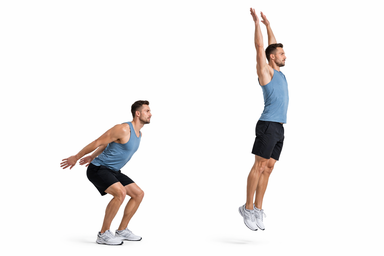
How to
A quick dip and jump that trains explosive power in your legs and hips.
- Stand tall with feet about hip-width apart.
- Dip fast by bending your knees and hips, and swing your arms back.
- Jump straight up as high as you can, swinging your arms forward.
- Land softly with bent knees, then stand tall and reset.
- Keep your chest up
- Land quietly on both feet
- Letting your knees cave in
- Landing stiff-legged
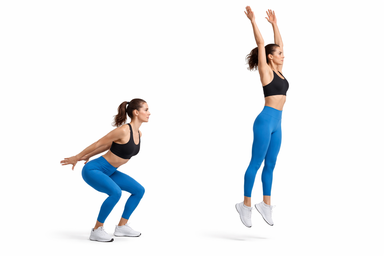
How to
A bodyweight squat into an explosive jump that trains your legs, glutes, and power.
- Stand with feet about shoulder-width apart and arms by your sides.
- Push your hips back and bend your knees into a squat.
- Drive through your feet and jump straight up.
- Land softly with knees bent, then go into the next rep.
- Land quiet and controlled
- Keep your chest lifted
- Letting your knees cave in
- Landing with stiff legs
Set B — Unilateral Power
Stay tall; keep knee tracking over toes; step down instead of jumping down. — Landing control focus.
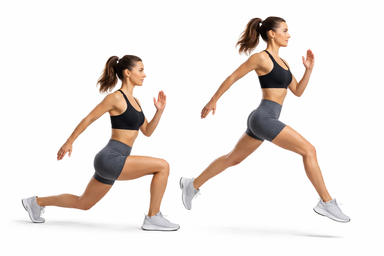
How to
A jumping split squat that trains your legs and glutes while challenging power and balance.
- Stand in a split stance with your front foot flat and back heel lifted.
- Bend both knees and lower into a split squat.
- Jump straight up, driving through your front foot.
- Land softly in the same stance and lower into the next rep.
- Finish your reps, then switch legs.
- Keep your chest tall
- Land with soft knees
- Letting your front knee cave inward
- Landing hard on each jump
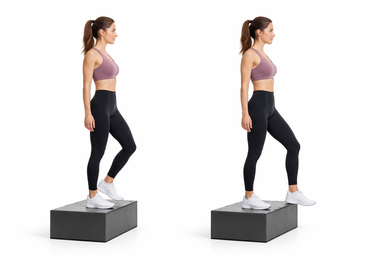
How to
A controlled step down from a box that trains your quads, glutes, and balance.
- Stand on a box with one foot near the edge.
- Let the other foot hover off the side or front.
- Bend your standing knee and slowly lower your free foot to the floor.
- Tap the floor lightly, then drive through your standing foot to rise.
- Finish your reps, then switch legs.
- Keep your knee tracking over your toes
- Control the lowering
- Dropping quickly to the floor
- Letting your knee cave inward
Set C — Single-Leg Reactivity
Small, quick hops. Stop if you feel Achilles discomfort.
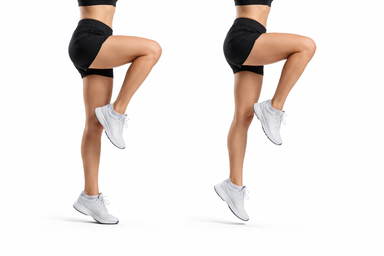
How to
A one-leg jumping move that trains power, balance, and control.
- Stand tall on one leg with a soft knee and arms ready.
- Dip slightly, then hop forward or in place on the same leg.
- Land softly on the ball of your foot, then let your heel lower.
- Reset your balance before the next hop.
- Finish your reps, then switch legs.
- Keep your knee tracking over your toes.
- Land quietly with control.
- Letting your knee cave inward on landing.
- Rushing the next hop before you regain balance.
Cool-Down
Bring heart rate down and restore lower-leg/quad length. Calves, quads, ankles focus.
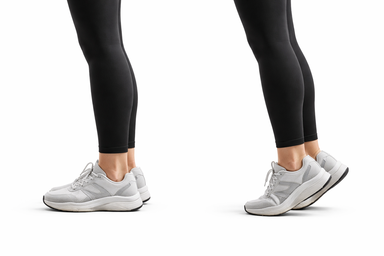
How to
A standing lower-leg move that trains your calves by lifting and lowering your heels.
- Stand tall with both feet hip-width apart.
- Press through the balls of your feet and lift your heels.
- Pause briefly at the top with control.
- Lower your heels slowly back to the floor.
- Repeat for your reps.
- Keep your ankles tracking straight.
- Move up and down with control.
- Rocking onto the outside edges of your feet.
- Bouncing at the bottom of each rep.
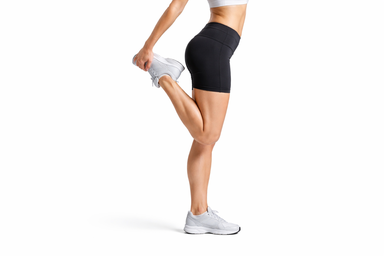
How to
A standing thigh stretch that targets the front of your hip and quad on one leg.
- Stand tall and hold a wall or chair for balance if needed.
- Bend one knee and hold your ankle or foot behind you.
- Keep your knees close and gently draw your heel toward your glute.
- Hold the stretch and breathe slowly.
- Release with control, then switch legs.
- Stand tall through your chest
- Keep your knees close
- Arching your lower back
- Pulling the knee out to the side
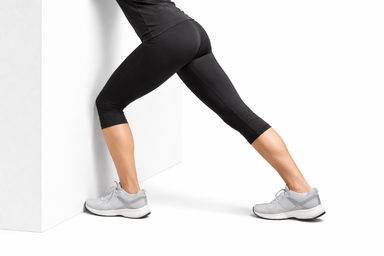
How to
A standing calf stretch for one leg that targets the back of your lower leg.
- Stand facing a wall and place both hands on it.
- Step one foot back and keep that heel on the floor.
- Bend your front knee until you feel a stretch in the back calf.
- Hold the stretch and breathe slowly.
- Release, step in, then switch legs.
- Keep your back heel down
- Point both toes forward
- Letting the back heel lift
- Turning the back foot out

Elastic Energy From Ankle to Hip
Ankle Hops and Jump Rope prime the stretch-shortening cycle in your soleus and Achilles tendon before heavier loading begins. Squat Jumps and Countermovement Jumps then recruit the glutes and quads through rapid eccentric-concentric transitions — the exact mechanism that determines peak takeoff velocity.

Vertical Jump Is a Tendon Sport
Elite jumpers store and release elastic energy through stiff, conditioned tendons — not just strong muscles. The progression from Ankle Hops to Single-Leg Hops mirrors how your Achilles and patellar tendons must absorb ground reaction forces and rebound explosively, a demand that separates good jumpers from great ones.

Plyometric Sequencing for Peak Output
Box Drop into ground contact trains reactive strength index — your ability to minimize contact time while maximizing force output. Start each jump set fully recovered (90–120s rest) to train the neuromuscular system at true peak intensity. If Single-Leg Hops feel asymmetrical, prioritize that weaker side before adding volume.