
Clean & Minimal AI Powered Fitness Routines
Download AppFoam Roll Strength Prep
Quick rolling and dynamic leg work to loosen a stiff lower body before lifting.
Foam Roll Strength Prep
Quick rolling and dynamic leg work to loosen a stiff lower body before lifting.
Warm-up
Loosen calves, hamstrings, hips, and ankles, then prep legs for squats and lunges.
How to
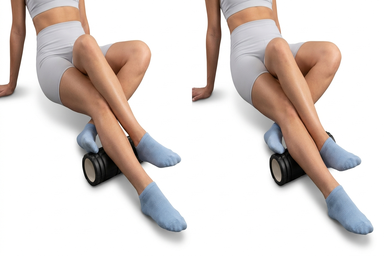
A one-sided calf release using a foam roller to loosen the lower leg.
- Sit with one calf on the roller and the other foot on the floor.
- Place your hands behind you and lift your hips.
- Roll slowly from ankle to just below the knee.
- Pause on tight spots and breathe.
- Finish your reps, then switch legs.
- Keep your leg relaxed
- Move slowly and stay controlled
- Rolling too fast over the calf
- Holding your breath or tensing up
How to
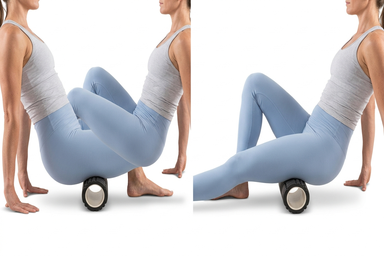
A hamstring foam roll hold that helps you feel and relax the back of your thigh.
- Sit with the roller under one hamstring and prop up your hands.
- Lift your hips and hold pressure on the sore spot.
- Breathe slowly and keep the leg relaxed.
- Finish your time, then switch legs.
- Keep your hips lifted
- Breathe slow and steady
- Rolling too fast instead of holding still
- Putting all your weight on the roller
How to
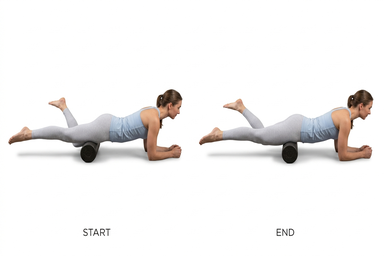
A foam roller hold for the front of one thigh that targets your quadriceps.
- Lie face down with a foam roller under one thigh.
- Prop up on your forearms and relax that leg.
- Shift weight onto the roller until you feel firm pressure.
- Hold steady and breathe slowly for the set time.
- Finish, then switch legs.
- Keep your thigh relaxed
- Use your arms to control pressure
- Holding your breath
- Pressing into sharp pain
How to
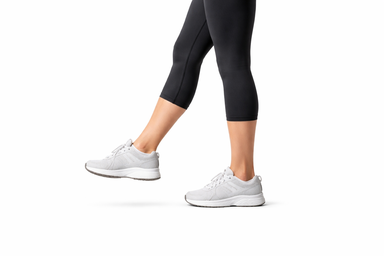
A simple ankle mobility move that warms up your ankle through a full circle.
- Sit or stand tall and lift one foot slightly off the floor.
- Slowly circle your ankle in one direction.
- Reverse the circle and keep the motion smooth.
- Finish your reps, then switch legs.
- Move from your ankle, not your knee
- Keep the circles slow and controlled
- Rushing through small, choppy circles
- Letting your whole leg swing around
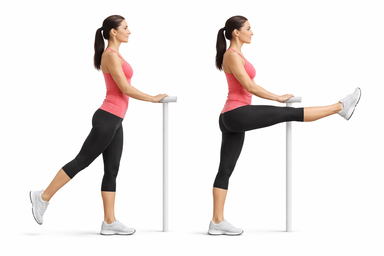
How to
A dynamic leg swing that warms up your hips, hamstrings, and glutes while challenging balance.
- Stand tall and hold a wall or rail for light support if needed.
- Lift one leg slightly off the floor with a soft knee.
- Swing it forward and back with control.
- Set it down, then switch legs on the next rep.
- Keep your torso tall.
- Swing from the hip, not the low back.
- Leaning back as the leg swings forward.
- Forcing the range of motion.
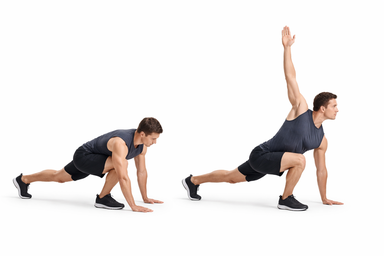
How to
A dynamic lunge stretch that opens your hips, hamstrings, and upper back as you alternate sides.
- Start in a high plank with hands under shoulders.
- Step your right foot outside your right hand.
- Drop your hips, then rotate your right arm up toward the ceiling.
- Place your hand down and step back to plank.
- Repeat on the left side, alternating sides each rep.
- Keep your front foot flat.
- Reach long through your top hand.
- Letting your front heel lift off the floor.
- Rushing the rotation without control.
Foam Roll Pass
Use slow passes, breathe steadily, and avoid grinding into sharp spots.
How to
A one-sided calf release using a foam roller to loosen the lower leg.
- Sit with one calf on the roller and the other foot on the floor.
- Place your hands behind you and lift your hips.
- Roll slowly from ankle to just below the knee.
- Pause on tight spots and breathe.
- Finish your reps, then switch legs.
- Keep your leg relaxed
- Move slowly and stay controlled
- Rolling too fast over the calf
- Holding your breath or tensing up
How to
A hamstring foam roll hold that helps you feel and relax the back of your thigh.
- Sit with the roller under one hamstring and prop up your hands.
- Lift your hips and hold pressure on the sore spot.
- Breathe slowly and keep the leg relaxed.
- Finish your time, then switch legs.
- Keep your hips lifted
- Breathe slow and steady
- Rolling too fast instead of holding still
- Putting all your weight on the roller
How to
A foam roller hold for the front of one thigh that targets your quadriceps.
- Lie face down with a foam roller under one thigh.
- Prop up on your forearms and relax that leg.
- Shift weight onto the roller until you feel firm pressure.
- Hold steady and breathe slowly for the set time.
- Finish, then switch legs.
- Keep your thigh relaxed
- Use your arms to control pressure
- Holding your breath
- Pressing into sharp pain
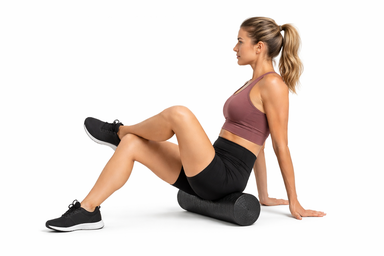
How to
A single-side foam rolling drill for your glutes that uses body weight and small shifts.
- Sit on a foam roller with one ankle crossed over the other knee.
- Lean toward the crossed-leg side and place your hands behind you.
- Slowly roll from the top of your glute to just above your thigh.
- Pause on tender spots and breathe with comfortable pressure.
- Finish the time, then switch sides.
- Move slowly and breathe.
- Keep pressure comfortable.
- Rolling onto your lower back.
- Holding your breath or forcing painful pressure.
Dynamic Openers
Stay smooth and controlled so the hips and ankles open without fatigue.
How to
A simple ankle mobility move that warms up your ankle through a full circle.
- Sit or stand tall and lift one foot slightly off the floor.
- Slowly circle your ankle in one direction.
- Reverse the circle and keep the motion smooth.
- Finish your reps, then switch legs.
- Move from your ankle, not your knee
- Keep the circles slow and controlled
- Rushing through small, choppy circles
- Letting your whole leg swing around
How to
A dynamic leg swing that warms up your hips, hamstrings, and glutes while challenging balance.
- Stand tall and hold a wall or rail for light support if needed.
- Lift one leg slightly off the floor with a soft knee.
- Swing it forward and back with control.
- Set it down, then switch legs on the next rep.
- Keep your torso tall.
- Swing from the hip, not the low back.
- Leaning back as the leg swings forward.
- Forcing the range of motion.
How to
A dynamic lunge stretch that opens your hips, hamstrings, and upper back as you alternate sides.
- Start in a high plank with hands under shoulders.
- Step your right foot outside your right hand.
- Drop your hips, then rotate your right arm up toward the ceiling.
- Place your hand down and step back to plank.
- Repeat on the left side, alternating sides each rep.
- Keep your front foot flat.
- Reach long through your top hand.
- Letting your front heel lift off the floor.
- Rushing the rotation without control.
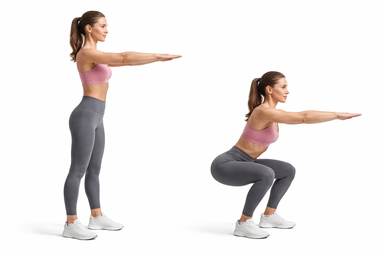
How to
A bodyweight lower-body move that trains your quads, glutes, and hips.
- Stand with feet about shoulder-width apart and toes slightly out.
- Brace your core and keep your chest tall.
- Bend your knees and hips to lower into a squat.
- Push through your feet to stand back up.
- Keep your knees tracking over your toes
- Keep your chest up
- Letting your knees cave in
- Rounding your back as you lower
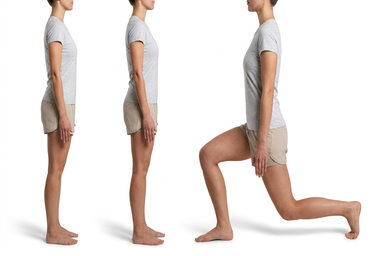
How to
A backward stepping lunge that trains your legs and glutes while challenging balance.
- Stand tall with your feet hip-width apart.
- Step one foot back and lower until both knees bend.
- Keep your front foot planted and your chest up.
- Push through your front foot to stand back up.
- Repeat on the other side, alternating each rep.
- Keep your front knee over your foot
- Take a controlled step back
- Letting your front knee cave inward
- Pushing off the back foot too much

Myofascial Release Before Load
Rolling the calves, hamstrings, quads, and glutes reduces tissue viscosity and improves sliding surface mechanics between fascial layers — so when you hit bodyweight squats and reverse lunges, motor recruitment is cleaner and joint tracking is more precise from rep one.

Why Stiff Lifters Get Hurt First
Chronic lower body stiffness compresses joint surfaces and forces compensatory movement patterns under load. Ankle circles and leg swings directly address the talocrural and hip flexor mobility restrictions that cause knees to cave and lumbar spine to over-flex during heavy lifting.

Sequencing That Primes, Not Fatigues
The progression from passive rolling to joint circles to the World's Greatest Stretch to loaded movement follows a tissue-readiness hierarchy — each layer prepares the next. To personalize it, spend an extra 60 seconds on whichever foam roll station reveals the most tenderness; that's your limiting tissue today.