
Clean & Minimal AI Powered Fitness Routines
Download AppIntermediate Full Body Flexibility
A 25-minute full-body flexibility session focusing on hips, hamstrings, spine, chest, and shoulders.
Intermediate Full Body Flexibility
A 25-minute full-body flexibility session focusing on hips, hamstrings, spine, chest, and shoulders.
Warm-Up Mobility
Gentle movement to warm tissues and prepare joints for deeper stretching. — 5 minutes.
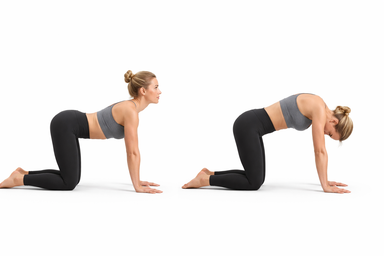
How to
A gentle spine mobility move that alternates rounding and arching your back on hands and knees.
- Start on hands and knees with wrists under shoulders and knees under hips.
- Inhale and drop your belly as you lift your chest and tailbone.
- Exhale and round your back, tucking your chin and tailbone.
- Move slowly between both positions with your breath.
- Move one vertebra at a time.
- Keep your shoulders away from your ears.
- Forcing your neck up or down.
- Rushing through the movement.
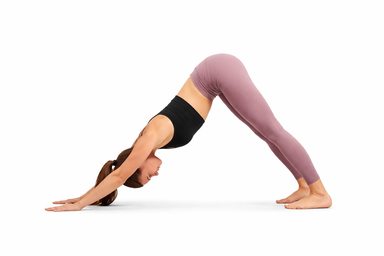
How to
A full-body isometric pose that trains shoulders, core, and hips while stretching the back line.
- Start on hands and knees, with hands under shoulders and knees under hips.
- Tuck your toes and lift your hips up and back.
- Straighten your arms and press the floor away.
- Let your heels reach toward the floor, with knees slightly bent if needed.
- Hold the pose and breathe steadily.
- Press your chest toward your thighs
- Keep your neck relaxed
- Rounding your upper back and shrugging your shoulders
- Forcing your heels down by locking your knees
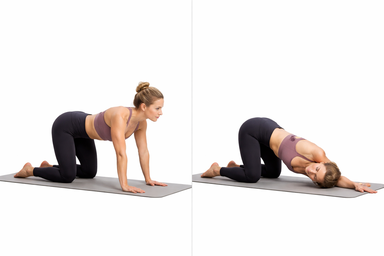
How to
A floor stretch that opens your upper back and shoulder while you hold one side at a time.
- Start on all fours with your hands under shoulders and knees under hips.
- Slide one arm under your chest, palm up, and lower your shoulder toward the floor.
- Rest your head down if comfortable, and keep your hips over your knees.
- Hold the stretch and breathe slowly.
- Press into your top hand to return to all fours, then switch sides.
- Keep your hips stacked over your knees
- Breathe into your upper back
- Letting your hips drift far to one side
- Forcing your shoulder lower than comfortable
Hips & Hamstrings
Keep the pelvis square; back off if you feel pinching at the front of the hip.
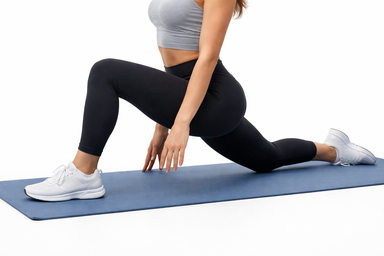
How to
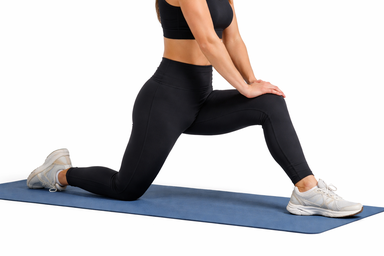
A low lunge hold that stretches the front of your hip and thigh while training steady posture.
- Step one foot forward and lower your back knee to the floor.
- Stack your front knee over your ankle and point your toes forward.
- Tuck your hips slightly and shift forward until you feel a stretch.
- Hold, breathe slowly, and keep your chest tall.
- Finish the hold, then switch sides.
- Keep your front heel planted
- Keep your hips facing forward
- Letting your front knee collapse inward
- Arching your lower back to go deeper
How to
A unilateral isometric stretch for your hamstrings and calves.
- Start in a half split with one leg forward and one back.
- Hinge at the hips and fold over the front leg.
- Hold the stretch and breathe steadily.
- Finish your hold, then switch sides.
- Keep your back long
- Stay relaxed and breathe
- Rounding your lower back
- Bouncing in and out of the stretch
How to
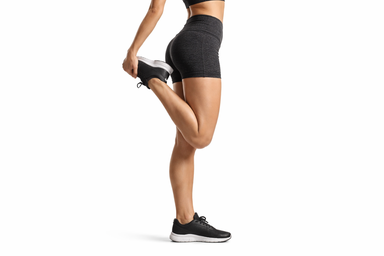
A standing thigh stretch that targets the front of one leg and challenges balance.
- Stand tall and hold a wall or chair for balance if needed.
- Bend one knee and bring your heel toward your glutes.
- Grab your ankle or foot, and keep your knees close together.
- Hold the stretch and breathe slowly.
- Release with control, then switch legs.
- Stand tall with your chest up.
- Keep your knees close together.
- Arching your lower back to force the stretch.
- Letting your lifted knee flare out wide.
Glutes & Outer Hip
Use props/support as needed; keep breathing into the stretch.
How to
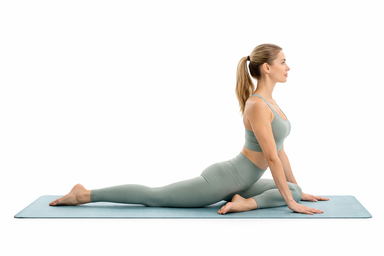
A floor hip stretch for the front-leg glutes and outer hip while opening the back hip.
- Start on hands and knees, then bring one knee toward the same-side wrist.
- Angle your front shin across the mat and slide the other leg back.
- Square your hips forward and lower onto your hands, forearms, or a support.
- Hold the stretch and breathe slowly.
- Come out carefully, then switch sides.
- Keep both hips facing forward.
- Relax your shoulders and jaw.
- Letting one hip drop hard to the floor.
- Forcing the front knee into a sharp angle.
How to
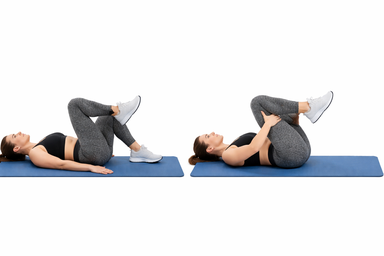
A lying hip stretch that targets your glutes and outer hip, one side at a time.
- Lie on your back with knees bent and feet flat.
- Cross one ankle over the opposite thigh.
- Pull the uncrossed thigh toward your chest.
- Hold and breathe, keeping your shoulders relaxed.
- Release slowly, then switch sides.
- Keep your low back on the floor
- Flex the crossed foot
- Pulling your head or neck off the floor
- Forcing the knee open too far
Spine, Chest & Shoulders
Rotate from the mid-back; keep shoulders relaxed away from ears.
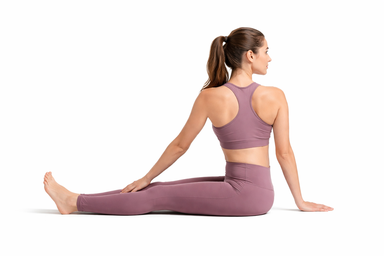
How to
A seated twist that gently works spinal rotation and posture while you hold and breathe.
- Sit tall with both legs extended or crossed.
- Place one hand behind you and the other on your opposite knee.
- Rotate your chest toward the back hand.
- Hold the twist and breathe slowly.
- Release to center, then switch sides.
- Sit tall through your spine
- Twist from your upper back
- Forcing the twist with your arms
- Slumping or rounding your back
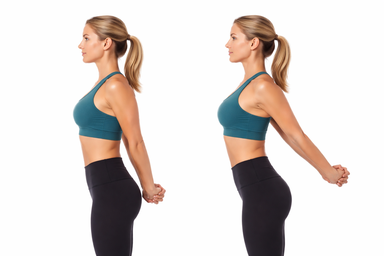
How to
A standing stretch that opens your chest and shoulders with a steady hold.
- Stand tall with your feet hip-width apart.
- Clasp your hands behind your back or hold a towel.
- Gently straighten your arms and lift your chest.
- Hold the stretch and breathe slowly.
- Release your hands and relax your shoulders.
- Keep your ribs down
- Lift through your chest
- Arching your lower back
- Forcing your arms too high
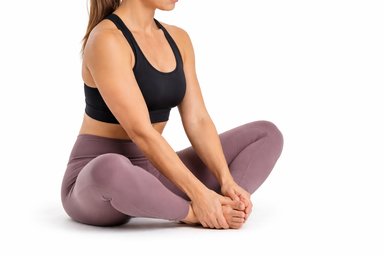
How to
A seated hip stretch that targets your inner thighs and groin.
- Sit tall and bring the soles of your feet together.
- Let your knees fall out to the sides.
- Hold your feet or ankles and lengthen through your spine.
- Relax your thighs and hold, breathing slowly.
- Keep your chest lifted
- Let your knees drop naturally
- Forcing your knees down with your hands
- Rounding your back to reach your feet
Cool-Down
Downshift breathing and release remaining tension. — 3 minutes.
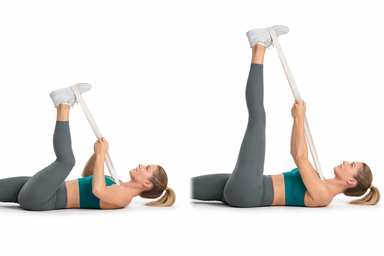
How to
A lying hamstring stretch that uses a steady hold to target the back of your thigh.
- Lie on your back with one leg flat and the other lifted.
- Hold behind your thigh or use a towel around your foot.
- Straighten your raised leg until you feel a gentle stretch.
- Hold the position and breathe slowly.
- Lower your leg, then change sides if your set calls for it.
- Keep your hips heavy on the floor.
- Relax your shoulders and neck.
- Forcing the leg past a gentle stretch.
- Letting your hips roll off the floor.
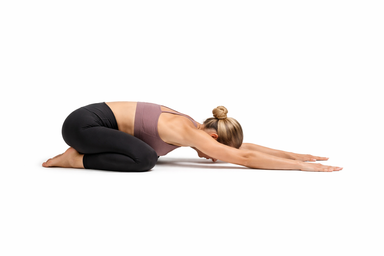
How to
A kneeling rest pose that gently stretches your back, hips, and shoulders.
- Kneel on the floor with your big toes together and knees apart.
- Sit your hips back toward your heels.
- Fold forward and reach your arms in front of you.
- Rest your forehead down and let your chest sink between your thighs.
- Hold the position and breathe slowly.
- Relax your shoulders
- Breathe into your back
- Forcing your hips down
- Holding your breath
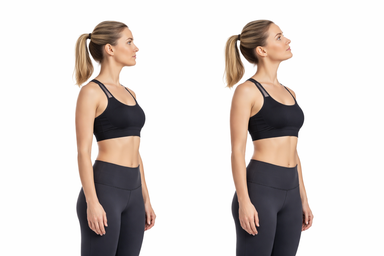
How to
A gentle side-bend stretch for the side of your neck, held still while you breathe.
- Sit or stand tall with your shoulders relaxed.
- Let your right ear move toward your right shoulder.
- Hold the stretch and breathe slowly.
- Return to center, then switch sides.
- Keep both shoulders down.
- Move slowly and gently.
- Lifting the shoulder toward your ear.
- Forcing your head into the stretch.

Spinal Mobility as the Foundation
Cat-Cow and Thread-the-Needle prime the thoracic and lumbar vertebrae through segmental flexion-extension and rotation before deeper loading begins. This sequencing unlocks the spine's full range before the hips and hamstrings are asked to lengthen, reducing compensatory tension that would otherwise limit your Pigeon Pose and Half Split depth.

Hip Capsule Complexity Demands Variety
The hip joint's ball-and-socket structure requires stretching across multiple planes — Pigeon targets external rotation, Low Lunge addresses hip flexor length, Butterfly opens the adductors, and Lying Figure-Four isolates the piriformis. Addressing all four vectors is what separates genuine mobility gains from surface-level looseness that disappears by morning.

Passive Hold Timing Drives Real Change
At the intermediate level, connective tissue adaptation requires holds of 30–60 seconds to transition from neurological relaxation into actual fascial remodeling. Progress this routine by gradually extending hold durations in the Supine Hamstring and Seated Spinal Twist before adding new exercises — depth improves through time under tension, not just frequency.