
Clean & Minimal AI Powered Fitness Routines
Download AppIntermediate Postpartum Recovery
A 25-minute intermediate postpartum recovery session focusing on breath, core control, glutes, and gentle full-body strength.
Intermediate Postpartum Recovery
A 25-minute intermediate postpartum recovery session focusing on breath, core control, glutes, and gentle full-body strength.
Warm-Up & Reconnect
Breath, gentle mobility, and core connection to prepare for strength work. 6 minutes.
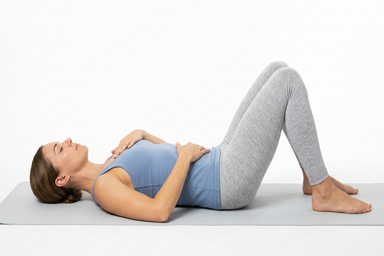
How to
A slow breathing drill that trains relaxed belly breathing and helps you control your breath.
- Lie on your back or sit tall with one hand on your belly.
- Inhale through your nose and let your belly rise.
- Exhale slowly and let your belly fall.
- Keep your chest and shoulders quiet.
- Continue for the set time with smooth breaths.
- Breathe low into your belly
- Keep your shoulders relaxed
- Shrugging your shoulders as you inhale
- Forcing the breath or holding tension
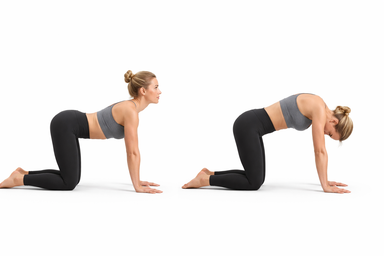
How to
A gentle spine mobility move that alternates rounding and arching your back on hands and knees.
- Start on hands and knees with wrists under shoulders and knees under hips.
- Inhale and drop your belly as you lift your chest and tailbone.
- Exhale and round your back, tucking your chin and tailbone.
- Move slowly between both positions with your breath.
- Move one vertebra at a time.
- Keep your shoulders away from your ears.
- Forcing your neck up or down.
- Rushing through the movement.
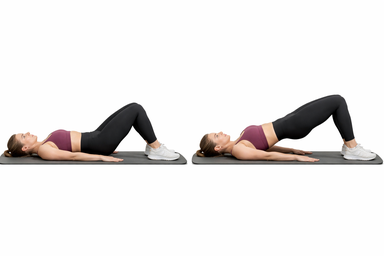
How to
A floor hip lift that trains your glutes and hamstrings with both feet planted.
- Lie on your back with knees bent and feet flat, hip-width apart.
- Brace your core and press your arms lightly into the floor.
- Drive through your heels and lift your hips until your body forms a straight line.
- Squeeze your glutes at the top, then lower with control.
- Repeat for your reps.
- Keep your ribs down
- Drive through your heels
- Arching your lower back at the top
- Pushing through your toes
Circuit A
Aim for smooth reps. Exhale on effort; avoid abdominal doming.
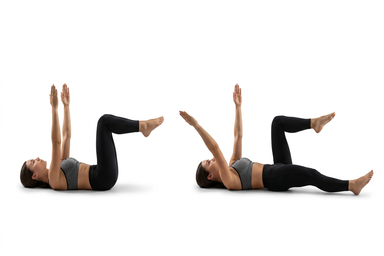
How to
A core move on your back that trains control while you move opposite arm and leg.
- Lie on your back with arms up and knees bent over hips.
- Press your lower back gently toward the floor.
- Lower one arm and the opposite leg with control.
- Return to the start, then repeat on the other side.
- Keep alternating sides for each rep.
- Move slow and stay braced
- Keep your ribs down
- Letting your lower back arch
- Rushing through the reps
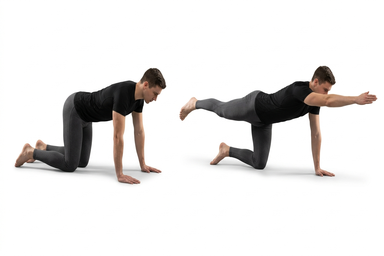
How to
A core stability move from all fours that trains your abs, back, glutes, and balance.
- Start on hands and knees with your hands under shoulders and knees under hips.
- Brace your core and keep your back flat.
- Reach one arm forward and the opposite leg back until they are straight.
- Pause briefly, then bring your hand and knee back under you.
- Repeat on the other side, alternating each rep.
- Keep your hips square
- Move slow and controlled
- Arching or sagging your lower back
- Rotating your hips as you reach
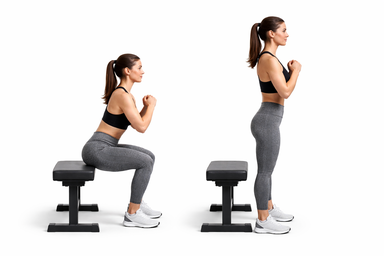
How to
A squat to a box or bench that trains your quads, glutes, and control.
- Stand in front of a box with feet about shoulder-width apart.
- Reach hips back and bend knees to sit down with control.
- Lightly touch or sit on the box without relaxing fully.
- Drive through your feet to stand tall again.
- Keep your chest up
- Track knees over toes
- Dropping onto the box
- Letting your knees cave inward
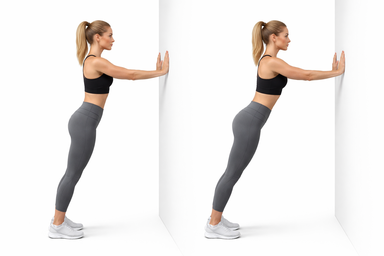
How to
A standing push-up against a wall that trains your chest, shoulders, and triceps.
- Stand facing a wall and place your hands at chest height.
- Step your feet back so your body forms a straight line.
- Bend your elbows and lower your chest toward the wall.
- Press the wall away to return to the start.
- Repeat for your planned reps.
- Keep your body straight
- Keep elbows about 45 degrees
- Letting your hips sag
- Shrugging your shoulders toward your ears
Circuit B
Glute and lateral core focus. Keep hips stacked and ribs down. If side plank feels too intense, do it from knees.
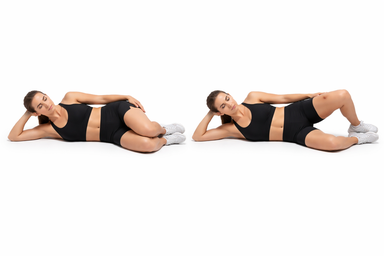
How to
A side-lying hip exercise that trains your glutes and outer hips.
- Lie on your side with knees bent and feet stacked.
- Brace your core and keep your hips stacked.
- Lift your top knee while keeping your feet together.
- Lower your knee with control to the start.
- Finish your reps, then switch sides.
- Keep your hips stacked
- Move slow and controlled
- Rolling your hips back as you lift
- Letting your feet separate
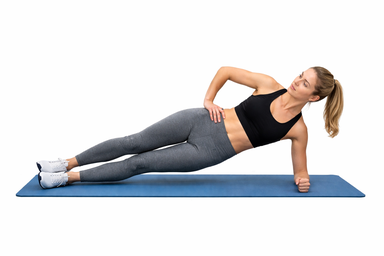
How to
A side hold that trains your obliques, hips, and shoulder stability.
- Lie on one side with your elbow under your shoulder and legs stacked.
- Lift your hips until your body forms a straight line.
- Hold the position and breathe steadily.
- Lower your hips with control.
- Finish your hold, then switch sides.
- Keep your hips stacked
- Press the floor away
- Letting your hips sag
- Rolling your chest toward the floor
Cool-Down
Downshift, restore breathing, and release hips and back. 3 minutes.
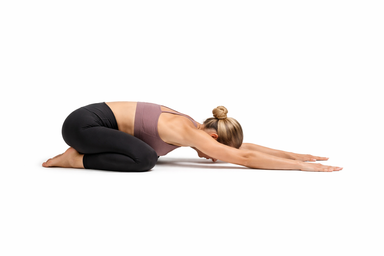
How to
A kneeling rest pose that gently stretches your back, hips, and shoulders.
- Kneel on the floor with your big toes together and knees apart.
- Sit your hips back toward your heels.
- Fold forward and reach your arms in front of you.
- Rest your forehead down and let your chest sink between your thighs.
- Hold the position and breathe slowly.
- Relax your shoulders
- Breathe into your back
- Forcing your hips down
- Holding your breath
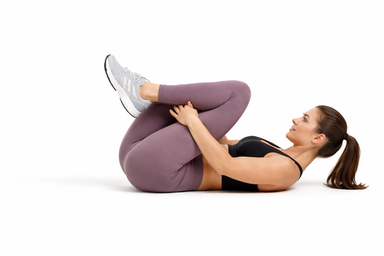
How to
A lying hip stretch that targets your glutes and outer hip on one side at a time.
- Lie on your back with knees bent and feet flat.
- Cross one ankle over the opposite thigh, making a figure four.
- Hold behind the thigh or shin and gently pull toward you.
- Hold the stretch and breathe slowly.
- Release with control, then switch sides.
- Keep your head and shoulders relaxed
- Flex the crossed foot
- Pulling so hard your hips lift off the floor
- Twisting your pelvis to one side

Rebuilding the Core-Pelvic Floor Circuit
Diaphragmatic breathing and dead bug directly retrain intra-abdominal pressure management — the foundational skill lost during pregnancy. Bird dog and glute bridges then layer in spinal stabilization and posterior chain activation, ensuring your deep stabilizers fire before larger movers are loaded.

What Postpartum Bodies Actually Need First
The postpartum core isn't weak — it's disconnected. Diastasis recti, pelvic floor laxity, and altered load transfer patterns mean traditional ab work can worsen dysfunction. Clamshells and side planks target gluteus medius, which directly offloads pelvic instability that new mothers feel as hip or low back ache.

Sequencing Stability Before Strength
This session follows a proximal-to-distal loading principle: breath and spinal control before box squats and wall push-ups, so global muscles never compensate for a system that isn't ready. Progress by adding a 2-second pause at the top of each glute bridge or increasing bird dog hold time before adding any external load.