
Clean & Minimal AI Powered Fitness Routines
Download AppIntermediate Osteoporosis Bone Strength
A moderate, low-impact strength + balance session to support bone health.
Intermediate Osteoporosis Bone Strength
A moderate, low-impact strength + balance session to support bone health.
Warm-Up
5 minutes. Raise body temperature and prep joints with upright, low-impact movement.
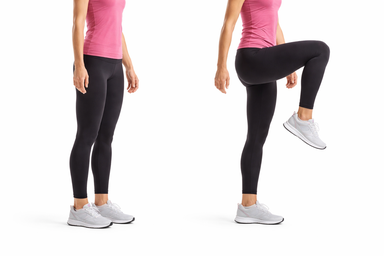
How to
A low-impact cardio move that warms up your legs and hips while raising your heart rate.
- Stand tall with your feet hip-width apart and arms at your sides.
- Lift one knee to hip height as you swing the opposite arm forward.
- Lower that foot, then lift the other knee and switch arms.
- Keep alternating sides at a steady pace.
- Slow down and plant both feet to finish.
- Stand tall with your chest up
- Land softly under your hips
- Leaning back as you lift your knees
- Stomping your feet on each step
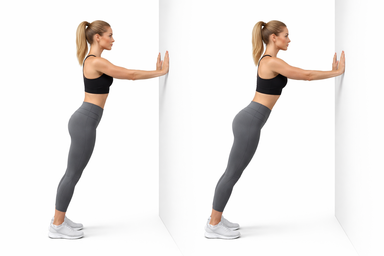
How to
A standing push-up against a wall that trains your chest, shoulders, and triceps.
- Stand facing a wall and place your hands at chest height.
- Step your feet back so your body forms a straight line.
- Bend your elbows and lower your chest toward the wall.
- Press the wall away to return to the start.
- Repeat for your planned reps.
- Keep your body straight
- Keep elbows about 45 degrees
- Letting your hips sag
- Shrugging your shoulders toward your ears
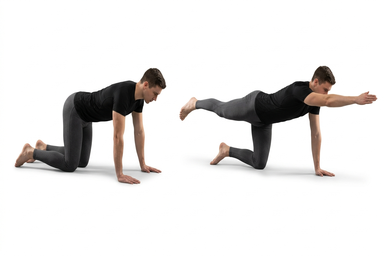
How to
A core stability move from all fours that trains your abs, back, glutes, and balance.
- Start on hands and knees with your hands under shoulders and knees under hips.
- Brace your core and keep your back flat.
- Reach one arm forward and the opposite leg back until they are straight.
- Pause briefly, then bring your hand and knee back under you.
- Repeat on the other side, alternating each rep.
- Keep your hips square
- Move slow and controlled
- Arching or sagging your lower back
- Rotating your hips as you reach
Circuit A
Use controlled tempo. Rest as needed, but aim to keep moving.
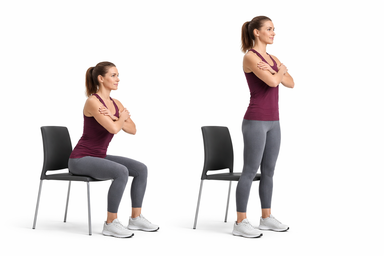
How to
A chair-based squat pattern that trains your thighs and glutes for standing strength.
- Sit near the front of a chair with feet flat and hip-width apart.
- Lean slightly forward and brace your core.
- Press through both feet and stand tall.
- Push your hips back and sit down with control.
- Keep your knees tracking over your toes
- Stand tall at the top
- Letting your knees cave inward
- Dropping hard onto the chair
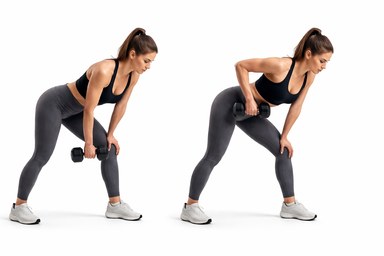
How to
A bent-over pulling move that trains your upper back, lats, and arms.
- Hold a dumbbell in each hand and hinge at your hips.
- Let your arms hang under your shoulders with palms facing in.
- Pull both elbows up toward your ribs.
- Pause briefly, then lower the dumbbells with control.
- Keep your back flat
- Pull elbows close to your sides
- Shrugging your shoulders toward your ears
- Using your torso to swing the weights
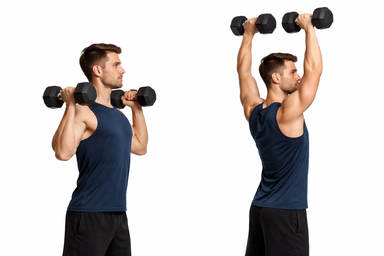
How to
A standing or seated press that trains your shoulders and triceps with dumbbells.
- Hold dumbbells at shoulder height, palms facing forward or in.
- Brace your core and keep your ribs down.
- Press both dumbbells overhead until your arms are straight.
- Lower the dumbbells with control back to your shoulders.
- Keep wrists stacked over elbows.
- Do not lean back as you press.
- Flaring your ribs to lift the weights.
- Dropping the dumbbells too fast.
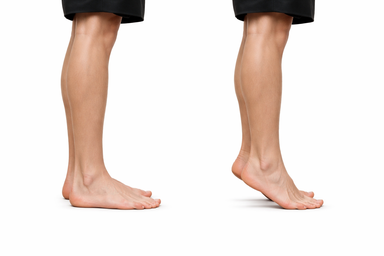
How to
A standing calf raise that trains your calves using bodyweight or added load.
- Stand tall with feet hip-width apart and toes pointing forward.
- Press through the balls of your feet and lift your heels high.
- Pause briefly at the top with control.
- Lower your heels slowly back to the floor.
- Keep your knees softly straight.
- Rise straight up, not forward.
- Bouncing through the reps.
- Letting your ankles roll outward or inward.
Circuit B
Keep ribs stacked over hips; avoid leaning back during carries and presses.
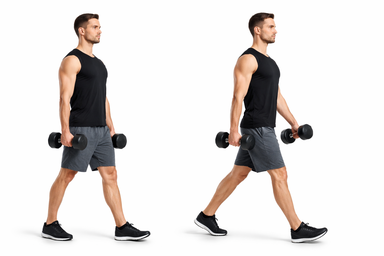
How to
A loaded walk that trains your grip, core, shoulders, and posture.
- Stand tall with a weight in each hand at your sides.
- Brace your core and pull your shoulders down and back.
- Walk forward with short, controlled steps.
- Keep the weights steady and your torso upright.
- Set the weights down with control when finished.
- Stand tall as you walk
- Keep the weights by your sides
- Leaning back or to one side
- Letting the weights swing
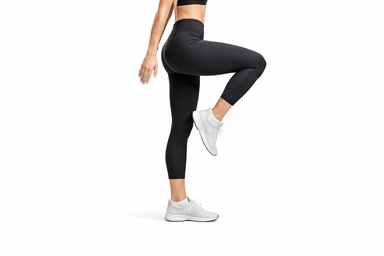
How to
A one-leg balance hold that trains stability in your foot, ankle, and hip.
- Stand tall with feet hip-width apart and arms relaxed.
- Shift your weight onto one foot and lift the other foot off the floor.
- Hold steady and breathe, keeping your body tall.
- Lower your foot with control when the hold is done.
- Finish your hold, then switch legs.
- Keep your hips level
- Stand tall through your crown
- Leaning your torso far to one side
- Letting your lifted foot rest on the floor
Cool-Down
2 minutes. Gentle stretching to relax without deep spinal flexion.
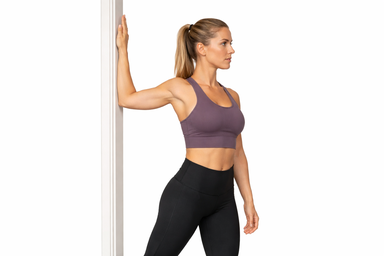
How to
A static chest opener that stretches your chest and front shoulders.
- Stand tall and clasp your hands behind your back.
- Straighten your arms and gently lift your hands.
- Open your chest until you feel a comfortable stretch.
- Hold and breathe slowly, then release with control.
- Keep your ribs down
- Relax your shoulders
- Arching your lower back to force the stretch
- Shrugging your shoulders up toward your ears
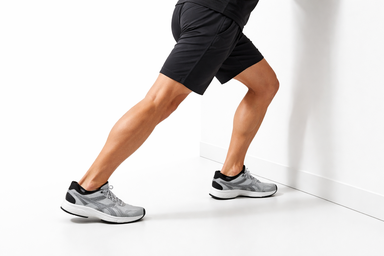
How to
A standing calf stretch that targets the back of your lower leg with a steady hold.
- Stand facing a wall and place your hands on it.
- Step one foot back and keep that heel on the floor.
- Bend your front knee until you feel a calf stretch.
- Hold and breathe slowly without bouncing.
- Finish the hold, then switch legs.
- Keep your back heel down
- Point both toes forward
- Bouncing in the stretch
- Letting the back heel lift

Axial Loading for Cortical Bone Density
Sit to Stand, Farmer Carry, and Heel Raises apply direct compressive and tensile forces through the femur, tibia, and lumbar spine — the exact sites most vulnerable to osteoporotic fracture. Overhead Press adds axial load through the humerus and thoracic vertebrae, stimulating osteoblast activity where it matters most.

The Fall-Prevention Calculus in Osteoporosis
Fracture risk in osteoporosis is a two-variable equation: bone density and fall frequency. Single-Leg Stand and Bird Dog directly train the proprioceptive and neuromuscular control that prevents falls, while Farmer Carry builds the grip and postural endurance that keeps you stable under real-world load.

Mechanical Strain Thresholds and Progression
Bone remodeling responds to strain magnitude and novelty — meaning your skeleton adapts only when load exceeds its current threshold. As Sit to Stand and Dumbbell Row become easier, increase dumbbell weight by 1–2 lbs before adding reps, preserving the osteogenic stimulus without elevating joint stress.