
Clean & Minimal AI Powered Fitness Routines
Download AppIntermediate Calf Strength
A focused calf-strength session using controlled tempo, isometrics, and single-leg work.
Intermediate Calf Strength
A focused calf-strength session using controlled tempo, isometrics, and single-leg work.
Warm-Up
Increase ankle mobility and gently wake up the calves before loading. 4 minutes.
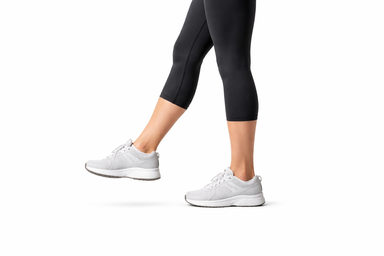
How to
A simple ankle mobility move that warms up your ankle through a full circle.
- Sit or stand tall and lift one foot slightly off the floor.
- Slowly circle your ankle in one direction.
- Reverse the circle and keep the motion smooth.
- Finish your reps, then switch legs.
- Move from your ankle, not your knee
- Keep the circles slow and controlled
- Rushing through small, choppy circles
- Letting your whole leg swing around
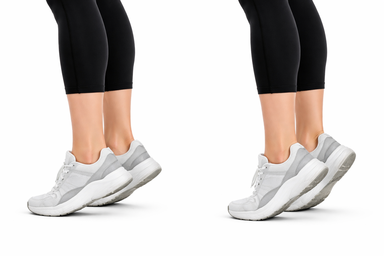
How to
A standing lower-leg move that trains your calves by lifting and lowering your heels.
- Stand tall with feet hip-width apart and toes pointing forward.
- Press through the balls of your feet and lift your heels high.
- Pause briefly at the top without leaning forward.
- Lower your heels with control to the floor.
- Keep your knees softly straight.
- Rise straight up, not forward.
- Bouncing through the reps.
- Letting your ankles roll outward.
Block A — Strength + Isometric
Stay tall; avoid bouncing. Use a wall lightly for balance if needed.
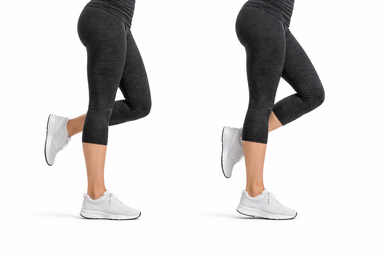
How to
A one-leg calf raise that trains your calves and balance.
- Stand tall on one foot near a wall or support.
- Let your heel drop slightly if standing on a step.
- Press through the ball of your foot and lift your heel high.
- Lower with control until your heel is down or slightly below the step.
- Finish your reps, then switch legs.
- Keep your knee mostly straight.
- Move straight up and down.
- Bouncing at the bottom.
- Rolling your ankle in or out.
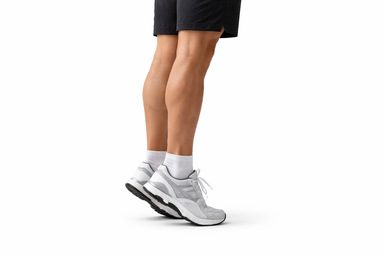
How to
An isometric calf raise that trains your calves and balance by holding at the top.
- Stand tall with feet hip-width apart and hands on support if needed.
- Rise onto the balls of both feet as high as you can control.
- Hold the top position and breathe steadily.
- Lower your heels with control when the hold is done.
- Keep your ankles stacked over your toes
- Stand tall through the top of your head
- Letting your ankles roll outward or inward
- Bouncing instead of holding still
Block B — Soleus Emphasis
Keep knees bent and torso upright; move through full comfortable range.
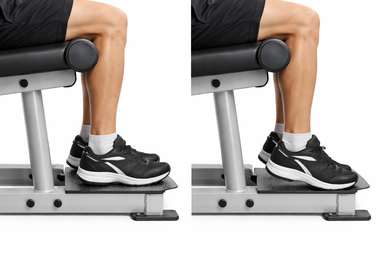
How to
A seated lower-leg move that trains your calves by lifting your heels against resistance.
- Sit tall with feet flat and knees bent about 90 degrees.
- Place weight on your thighs, or use bodyweight only.
- Press through the balls of your feet and lift both heels high.
- Pause briefly at the top.
- Lower your heels with control and repeat.
- Keep your toes planted
- Lift straight up, not out
- Bouncing through the reps
- Letting your feet roll to the outside
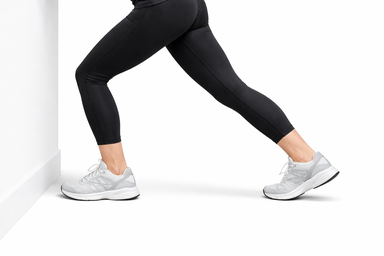
How to
A standing calf stretch that targets your gastrocnemius.
- Stand facing a wall with one leg back and heel down.
- Keep the back knee straight and lean forward slightly.
- Hold the stretch and breathe slowly.
- Finish, then switch legs.
- Keep your back heel planted
- Keep the back knee straight
- Bending the back knee
- Lifting the back heel
Block C — Eccentric Control
Rise up with both legs, shift weight, then lower on one leg slowly (about 3–4 seconds).
How to
A standing calf stretch that targets your gastrocnemius.
- Stand facing a wall with one leg back and heel down.
- Keep the back knee straight and lean forward slightly.
- Hold the stretch and breathe slowly.
- Finish, then switch legs.
- Keep your back heel planted
- Keep the back knee straight
- Bending the back knee
- Lifting the back heel
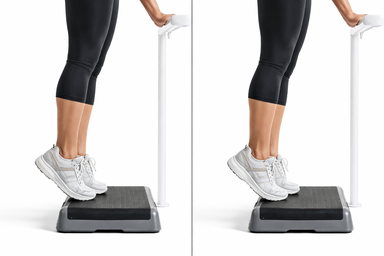
How to
A slow heel-lowering calf raise that trains your calves and ankle control.
- Stand tall on a step or flat floor with feet hip-width apart.
- Rise onto your toes, then lower your heels slowly and under control.
- Reset at the top and repeat for the next rep.
- Keep your ankles stacked
- Move slowly on the way down
- Dropping your heels too fast
- Letting your ankles roll inward
Cool-Down
Downshift and restore calf/ankle range of motion. 2–3 minutes.
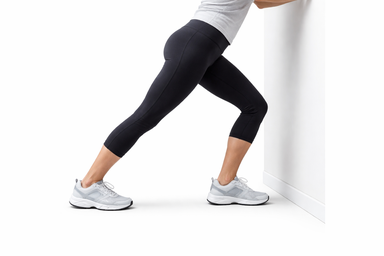
How to
A bent-knee calf stretch that targets the soleus in your lower calf.
- Stand facing a wall with one foot back and hands on the wall.
- Bend both knees and keep your back heel on the floor.
- Lean forward until you feel a stretch in your lower calf.
- Hold the stretch and breathe steadily.
- Finish the hold, then switch legs.
- Keep your back heel down
- Keep your toes pointing forward
- Letting the back heel lift
- Turning the back foot outward

Dual-Head Loading: Gastroc vs. Soleus
Standing and single-leg raises target the gastrocnemius under full knee extension, while the seated raise isolates the soleus by slackening the gastroc across the knee joint. Hitting both heads is non-negotiable for complete plantar flexion strength and Achilles tendon resilience.

Why Calf Strength Is Deceptively Hard to Build
The calf withstands forces up to 6–8x bodyweight during running and jumping, making it one of the most load-tolerant—and most undertrained—muscle groups. Single-leg work exposes bilateral deficits that bilateral raises mask, while isometric holds at peak contraction recruit high-threshold motor units that tempo work alone can't access.

Eccentric Lowering as the Structural Cornerstone
The eccentric calf lowering is the highest-priority stimulus here—slow, controlled lengthening under load drives tendon collagen remodeling and is the primary mechanism behind Achilles injury prevention and rehabilitation. Increase difficulty by adding a pause at the bottom before your next rep, only when you can maintain heel depth without compensating through the hip.