
Clean & Minimal AI Powered Fitness Routines
Download AppIntermediate High-Altitude Hiking
A 25-minute hike-focused session to build steady pacing, uphill stamina, and controlled breathing at altitude.
Intermediate High-Altitude Hiking
A 25-minute hike-focused session to build steady pacing, uphill stamina, and controlled breathing at altitude.
Warm-Up
Gradually raise heart rate and settle into relaxed breathing before harder climbing.
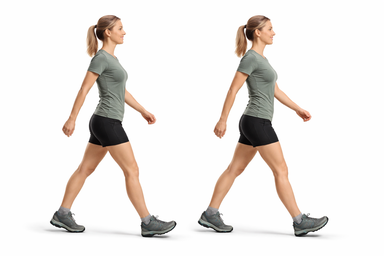
How to
A steady uphill walk at an easy pace that trains your legs and builds low-intensity endurance.
- Stand tall and start walking at an easy pace.
- Use short, steady steps as the ground or incline rises.
- Swing your arms naturally and keep your breathing relaxed.
- Slow down if you cannot speak in short sentences.
- Finish by easing your pace before you stop.
- Keep your chest lifted
- Step softly and steadily
- Leaning far forward from your waist
- Starting too fast for an easy pace
Uphill Intervals
Maintain steady form and breathing. Use poles if available; keep steps short on climbs.
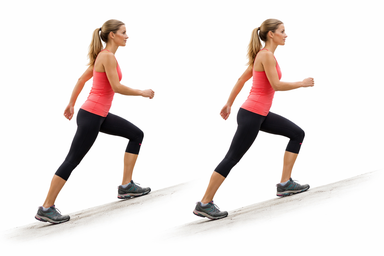
How to
A steady uphill walk that trains your legs and glutes while raising your heart rate.
- Stand tall at the base of the hill and look ahead.
- Walk uphill with short, steady steps.
- Lean slightly from your ankles, not your waist.
- Drive through your whole foot and swing your arms naturally.
- Continue to the top or your set time, then slow down safely.
- Keep your chest lifted
- Use short, strong steps
- Hunching forward at the waist
- Taking steps that are too long
How to
A steady uphill walk at an easy pace that trains your legs and builds low-intensity endurance.
- Stand tall and start walking at an easy pace.
- Use short, steady steps as the ground or incline rises.
- Swing your arms naturally and keep your breathing relaxed.
- Slow down if you cannot speak in short sentences.
- Finish by easing your pace before you stop.
- Keep your chest lifted
- Step softly and steadily
- Leaning far forward from your waist
- Starting too fast for an easy pace
Steady Rolling Hike
Settle into a consistent pace; focus on efficient breathing and posture.
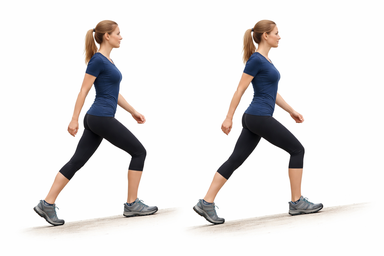
How to
A steady hike at a moderate pace that trains cardio fitness, legs, and glutes.
- Stand tall and start walking on your route or incline.
- Set a steady pace you can maintain while breathing harder.
- Step smoothly and drive through your whole foot.
- Use your arms naturally to help your rhythm.
- Slow down gradually to finish.
- Keep your chest up
- Take controlled, even steps
- Leaning far forward from the waist
- Starting too fast to hold your pace
Cool-Down
Bring heart rate down and finish with controlled, careful footing.
How to
A steady uphill walk at an easy pace that trains your legs and builds low-intensity endurance.
- Stand tall and start walking at an easy pace.
- Use short, steady steps as the ground or incline rises.
- Swing your arms naturally and keep your breathing relaxed.
- Slow down if you cannot speak in short sentences.
- Finish by easing your pace before you stop.
- Keep your chest lifted
- Step softly and steadily
- Leaning far forward from your waist
- Starting too fast for an easy pace
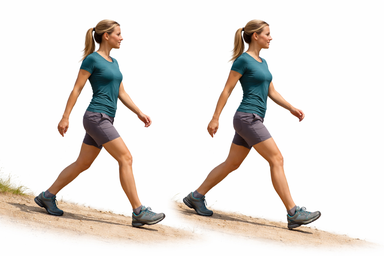
How to
A downhill walking move that trains your legs and balance while controlling your pace.
- Stand tall facing downhill with feet hip-width apart.
- Take short, controlled steps and land softly.
- Keep your knees slightly bent as you descend.
- Use your arms for balance and keep your eyes on the path ahead.
- Continue for the set distance or time, then slow to a stop.
- Keep steps short and steady
- Stay controlled, not rushed
- Leaning far back as you step
- Locking your knees on each landing

Eccentric Quads & the Downhill Demand
Uphill Hike loads your glutes and soleus under concentric stress, while Downhill Hike flips the demand entirely — your quads absorb bodyweight eccentrically with every step, a notoriously fatiguing pattern that most hikers underestimate. Rolling Terrain bridges both, training your legs to switch contraction modes rapidly across changing grades.

Altitude's Hidden Tax on Pacing
At elevation, reduced oxygen partial pressure forces your cardiovascular system to work harder at identical speeds, meaning perceived exertion spikes well before your legs fatigue. Steady Climb intervals train your body to find and hold a sustainable aerobic ceiling — the exact skill that separates hikers who summit from those who bonk halfway up.

Grade Sequencing as Built-In Periodization
This session moves from flat easy effort into sustained climbing, then rolling terrain, then controlled descent — a deliberate stimulus progression that mirrors real trail demands without accumulating excessive fatigue in 25 minutes. To personalize it, shorten your Downhill segment recovery pace if your quads feel fresh, or extend Easy Hike warm-up time if you're training above 8,000 feet.