
Clean & Minimal AI Powered Fitness Routines
Download AppChronic Fatigue Syndrome Pacing Routine
Low-impact, intermediate pacing-focused mobility + gentle strength to support consistency without post-exertional malaise (PEM).
Chronic Fatigue Syndrome Pacing Routine
Low-impact, intermediate pacing-focused mobility + gentle strength to support consistency without post-exertional malaise (PEM).
Warm-Up
Gentle activation. Ease into movement, regulate breathing, and mobilize spine/shoulders without spiking exertion.
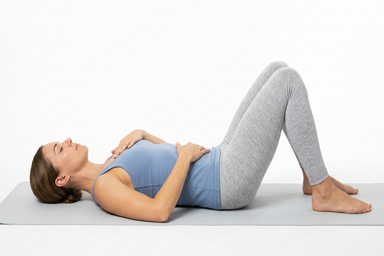
How to
A slow breathing drill that trains relaxed belly breathing and helps you control your breath.
- Lie on your back or sit tall with one hand on your belly.
- Inhale through your nose and let your belly rise.
- Exhale slowly and let your belly fall.
- Keep your chest and shoulders quiet.
- Continue for the set time with smooth breaths.
- Breathe low into your belly
- Keep your shoulders relaxed
- Shrugging your shoulders as you inhale
- Forcing the breath or holding tension
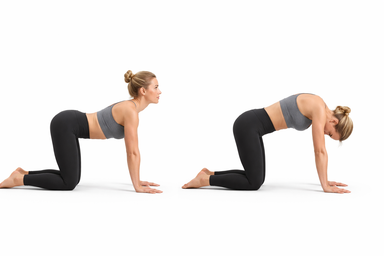
How to
A gentle spine mobility move that alternates rounding and arching your back on hands and knees.
- Start on hands and knees with wrists under shoulders and knees under hips.
- Inhale and drop your belly as you lift your chest and tailbone.
- Exhale and round your back, tucking your chin and tailbone.
- Move slowly between both positions with your breath.
- Move one vertebra at a time.
- Keep your shoulders away from your ears.
- Forcing your neck up or down.
- Rushing through the movement.
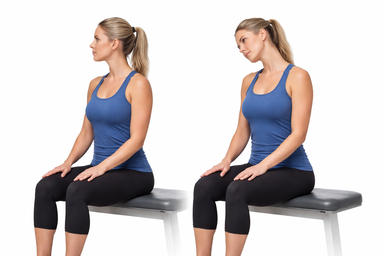
How to
A seated neck stretch that uses a side bend to stretch one side of your neck.
- Sit tall with feet flat and shoulders relaxed.
- Anchor one hand under your thigh or hold the chair.
- Slowly tilt your ear toward the opposite shoulder.
- Hold and breathe, keeping the anchored shoulder down.
- Return to center, then switch sides.
- Move slowly and gently.
- Keep both shoulders relaxed.
- Pulling your head down hard.
- Twisting your chin as you bend.
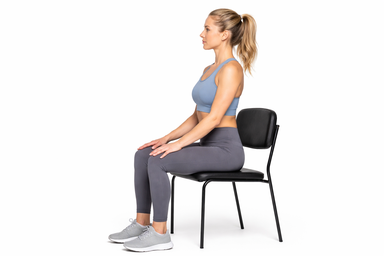
How to
A seated mobility move that circles both shoulders to loosen your upper back and neck area.
- Sit tall with your feet flat and arms relaxed at your sides.
- Lift both shoulders up toward your ears.
- Roll them back and down in a smooth circle.
- Repeat for reps, then reverse the direction if planned.
- Move slowly and smoothly
- Keep your chest relaxed
- Shrugging hard or holding tension
- Arching your back as you roll
Main Set
Pacing strength and stability. Low-impact strength and core stability with controlled reps. Stop before fatigue; quality over quantity.
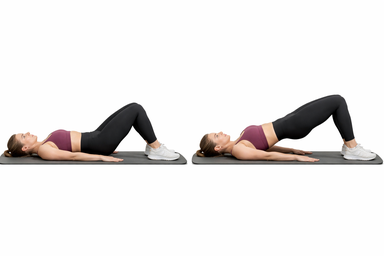
How to
A floor hip lift that trains your glutes and hamstrings with both feet planted.
- Lie on your back with knees bent and feet flat, hip-width apart.
- Brace your core and press your arms lightly into the floor.
- Drive through your heels and lift your hips until your body forms a straight line.
- Squeeze your glutes at the top, then lower with control.
- Repeat for your reps.
- Keep your ribs down
- Drive through your heels
- Arching your lower back at the top
- Pushing through your toes
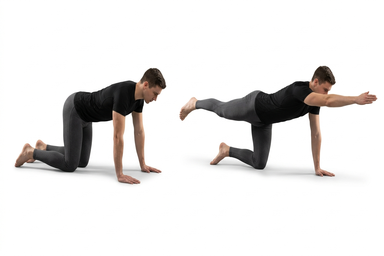
How to
A core stability move from all fours that trains your abs, back, glutes, and balance.
- Start on hands and knees with your hands under shoulders and knees under hips.
- Brace your core and keep your back flat.
- Reach one arm forward and the opposite leg back until they are straight.
- Pause briefly, then bring your hand and knee back under you.
- Repeat on the other side, alternating each rep.
- Keep your hips square
- Move slow and controlled
- Arching or sagging your lower back
- Rotating your hips as you reach
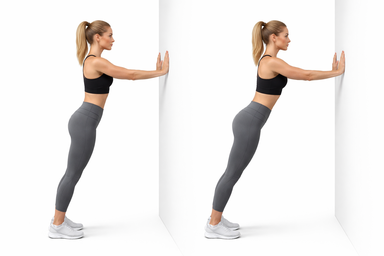
How to
A standing push-up against a wall that trains your chest, shoulders, and triceps.
- Stand facing a wall and place your hands at chest height.
- Step your feet back so your body forms a straight line.
- Bend your elbows and lower your chest toward the wall.
- Press the wall away to return to the start.
- Repeat for your planned reps.
- Keep your body straight
- Keep elbows about 45 degrees
- Letting your hips sag
- Shrugging your shoulders toward your ears
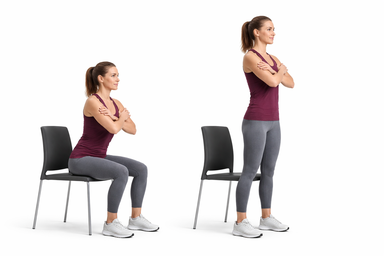
How to
A chair-based squat pattern that trains your thighs and glutes for standing strength.
- Sit near the front of a chair with feet flat and hip-width apart.
- Lean slightly forward and brace your core.
- Press through both feet and stand tall.
- Push your hips back and sit down with control.
- Keep your knees tracking over your toes
- Stand tall at the top
- Letting your knees cave inward
- Dropping hard onto the chair
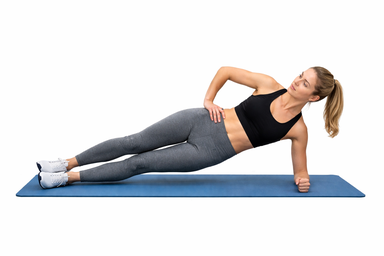
How to
A side hold that trains your obliques, hips, and shoulder stability.
- Lie on one side with your elbow under your shoulder and legs stacked.
- Lift your hips until your body forms a straight line.
- Hold the position and breathe steadily.
- Lower your hips with control.
- Finish your hold, then switch sides.
- Keep your hips stacked
- Press the floor away
- Letting your hips sag
- Rolling your chest toward the floor
Cool-Down
Downshift and stretch. Lower arousal, stretch gently, and finish with calming breathing.
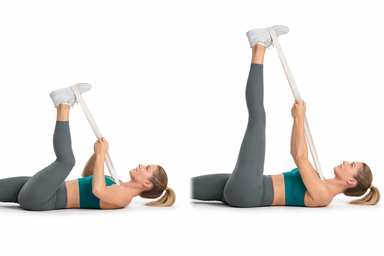
How to
A lying hamstring stretch that uses a steady hold to target the back of your thigh.
- Lie on your back with one leg flat and the other lifted.
- Hold behind your thigh or use a towel around your foot.
- Straighten your raised leg until you feel a gentle stretch.
- Hold the position and breathe slowly.
- Lower your leg, then change sides if your set calls for it.
- Keep your hips heavy on the floor.
- Relax your shoulders and neck.
- Forcing the leg past a gentle stretch.
- Letting your hips roll off the floor.
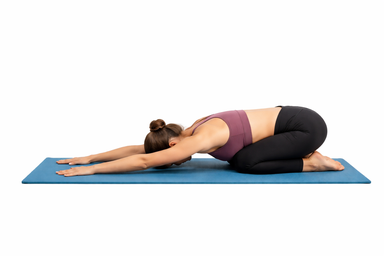
How to
A kneeling rest stretch that relaxes your back, hips, and shoulders while you breathe.
- Kneel with your big toes together and knees apart.
- Sit your hips back toward your heels.
- Reach your arms forward and lower your chest to the floor.
- Rest your forehead down and relax your neck.
- Hold the stretch and breathe slowly.
- Let your hips sink back
- Keep your neck relaxed
- Forcing your hips down
- Holding your breath
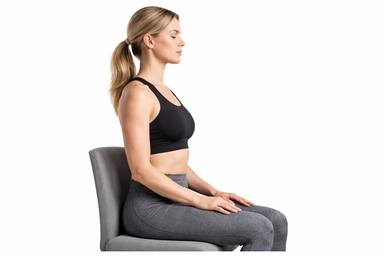
How to
A steady breathing pattern that trains control and helps you settle your breathing.
- Sit or stand tall with relaxed shoulders.
- Inhale through your nose for 4 counts.
- Hold your breath for 4 counts.
- Exhale slowly for 4 counts.
- Hold with your lungs empty for 4 counts, then repeat.
- Keep your face and jaw relaxed.
- Breathe smoothly and quietly.
- Rushing the counts.
- Tensing your shoulders or neck.

Why Each Exercise Earns Its Energy Cost
Glute Bridge and Bird Dog target posterior chain stability through low-load isometric demand, preserving ATP without triggering anaerobic threshold. Wall Push Up and Side Plank build shoulder and lateral core integrity at intensities calibrated to stay beneath your symptom threshold — every rep is a deliberate energy trade-off, not filler.

PEM Is a Physiological Boundary, Not a Mindset
CFS dysregulates autonomic function and cellular energy metabolism, meaning your exertion ceiling is neurologically enforced, not motivational. Sit to Stand trains functional independence — your highest-priority real-world movement — because CFS disproportionately erodes lower limb endurance and orthostatic tolerance before other capacities.

Bookending Sessions With Your Nervous System
Diaphragmatic and Box Breathing open and close this routine intentionally, shifting autonomic state toward parasympathetic dominance before and after exertion — this is your primary recovery mechanism. If Side Plank or Sit to Stand triggers heaviness within 12–24 hours, reduce reps by 30% and treat that as your personal baseline, not a setback.