
Clean & Minimal AI Powered Fitness Routines
Download App25-Minute Intermediate Gymnastics Rings Session
Intermediate rings strength + stability work with controlled tempo and brief rests.
25-Minute Intermediate Gymnastics Rings Session
Intermediate rings strength + stability work with controlled tempo and brief rests.
Warm-Up
Prep shoulders/scapula and groove stable positions on the rings. Focus on rings and shoulders.
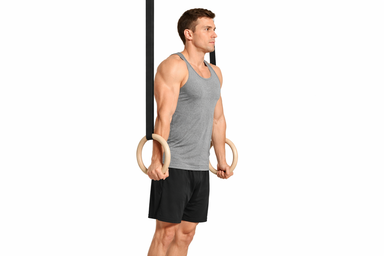
How to
An isometric hold on rings that trains shoulder stability, chest, triceps, and core control.
- Set the rings low enough to step or jump into support.
- Grip the rings and press down until your arms are straight.
- Hold your body tall with ribs down and legs still.
- Keep the rings close to your sides as you breathe.
- Step down with control when the hold is done.
- Lock in tall posture
- Press the rings down
- Letting the rings drift wide
- Shrugging your shoulders toward your ears
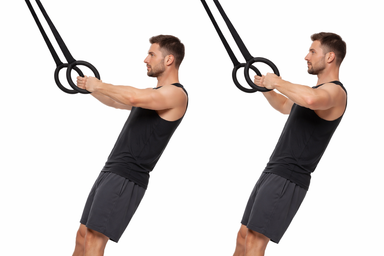
How to
A pulling move on rings that trains your upper back, rear shoulders, and shoulder control.
- Set the rings at chest height and hold one in each hand.
- Walk your feet forward and lean back with arms straight.
- Pull the rings toward your face, elbows high and out.
- Squeeze your shoulder blades, then straighten your arms with control.
- Repeat for reps.
- Keep ribs down and body straight.
- Lead with your elbows.
- Shrugging your shoulders toward your ears.
- Letting your hips sag or arch.
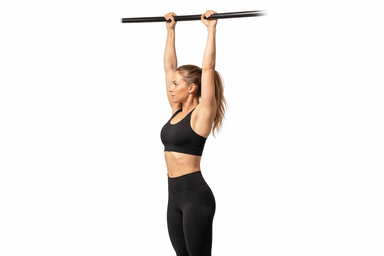
How to
A two-hand hang from an overhead bar that trains grip and upper-body hanging strength.
- Grip a sturdy overhead bar with both hands.
- Step or jump up so your arms are straight and feet are off the floor.
- Let your body hang long, with your ribs down.
- Hold for the set time and breathe slowly.
- Step down with control.
- Keep your grip firm.
- Stay still from shoulders to feet.
- Swinging or kicking your legs.
- Holding your breath during the hold.
Main Strength
Alternate pulling and pushing with ring stability demands.
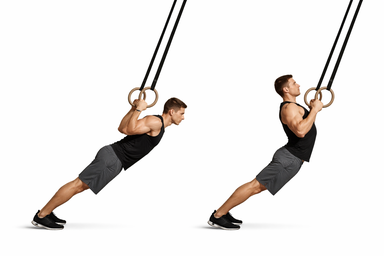
How to
A bodyweight row using rings that trains your upper back, lats, and biceps.
- Hold the rings with straight arms and walk your feet forward.
- Set your body in a straight line from head to heels.
- Pull your chest toward the rings, driving elbows back.
- Pause briefly, then lower with control until your arms are straight.
- Repeat for your reps.
- Keep your body rigid
- Squeeze your shoulder blades back
- Letting your hips sag
- Shrugging your shoulders toward your ears
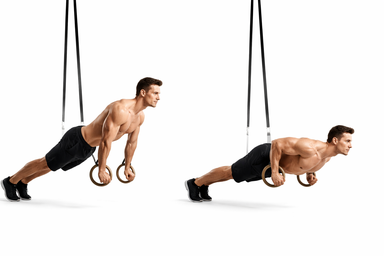
How to
A push-up with your hands in rings. It trains your chest, shoulders, triceps, and core.
- Set the rings low and grip them under your shoulders.
- Step back to a straight plank with your feet set wide if needed.
- Bend your elbows and lower your chest between the rings.
- Press the rings down and together to return to the start.
- Keep your body in one straight line.
- Keep the rings steady under your shoulders.
- Letting the rings drift wide as you press.
- Sagging your hips or arching your lower back.
How to
An isometric hold on rings that trains shoulder stability, chest, triceps, and core control.
- Set the rings low enough to step or jump into support.
- Grip the rings and press down until your arms are straight.
- Hold your body tall with ribs down and legs still.
- Keep the rings close to your sides as you breathe.
- Step down with control when the hold is done.
- Lock in tall posture
- Press the rings down
- Letting the rings drift wide
- Shrugging your shoulders toward your ears
Core & Stability Finisher
Core control and shoulder stability under fatigue; keep movement strict.
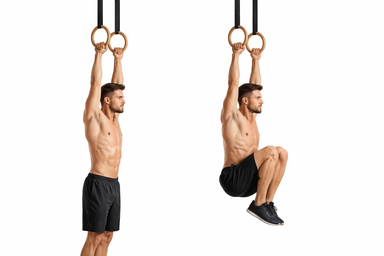
How to
A hanging core move on rings that trains your abs and hip flexors while challenging grip and control.
- Grip the rings and hang with straight arms and active shoulders.
- Brace your core and keep your legs together.
- Lift both knees toward your chest without swinging.
- Lower your legs with control back to the start.
- Repeat for your planned reps.
- Keep the rings steady.
- Move slow and controlled.
- Swinging your body to lift your knees.
- Shrugging your shoulders up by your ears.
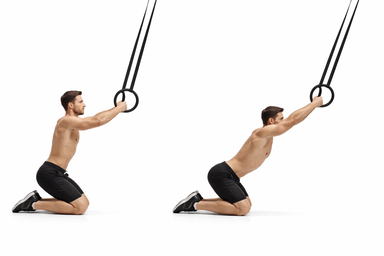
How to
A suspension core move that trains your abs and shoulders as you reach forward and pull back.
- Hold the rings with straight arms and stand or kneel facing away from the anchor.
- Brace your abs and squeeze your glutes.
- Let your body fall forward as your arms reach overhead.
- Go only as far as you can control without arching.
- Pull the rings back down to return to the start.
- Keep your ribs down
- Move in one straight line
- Letting your lower back arch
- Bending your elbows to pull back

Closed-Chain Instability as a Strength Multiplier
Ring Support Holds and Ring Push-Ups force constant co-contraction of the rotator cuff, serratus anterior, and wrist flexors—muscles a fixed bar never fully recruits. Ring Rows and Face Pulls pair horizontal pulling with scapular retraction to counter the anterior dominance that rings pushing creates, keeping shoulder mechanics balanced under load.

Why Rings Expose Every Weakness You Have
Gymnastics rings demand dynamic stabilization across three planes simultaneously, meaning any asymmetry in shoulder girdle strength or thoracic mobility becomes immediately visible—and punishing. The Dead Hang at the end isn't recovery; it's passive traction that decompresses the glenohumeral joint after accumulated ring tension and builds the grip endurance that caps most athletes' ring progress

Tempo as the Real Training Variable Here
At intermediate level, ring strength plateaus rarely come from adding volume—they come from controlling the eccentric phase. Slowing Ring Fallouts and Ring Push-Ups to a 3-second lowering tempo increases time under tension in the long head of triceps and anterior deltoid, which is where ring-specific pressing power is actually built. When this feels too easy, extend the support hold duration befor