
Clean & Minimal AI Powered Fitness Routines
Download App25-Minute Cerebellar Ataxia Coordination Routine
A balance and coordination session to improve control, stability, and gait confidence in ~25 minutes.
25-Minute Cerebellar Ataxia Coordination Routine
A balance and coordination session to improve control, stability, and gait confidence in ~25 minutes.
Breath and Gentle Movement
Slow, controlled motion. Light support is OK.
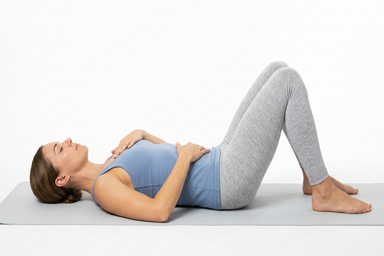
How to
A slow breathing drill that trains relaxed belly breathing and helps you control your breath.
- Lie on your back or sit tall with one hand on your belly.
- Inhale through your nose and let your belly rise.
- Exhale slowly and let your belly fall.
- Keep your chest and shoulders quiet.
- Continue for the set time with smooth breaths.
- Breathe low into your belly
- Keep your shoulders relaxed
- Shrugging your shoulders as you inhale
- Forcing the breath or holding tension
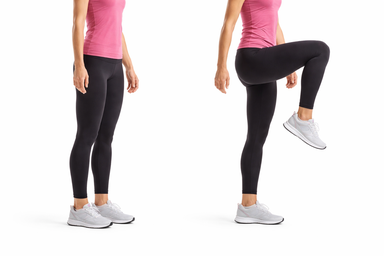
How to
A low-impact cardio move that warms up your legs and hips while raising your heart rate.
- Stand tall with your feet hip-width apart and arms at your sides.
- Lift one knee to hip height as you swing the opposite arm forward.
- Lower that foot, then lift the other knee and switch arms.
- Keep alternating sides at a steady pace.
- Slow down and plant both feet to finish.
- Stand tall with your chest up
- Land softly under your hips
- Leaning back as you lift your knees
- Stomping your feet on each step
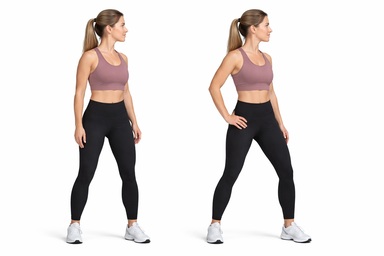
How to
A simple balance drill that shifts your weight from foot to foot to train control and stability.
- Stand tall with your feet hip-width apart.
- Shift your weight slowly onto one foot.
- Let the other foot get light, but keep it near the floor.
- Shift back through center and repeat to the other side.
- Move slowly and stay tall.
- Keep your hips level.
- Leaning your chest far to the side.
- Rushing the shift or losing control.
Sit-to-Stand Primer
Stand up smoothly; sit down slowly (3 seconds down).
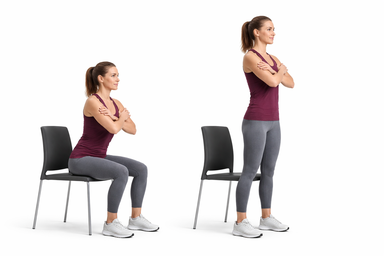
How to
A chair-based squat pattern that trains your thighs and glutes for standing strength.
- Sit near the front of a chair with feet flat and hip-width apart.
- Lean slightly forward and brace your core.
- Press through both feet and stand tall.
- Push your hips back and sit down with control.
- Keep your knees tracking over your toes
- Stand tall at the top
- Letting your knees cave inward
- Dropping hard onto the chair
Stance Control Block
Light fingertip support. Reset your feet between drills.
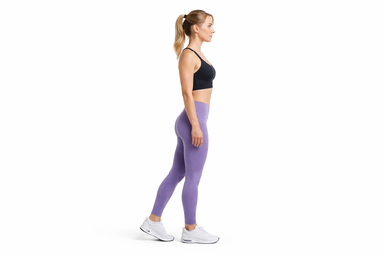
How to
A narrow heel-to-toe balance hold that trains steady posture and control.
- Stand tall near support if needed.
- Place one foot directly in front of the other, heel to toe.
- Keep your weight even and eyes forward.
- Hold the stance and breathe slowly.
- Stand tall through your head
- Keep your feet in one line
- Leaning your body to one side
- Looking down the whole time
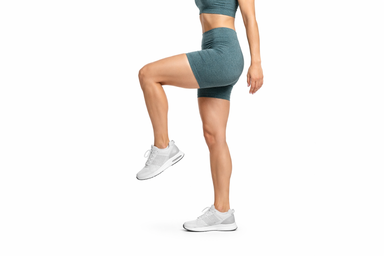
How to
A one-leg balance hold that trains foot, ankle, hip, and core control.
- Stand tall with your feet hip-width apart.
- Shift your weight onto one foot and lift the other foot off the floor.
- Hold steady and breathe slowly.
- Lower your foot with control.
- Finish your hold, then switch legs.
- Keep your hips level.
- Stand tall through your head.
- Leaning your body to one side.
- Letting your lifted foot touch down repeatedly.
Gait and Lateral Control Block
Small steps, quiet feet, steady breathing. Use support as needed.
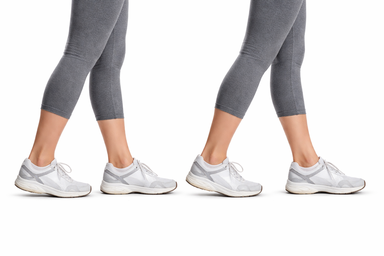
How to
A straight-line walking drill that trains balance, ankle control, and steady foot placement.
- Stand tall and pick a straight line ahead of you.
- Step forward, placing your heel directly in front of your other toes.
- Shift weight onto the front foot, then bring the back foot through.
- Keep walking heel to toe for the set distance or time.
- Finish the distance, then step out of the line.
- Look ahead, not down.
- Move slowly and stay tall.
- Letting your feet drift wide.
- Rushing through each step.
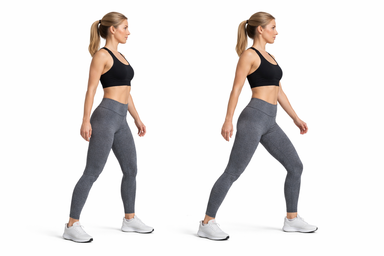
How to
A side-to-side stepping move that warms up your hips, glutes, and legs.
- Stand tall with feet hip-width apart and arms relaxed.
- Step one foot out to the side, then follow with the other foot.
- Step back the other way and keep alternating sides.
- Stay light on your feet and keep a steady rhythm.
- Keep your chest up
- Step softly with control
- Letting your knees cave inward
- Dragging your feet instead of stepping
Reach and Seated Coordination Block
Reach slowly like a clock (12-3-6-9). Then finish with seated coordination for accuracy.
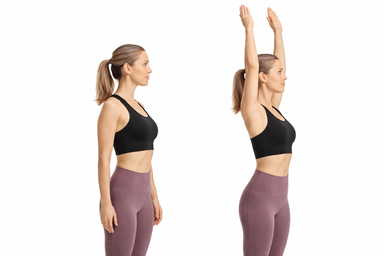
How to
A standing overhead reach that trains tall posture, shoulder control, and gentle core tension.
- Stand tall with feet hip-width apart and arms at your sides.
- Brace lightly and reach both arms overhead.
- Grow tall through your fingertips without leaning back.
- Hold and breathe slowly, then lower your arms.
- Keep your ribs down
- Reach straight up
- Arching your lower back
- Shrugging your shoulders hard
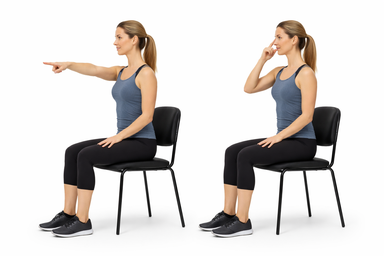
How to
A seated coordination drill that moves one finger between an outstretched position and your nose.
- Sit tall with feet flat and one arm reaching forward at shoulder height.
- Focus on your fingertip and bring it slowly to the tip of your nose.
- Reach the arm back out to the start with control.
- Repeat for your reps, then switch sides.
- Move slowly and stay smooth
- Keep your torso still
- Rushing the motion
- Leaning your head toward your finger
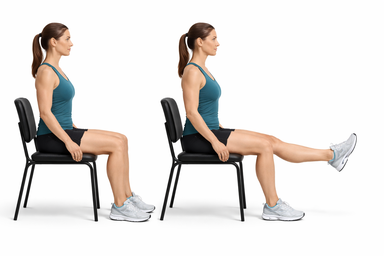
How to
A seated leg exercise that trains your quads by straightening one knee at a time.
- Sit tall on a bench or chair with both feet flat on the floor.
- Brace lightly and lift one foot as you straighten that knee.
- Pause briefly with your leg extended, then lower your foot with control.
- Repeat on the other side, alternating legs each rep.
- Sit tall with your chest up.
- Move slowly and control the lower.
- Leaning back as you extend your leg.
- Letting your foot drop quickly to the floor.
Cool-Down
Downshift and reduce tension in hips and back. 3 minutes.
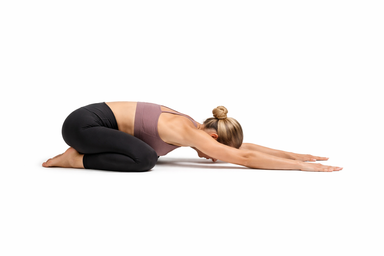
How to
A kneeling rest pose that gently stretches your back, hips, and shoulders.
- Kneel on the floor with your big toes together and knees apart.
- Sit your hips back toward your heels.
- Fold forward and reach your arms in front of you.
- Rest your forehead down and let your chest sink between your thighs.
- Hold the position and breathe slowly.
- Relax your shoulders
- Breathe into your back
- Forcing your hips down
- Holding your breath
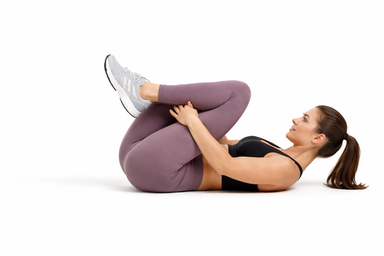
How to
A lying hip stretch that targets your glutes and outer hip on one side at a time.
- Lie on your back with knees bent and feet flat.
- Cross one ankle over the opposite thigh, making a figure four.
- Hold behind the thigh or shin and gently pull toward you.
- Hold the stretch and breathe slowly.
- Release with control, then switch sides.
- Keep your head and shoulders relaxed
- Flex the crossed foot
- Pulling so hard your hips lift off the floor
- Twisting your pelvis to one side
How to
A lying hip stretch that targets your glutes and outer hip on one side at a time.
- Lie on your back with knees bent and feet flat.
- Cross one ankle over the opposite thigh, making a figure four.
- Hold behind the thigh or shin and gently pull toward you.
- Hold the stretch and breathe slowly.
- Release with control, then switch sides.
- Keep your head and shoulders relaxed
- Flex the crossed foot
- Pulling so hard your hips lift off the floor
- Twisting your pelvis to one side

Cerebellar Demand Behind Each Movement
Tandem Stance, Clock Reaches, and Single-Leg Stance directly challenge the cerebellum's role in error correction and limb timing. Side-to-Side Weight Shifts and Heel-to-Toe Walk recruit the vestibular and proprioceptive systems simultaneously, targeting the exact feedback loops ataxia disrupts. Every exercise earns its place by demanding the nervous system to predict, adjust, and refine.

Why Ataxia Needs Supported Progression
Cerebellar ataxia degrades feedforward motor control, meaning the body struggles to anticipate movement before it happens — not just react to it. Supported variations like Heel-to-Toe Walk and Single-Leg Stance allow high-quality repetitions without fear of fall, which is critical because movement confidence directly shapes neuroplastic adaptation. Sit to Stand reinforces the hip extensor strength

Repetition Quality Over Intensity Here
This routine applies specificity and neural repetition principles rather than progressive overload in the traditional sense — the adaptation target is motor pattern refinement, not muscle hypertrophy. Finger-to-Nose and Seated Knee Extension train limb trajectory accuracy at low load, maximizing cerebellar engagement per rep. To personalize, reduce rest between balance exercises as steadiness impr