
Clean & Minimal AI Powered Fitness Routines
Download AppIntermediate Hip Hinge Patterning
A 25-minute session to groove the hip hinge, strengthen the posterior chain, and reinforce a neutral spine.
Intermediate Hip Hinge Patterning
A 25-minute session to groove the hip hinge, strengthen the posterior chain, and reinforce a neutral spine.
Warm-Up & Positioning
Prime spine/hips and find neutral alignment before hinging. 5 minutes.
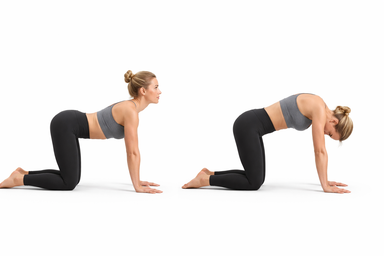
How to
A gentle spine mobility move that alternates rounding and arching your back on hands and knees.
- Start on hands and knees with wrists under shoulders and knees under hips.
- Inhale and drop your belly as you lift your chest and tailbone.
- Exhale and round your back, tucking your chin and tailbone.
- Move slowly between both positions with your breath.
- Move one vertebra at a time.
- Keep your shoulders away from your ears.
- Forcing your neck up or down.
- Rushing through the movement.
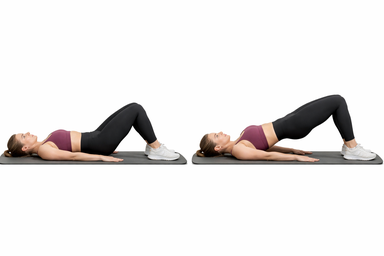
How to
A floor hip lift that trains your glutes and hamstrings with both feet planted.
- Lie on your back with knees bent and feet flat, hip-width apart.
- Brace your core and press your arms lightly into the floor.
- Drive through your heels and lift your hips until your body forms a straight line.
- Squeeze your glutes at the top, then lower with control.
- Repeat for your reps.
- Keep your ribs down
- Drive through your heels
- Arching your lower back at the top
- Pushing through your toes
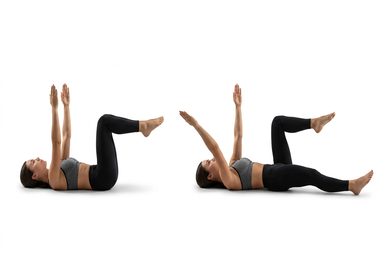
How to
A core move on your back that trains control while you move opposite arm and leg.
- Lie on your back with arms up and knees bent over hips.
- Press your lower back gently toward the floor.
- Lower one arm and the opposite leg with control.
- Return to the start, then repeat on the other side.
- Keep alternating sides for each rep.
- Move slow and stay braced
- Keep your ribs down
- Letting your lower back arch
- Rushing through the reps
Patterning
Groove the hinge with external feedback and controlled reps. 9 minutes.
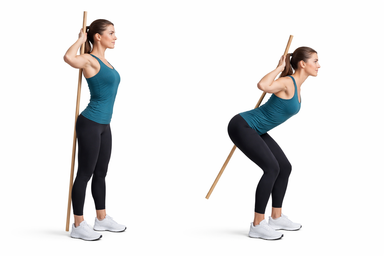
How to
A hip hinge drill with a dowel that trains the hinge pattern and teaches a neutral back position.
- Stand tall with feet hip-width apart and hold a dowel along your spine.
- Keep the dowel touching your head, upper back, and tailbone.
- Push your hips back and let your knees bend slightly.
- Lower until you feel a stretch in your hamstrings.
- Drive your hips forward to stand tall again.
- Keep three points of contact
- Hips move back, not down
- Losing contact with the dowel
- Squatting instead of hinging
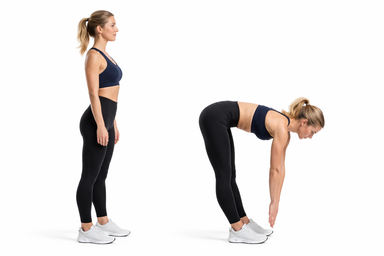
How to
A held stretch for the back of your thigh that targets your hamstrings.
- Sit tall with your target leg straight and toes up.
- Hinge at your hips and reach toward your foot.
- Stop when you feel a gentle stretch behind your thigh.
- Hold the stretch and breathe slowly.
- Release slowly, then switch sides if stretching one leg.
- Keep your back long.
- Hinge from your hips.
- Rounding your back to reach farther.
- Bouncing in the stretch.
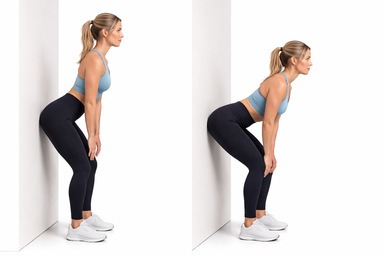
How to
A hip hinge drill that trains your glutes and hamstrings while practicing the hips-back pattern.
- Stand with your back to a wall, feet hip-width apart.
- Soften your knees and brace your core.
- Push your hips back until your glutes tap the wall.
- Keep your chest long as your torso leans forward.
- Drive your hips forward to stand tall again.
- Keep your spine long
- Move from your hips
- Squatting instead of hinging
- Rounding your back as you reach the wall
Posterior Chain Strength
Choose a load that lets you keep shins mostly vertical and spine neutral.
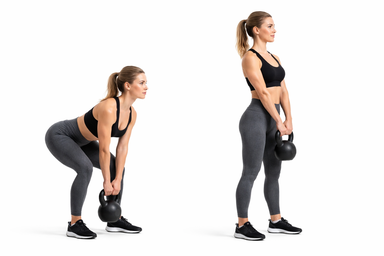
How to
A two-leg hip hinge with a kettlebell that trains your glutes, hamstrings, and back.
- Stand with feet hip-width, kettlebell between your feet.
- Hinge at your hips and grip the handle with both hands.
- Brace your core, then stand tall by driving your hips forward.
- Lower the kettlebell back to the floor with control.
- Keep your back flat.
- Push the floor away.
- Squatting instead of hinging at the hips.
- Letting the kettlebell drift away from you.

How to
A hip hinge that trains your hamstrings, glutes, and back control.
- Stand tall with feet hip-width and hold the weight in front of your thighs.
- Soften your knees and brace your core.
- Push your hips back as the weight slides down close to your legs.
- Lower until you feel a hamstring stretch, keeping your back flat.
- Drive your hips forward to stand tall, then repeat.
- Keep the weight close to you.
- Hinge at your hips, not your waist.
- Squatting instead of hinging.
- Rounding your back as you lower.
Unilateral Hinge
Move slowly; hips stay square. Use a light kettlebell or bodyweight if balance is limiting.

How to
A one-leg hip hinge that trains your hamstrings and glutes while challenging balance.
- Stand tall on one leg with a soft bend in your knee.
- Hinge at your hips and send your free leg back behind you.
- Lower your torso until you feel a stretch in your standing leg.
- Drive through your standing foot to return to tall.
- Finish your reps, then switch legs.
- Keep your hips square.
- Keep your back long.
- Rounding your back as you lower.
- Opening your hips toward the side.
Cool-Down
Downshift and restore length to the posterior chain. 2 minutes.
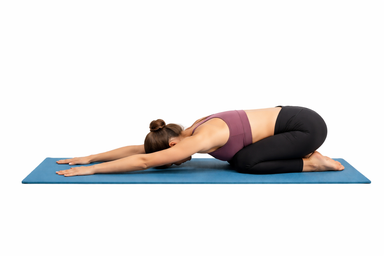
How to
A kneeling rest stretch that relaxes your back, hips, and shoulders while you breathe.
- Kneel with your big toes together and knees apart.
- Sit your hips back toward your heels.
- Reach your arms forward and lower your chest to the floor.
- Rest your forehead down and relax your neck.
- Hold the stretch and breathe slowly.
- Let your hips sink back
- Keep your neck relaxed
- Forcing your hips down
- Holding your breath
How to
A held stretch for the back of your thigh that targets your hamstrings.
- Sit tall with your target leg straight and toes up.
- Hinge at your hips and reach toward your foot.
- Stop when you feel a gentle stretch behind your thigh.
- Hold the stretch and breathe slowly.
- Release slowly, then switch sides if stretching one leg.
- Keep your back long.
- Hinge from your hips.
- Rounding your back to reach farther.
- Bouncing in the stretch.

Hinge Before You Load: The Exercise Logic
Cat-Cow and Dead Bug prime spinal segmentation and deep core bracing before any load touches the posterior chain. The progression from Dowel Hip Hinge to Kettlebell Deadlift to Single-Leg RDL systematically increases demand on the glutes, hamstrings, and erectors—each exercise earning the next.

Why the Hip Hinge Is a Skill, Not a Movement
The hinge pattern requires dissociating lumbar flexion from hip flexion, a coordination challenge most athletes underestimate. Wall Tap Hip Hinges and the dowel drill train proprioceptive feedback at the pelvis and thoracic spine—the exact sensory awareness that breaks down under fatigue or heavier loads.

Pattern First, Then Progressive Overload
This session follows a specificity-before-intensity model: movement quality is locked in during Patterning before the Strength Integration block introduces kettlebell loading. To personalize, use the Single-Leg RDL as your benchmark—if balance or hip shift appears, reduce load and extend patterning work by one additional set.