
Clean & Minimal AI Powered Fitness Routines
Download App25-Minute Intermediate Olympic Weightlifting Session
A focused 25-minute Olympic weightlifting session emphasizing technique, speed, and quality reps.
25-Minute Intermediate Olympic Weightlifting Session
A focused 25-minute Olympic weightlifting session emphasizing technique, speed, and quality reps.
Warm-Up & Positioning
Prepare joints and reinforce key receiving positions before accelerating the bar. Focus on barbell work.
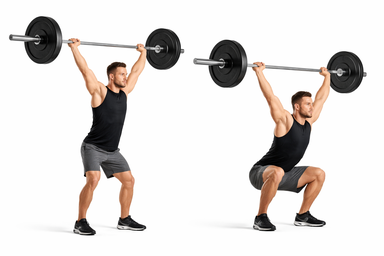
How to
A squat with your arms overhead that trains your legs, hips, core, and shoulder control.
- Stand with feet about shoulder-width apart and arms reaching overhead.
- Brace your core and keep your chest lifted.
- Push your hips back and bend your knees to squat down.
- Go as low as you can while keeping heels down and arms up.
- Drive through your feet to stand tall.
- Keep your arms in line with your ears.
- Keep your knees tracking over toes.
- Letting your heels lift off the floor.
- Rounding your back or dropping your chest.
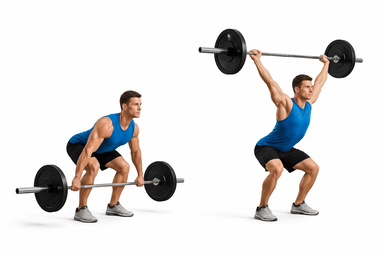
How to
An explosive lift from the hang to overhead that trains full-body power, speed, and coordination.
- Stand tall with the bar at your hips, hands wide, feet hip-width apart.
- Hinge to the hang position with a flat back and the bar close to your thighs.
- Drive through your legs, extend your hips, and pull the bar upward.
- Punch under the bar and catch it overhead in a partial squat.
- Stand tall to finish, then lower with control and reset.
- Keep the bar close.
- Catch with arms locked overhead.
- Swinging the bar away from your body.
- Pressing the bar up instead of catching it.
Main Lift: Snatch Focus
Speed from the hang and strong extension with a vertical finish.
How to
An explosive lift from the hang to overhead that trains full-body power, speed, and coordination.
- Stand tall with the bar at your hips, hands wide, feet hip-width apart.
- Hinge to the hang position with a flat back and the bar close to your thighs.
- Drive through your legs, extend your hips, and pull the bar upward.
- Punch under the bar and catch it overhead in a partial squat.
- Stand tall to finish, then lower with control and reset.
- Keep the bar close.
- Catch with arms locked overhead.
- Swinging the bar away from your body.
- Pressing the bar up instead of catching it.
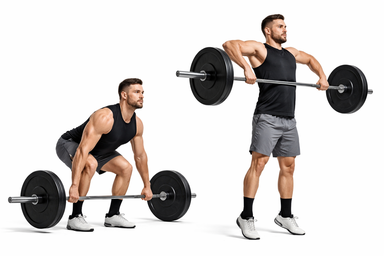
How to
A powerful wide-grip pull from the floor that trains your legs, hips, back, and upper traps.
- Stand with feet hip-width and hold the bar wide, over your shoelaces.
- Brace your core, flatten your back, and keep your chest over the bar.
- Push the floor away and pull the bar close past your knees.
- Extend hips, knees, and ankles hard, then shrug up.
- Lower the bar under control and reset for the next rep.
- Keep the bar close.
- Finish tall before you shrug.
- Bending your arms before your legs and hips finish.
- Letting the bar swing away from your body.
Main Lift: Clean & Jerk Focus
Crisp turnover and stable lockout with controlled leg drive.
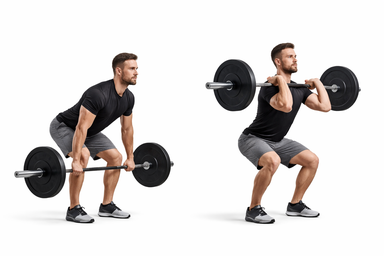
How to
An explosive lift from the hang that trains your hips, legs, back, and shoulders.
- Stand tall with the weight at your thighs and feet hip-width apart.
- Hinge slightly, bend your knees, and keep the weight close to your body.
- Drive through your legs and hips to pull the weight upward.
- Quickly drop under and catch it at your shoulders with soft knees.
- Stand tall, then lower with control back to the hang.
- Keep the weight close
- Extend your hips fast
- Pulling early with your arms
- Letting the weight swing away from you
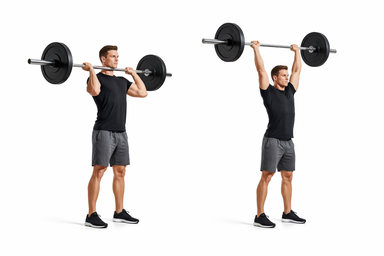
How to
A power lift that drives a weight from shoulders to overhead, training legs, shoulders, and timing.
- Stand tall with feet hip-width and the weight at your shoulders.
- Dip straight down a few inches with your chest up.
- Drive through your legs and press the weight overhead.
- Drop under it and catch with arms locked and knees bent.
- Stand tall to finish, then lower the weight to your shoulders.
- Dip and drive straight up.
- Keep ribs down under the weight.
- Pressing early without using your legs.
- Letting the weight drift forward.
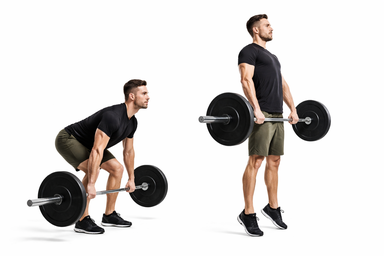
How to
An explosive pull from the floor that trains your legs, hips, back, and power.
- Stand with feet hip-width, bar over midfoot, hands just outside legs.
- Hinge and bend knees, chest up, back flat, arms straight.
- Push the floor away and pull the bar up close to your body.
- Extend hips, knees, and ankles hard, then shrug with straight arms.
- Lower the bar under control and reset for the next rep.
- Keep the bar close.
- Stay tall at the top.
- Bending your arms before your legs and hips extend.
- Letting the bar drift away from your body.
Strength Finisher
Build front rack strength and leg drive while staying technically sound under fatigue.
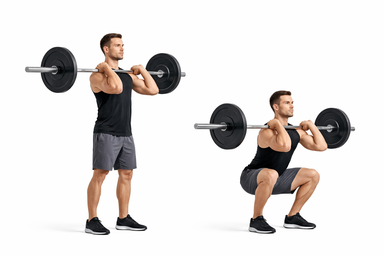
How to
A squat with the load held in front. It trains your quads, glutes, and core.
- Hold the weight at the front of your shoulders or chest.
- Stand with feet about shoulder-width apart, toes slightly out.
- Brace your core and keep your chest tall.
- Bend knees and hips to squat down under control.
- Drive through your feet to stand back up.
- Keep elbows high
- Knees track over toes
- Letting your chest drop forward
- Heels lifting as you squat

Bar Path Precision Over Brute Strength
Overhead squats demand active lat engagement and shoulder external rotation to lock the bar in the scapular plane, while hang power snatches train the explosive second-pull without the complexity of a full receive—building positional awareness before speed. Every exercise here targets the kinetic chain sequencing that separates efficient lifters from strong ones.

The 25-Minute Intensity Paradox
Olympic lifting is neurologically taxing in a way cardio never is—each snatch pull and clean pull fires the posterior chain at near-maximal recruitment, meaning quality degrades fast past 30 minutes. This condensed structure respects your CNS recovery window, keeping bar speed honest across every set rather than grinding through fatigue-compromised technique.

Pulling Mechanics Drive Your Ceiling
Pairing snatch pulls with hang power snatches and clean pulls with hang power cleans creates a feedback loop—the pull builds positional strength, the hang variation immediately tests whether that position transfers to speed. Track your catch height on the push jerk as your adaptation marker; when the receive gets lower and more confident, add 2–5% load to your pulling work.