
Clean & Minimal AI Powered Fitness Routines
Download AppMorning Breath and Mobility
A calm wake-up flow for tight legs, easy breathing, and light movement.
Morning Breath and Mobility
A calm wake-up flow for tight legs, easy breathing, and light movement.
Warm-up
Gentle mobility and breathing to prep shoulders, hips, and lower legs for your practice.
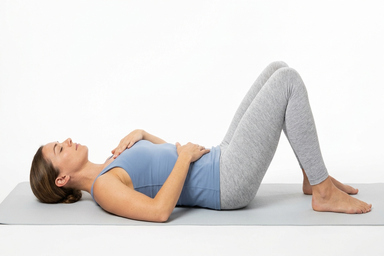
How to
A slow breathing drill that trains relaxed belly breathing and helps you control your breath.
- Lie on your back or sit tall with one hand on your belly.
- Inhale through your nose and let your belly rise.
- Exhale slowly and let your belly fall.
- Keep your chest and shoulders quiet.
- Continue for the set time with smooth breaths.
- Breathe low into your belly
- Keep your shoulders relaxed
- Shrugging your shoulders as you inhale
- Forcing the breath or holding tension
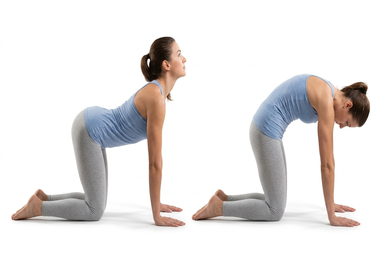
How to
A gentle spine mobility move on hands and knees that warms up your back, neck, and hips.
- Start on hands and knees with wrists under shoulders and knees under hips.
- Inhale and drop your belly as you lift your chest and tailbone.
- Exhale and round your back as you tuck your chin and tailbone.
- Move slowly between positions with your breath.
- Move one vertebra at a time
- Keep your hands and knees planted
- Shrugging your shoulders toward your ears
- Forcing your neck at the end range
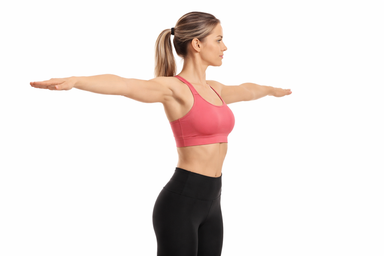
How to
A simple shoulder warm-up that moves both arms in circles and trains shoulder control.
- Stand tall with your feet about hip-width apart.
- Raise both arms out to your sides at shoulder height.
- Make small, controlled circles with both arms.
- Keep circling for the set time, then reverse direction if told.
- Lower your arms to finish.
- Keep your ribs down
- Move smoothly, not fast
- Shrugging your shoulders toward your ears
- Arching your back to keep the arms up
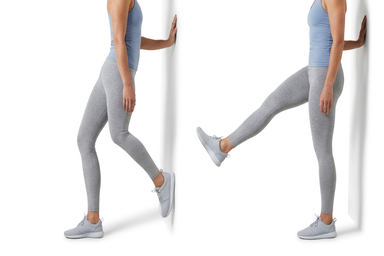
How to
A dynamic hip mobility move that swings each leg to warm up your hips, glutes, and hamstrings.
- Stand tall beside a wall or stable support.
- Brace lightly and shift your weight to one foot.
- Swing the other leg forward and back under control.
- Place it down, then repeat with the other leg.
- Alternate legs for the set.
- Keep your torso tall
- Move from the hip
- Arching your back to swing higher
- Letting the leg swing out of control
How to
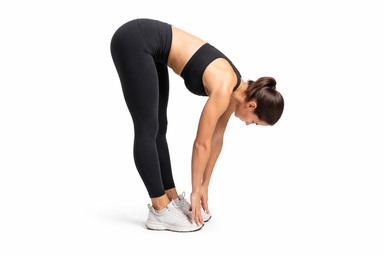
A standing hamstring stretch that uses a hip hinge to stretch the back of your thigh.
- Stand tall and step one foot forward with your heel down and toes up.
- Bend your back knee slightly and hinge at your hips.
- Keep your back long as you lower your chest toward your thigh.
- Hold the stretch and breathe slowly.
- Release, then switch legs.
- Keep your hips square
- Point your toes up
- Rounding your back to reach lower
- Locking the standing knee
Easy Morning Round
Inhale to lift and lengthen, exhale to ease into each stretch.
How to
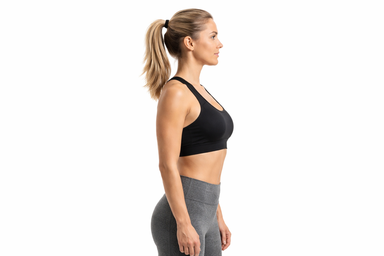
A simple shoulder mobility move that warms up your upper back, neck, and shoulders.
- Stand tall with your arms relaxed at your sides.
- Lift both shoulders up toward your ears.
- Roll them back and down in a smooth circle.
- Repeat for reps, then reverse the direction if needed.
- Move slowly and smoothly.
- Keep your neck relaxed.
- Shrugging with tension in your neck.
- Rushing through small, jerky circles.
How to
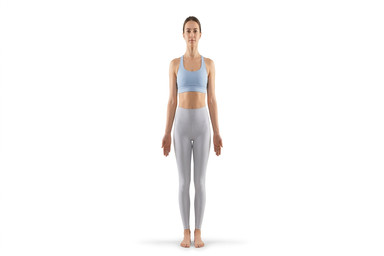
A standing posture that trains tall alignment, steady balance, and calm breathing.
- Stand with your feet together or hip-width apart.
- Press evenly through both feet and lift through the crown of your head.
- Let your arms rest by your sides with palms facing forward.
- Hold the posture and breathe slowly.
- Relax your shoulders and release when done.
- Stand tall, not stiff
- Keep your weight even
- Locking your knees hard
- Letting your ribs flare forward
How to
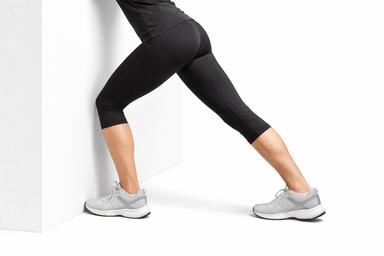
A standing calf stretch for one leg that targets the back of your lower leg.
- Stand facing a wall and place both hands on it.
- Step one foot back and keep that heel on the floor.
- Bend your front knee until you feel a stretch in the back calf.
- Hold the stretch and breathe slowly.
- Release, step in, then switch legs.
- Keep your back heel down
- Point both toes forward
- Letting the back heel lift
- Turning the back foot out
How to
A standing hamstring stretch that uses a hip hinge to stretch the back of your thigh.
- Stand tall and step one foot forward with your heel down and toes up.
- Bend your back knee slightly and hinge at your hips.
- Keep your back long as you lower your chest toward your thigh.
- Hold the stretch and breathe slowly.
- Release, then switch legs.
- Keep your hips square
- Point your toes up
- Rounding your back to reach lower
- Locking the standing knee
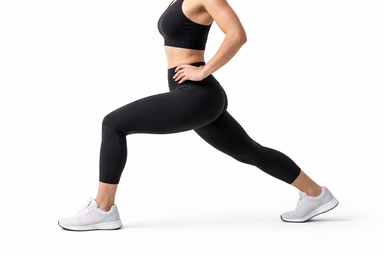
How to
A standing stretch for the front of your hip and thigh on one side.
- Stand tall and hold a wall or sturdy support for balance.
- Step one foot back and tuck that hip slightly under you.
- Bend your front knee until you feel a stretch in the back hip.
- Hold the stretch and breathe slowly.
- Finish the hold, then switch sides.
- Keep your torso tall
- Squeeze the back-side glute
- Arching your lower back
- Letting the back foot turn far outward
Long Exhales
Soften the jaw and let each exhale get a little longer.
How to
A slow breathing drill that trains relaxed belly breathing and helps you control your breath.
- Lie on your back or sit tall with one hand on your belly.
- Inhale through your nose and let your belly rise.
- Exhale slowly and let your belly fall.
- Keep your chest and shoulders quiet.
- Continue for the set time with smooth breaths.
- Breathe low into your belly
- Keep your shoulders relaxed
- Shrugging your shoulders as you inhale
- Forcing the breath or holding tension
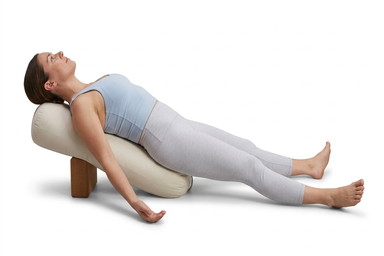
How to
A supported resting pose that helps you relax your whole body and settle your breathing.
- Lie on your back with support under your knees or head as needed.
- Let your legs fall open and rest your arms by your sides.
- Close your eyes or soften your gaze.
- Hold still and breathe slowly through your nose.
- To finish, roll to one side and sit up slowly.
- Let your shoulders drop
- Keep your breath easy
- Holding tension in your jaw or hands
- Using support that feels uncomfortable

Unlocking the Morning Stiffness Cycle
Shoulder rolls and arm circles restore synovial fluid circulation in the glenohumeral joint, while cat-cow mobilizes the thoracolumbar fascia that stiffens overnight. These aren't filler movements — they're directly targeting the tissues most compressed during 6-8 hours of stillness.

Why Mornings Feel Harder Than They Should
Cortisol peaks within 30 minutes of waking, but fascia and connective tissue remain dehydrated and rigid until blood flow arrives. Diaphragmatic breathing here isn't relaxation — it activates the parasympathetic nervous system to lower resting tension in the hip flexors and hamstrings before you ever stretch them.

Sequencing That Follows Your Nervous System
This flow moves from joint circles to standing stretches to floor-based holds, matching the body's natural arousal curve — mobilizing first, lengthening second, then settling into supported savasana to consolidate. To personalize, linger 3-5 extra breaths in the hip flexor stretch on your dominant side, where overnight compression is typically asymmetrical.