
Clean & Minimal AI Powered Fitness Routines
Download App25-Minute Thoracic Spine Mobility
Intermediate thoracic mobility session to improve rotation, extension, and posture in ~25 minutes.
25-Minute Thoracic Spine Mobility
Intermediate thoracic mobility session to improve rotation, extension, and posture in ~25 minutes.
Warm-Up
Prepare ribcage and spine for thoracic rotation/extension work. Breath and gentle motion to start.
How to
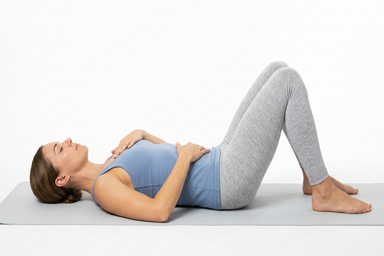
A slow breathing drill that trains relaxed belly breathing and helps you control your breath.
- Lie on your back or sit tall with one hand on your belly.
- Inhale through your nose and let your belly rise.
- Exhale slowly and let your belly fall.
- Keep your chest and shoulders quiet.
- Continue for the set time with smooth breaths.
- Breathe low into your belly
- Keep your shoulders relaxed
- Shrugging your shoulders as you inhale
- Forcing the breath or holding tension
How to
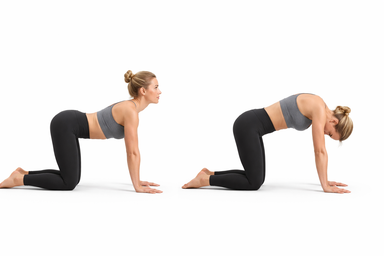
A gentle spine mobility move that alternates rounding and arching your back on hands and knees.
- Start on hands and knees with wrists under shoulders and knees under hips.
- Inhale and drop your belly as you lift your chest and tailbone.
- Exhale and round your back, tucking your chin and tailbone.
- Move slowly between both positions with your breath.
- Move one vertebra at a time.
- Keep your shoulders away from your ears.
- Forcing your neck up or down.
- Rushing through the movement.
Circuit A
Move slowly; exhale into the rotation/hold.
How to
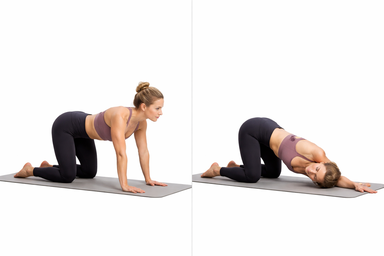
A floor stretch that opens your upper back and shoulder while you hold one side at a time.
- Start on all fours with your hands under shoulders and knees under hips.
- Slide one arm under your chest, palm up, and lower your shoulder toward the floor.
- Rest your head down if comfortable, and keep your hips over your knees.
- Hold the stretch and breathe slowly.
- Press into your top hand to return to all fours, then switch sides.
- Keep your hips stacked over your knees
- Breathe into your upper back
- Letting your hips drift far to one side
- Forcing your shoulder lower than comfortable
How to
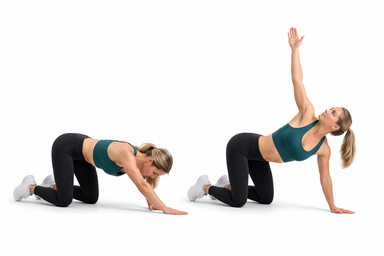
A hands-and-knees rotation that trains upper-back mobility and trunk control.
- Start on hands and knees with your hands under shoulders and knees under hips.
- Place one hand lightly behind your head.
- Rotate your elbow up toward the ceiling, turning through your upper back.
- Lower your elbow back toward the floor with control.
- Return to center, then repeat on the other side.
- Keep your hips still
- Move from your upper back
- Rocking your hips side to side
- Forcing the turn with your neck
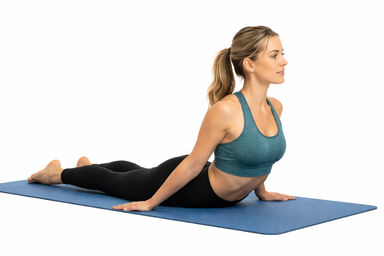
How to
A face-down back extension hold that trains your upper back, glutes, and posture muscles.
- Lie face down with legs long and arms by your sides.
- Turn your thumbs up and gently brace your core.
- Lift your chest, arms, and legs slightly off the floor.
- Hold the position and breathe slowly.
- Lower with control when the hold is done.
- Keep your neck long
- Squeeze shoulder blades down and back
- Cranking your neck upward
- Lifting too high and over-arching your lower back
Circuit B
Keep hips stacked and stable; let the mid-back do the work.
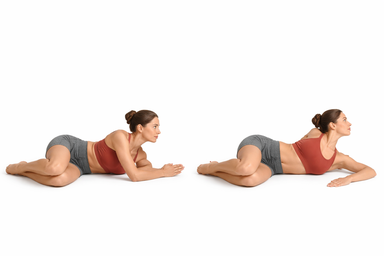
How to
A side-lying rotation stretch for your chest, shoulders, and upper back.
- Lie on one side with knees bent and arms straight in front.
- Keep your knees stacked as you open your top arm toward the floor behind you.
- Turn your chest and head toward the open arm.
- Hold the stretch and breathe slowly.
- Finish the hold, then switch sides.
- Keep your knees stacked
- Rotate from your upper back
- Letting your top knee lift as you rotate
- Forcing the shoulder toward the floor
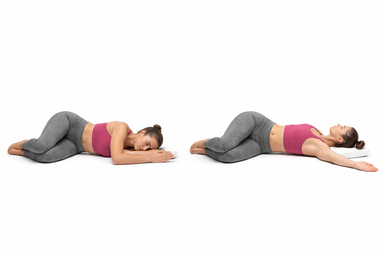
How to
A side-lying rotation drill that opens your chest, shoulders, and upper back.
- Lie on one side with knees bent and arms straight in front of you.
- Sweep your top arm up and back, rotating your chest open.
- Follow your hand with your eyes as far as you can control.
- Sweep the arm back to the start position.
- Finish your reps, then switch sides.
- Keep your knees stacked
- Move slowly and breathe
- Letting your top knee lift off the floor
- Forcing the shoulder past a comfortable range
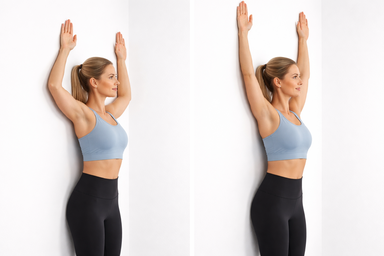
How to
A wall-based shoulder movement that trains upper-back control and shoulder mobility.
- Stand with your back to a wall and feet a small step forward.
- Press your head, upper back, and hips toward the wall.
- Set your arms in a goalpost shape with elbows and wrists near the wall.
- Slide your arms up as far as you can without arching your back.
- Slide your arms back down to the start and repeat.
- Keep your ribs down
- Move slowly and stay controlled
- Arching your back to reach higher
- Letting your shoulders shrug toward your ears
Cool-Down
Downshift breathing and finish with gentle thoracic side-bending/lat opening. Decompress and integrate the work.
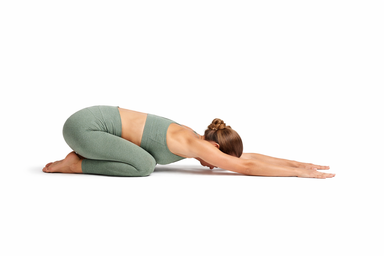
How to
A child pose hold with arms reaching forward. It stretches your back, hips, and shoulders.
- Kneel with your big toes together and knees apart.
- Sit your hips back toward your heels.
- Reach your arms forward and lower your chest toward the floor.
- Hold the stretch and breathe slowly.
- Walk your hands back in and rise up slowly.
- Reach long through your fingertips
- Let your neck relax
- Forcing your hips to your heels
- Shrugging your shoulders toward your ears
How to
A slow breathing drill that trains relaxed belly breathing and helps you control your breath.
- Lie on your back or sit tall with one hand on your belly.
- Inhale through your nose and let your belly rise.
- Exhale slowly and let your belly fall.
- Keep your chest and shoulders quiet.
- Continue for the set time with smooth breaths.
- Breathe low into your belly
- Keep your shoulders relaxed
- Shrugging your shoulders as you inhale
- Forcing the breath or holding tension

Segmental Mobility Before Global Movement
Thread the Needle and Quadruped Thoracic Rotation isolate T4-T8 rotation under scapular load, targeting the multifidus and rotatores without lumbar compensation. Open Book and Side-Lying Windmill then add glenohumeral dissociation, training your body to move the thorax independently from the shoulder girdle.

Why the T-Spine Becomes Your Limiting Factor
The thoracic spine carries 12 vertebral segments designed for rotation yet stiffens fastest under desk posture, overhead demand, and breath-holding under load. Chronic extension restriction here forces the cervical spine and lumbar joints to compensate, creating the cascade of tightness and pain most intermediate movers already recognize in themselves.

Breath as the Entry Point to Tissue Change
Diaphragmatic Breathing opens the session deliberately — intra-thoracic pressure directly influences rib cage mobility, and without it, Cat-Cow and Prone Cobra become surface-level stretches. Wall Angels at the close act as a neuromuscular reset, using serratus anterior and lower trapezius to lock in the range you've earned. Reduce Wall Angel range of motion if your lower back arches off the wall