
Clean & Minimal AI Powered Fitness Routines
Download AppIntermediate Upper Back Routine
An intermediate upper-back focused session to build strength and posture in about 25 minutes.
Intermediate Upper Back Routine
An intermediate upper-back focused session to build strength and posture in about 25 minutes.
Mobility Flow
Move smoothly and breathe; no rushing.
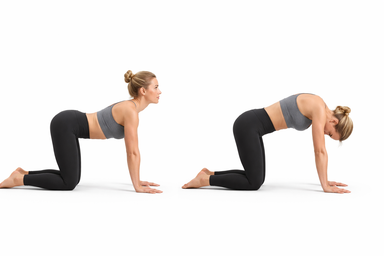
How to
A gentle spine mobility move that alternates rounding and arching your back on hands and knees.
- Start on hands and knees with wrists under shoulders and knees under hips.
- Inhale and drop your belly as you lift your chest and tailbone.
- Exhale and round your back, tucking your chin and tailbone.
- Move slowly between both positions with your breath.
- Move one vertebra at a time.
- Keep your shoulders away from your ears.
- Forcing your neck up or down.
- Rushing through the movement.
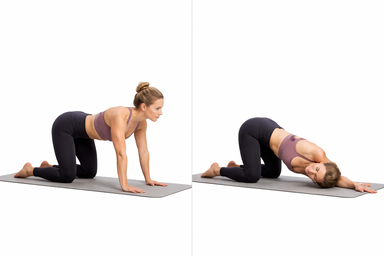
How to
A floor stretch that opens your upper back and shoulder while you hold one side at a time.
- Start on all fours with your hands under shoulders and knees under hips.
- Slide one arm under your chest, palm up, and lower your shoulder toward the floor.
- Rest your head down if comfortable, and keep your hips over your knees.
- Hold the stretch and breathe slowly.
- Press into your top hand to return to all fours, then switch sides.
- Keep your hips stacked over your knees
- Breathe into your upper back
- Letting your hips drift far to one side
- Forcing your shoulder lower than comfortable
Activation
Keep shoulders down; feel the shoulder blades move, not the neck.
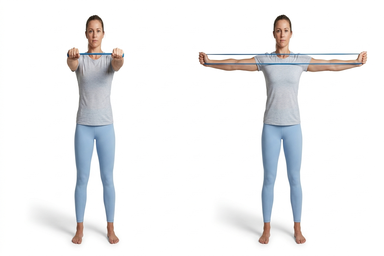
How to
A band upper-back move that trains your rear shoulders and mid-back.
- Stand tall and hold a band at chest height with both hands.
- Start with arms straight and hands shoulder-width apart.
- Pull the band apart until your hands move out to your sides.
- Pause briefly with shoulder blades squeezed together.
- Control the band back to the start and repeat.
- Keep your ribs down.
- Move from your shoulders, not your lower back.
- Shrugging your shoulders toward your ears.
- Arching your back to finish the pull.
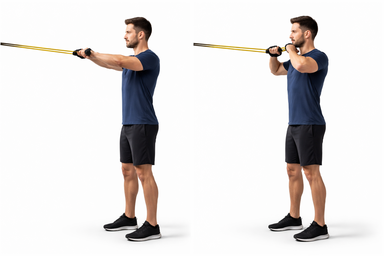
How to
A band pull to your face that trains your upper back, rear shoulders, and shoulder control.
- Anchor the band at face height and hold one end in each hand.
- Step back with arms straight and palms facing down or in.
- Pull the band toward your face, leading with your elbows.
- Squeeze your shoulder blades, then slowly extend your arms.
- Repeat for all reps with steady control.
- Keep your ribs down
- Pull elbows high and wide
- Shrugging your shoulders toward your ears
- Leaning back to move the band
Circuit A
Moderate pace. Focus on squeezing shoulder blades down and back on each rep.
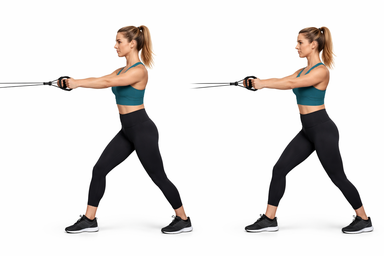
How to
A standing pull that trains your back, shoulders, and arms.
- Stand tall and hold the band at chest height.
- Brace your core and pull your elbows back.
- Squeeze your shoulder blades together.
- Slowly return with control and repeat.
- Keep your chest up
- Pull with your elbows
- Shrugging your shoulders up
- Leaning back to cheat the pull
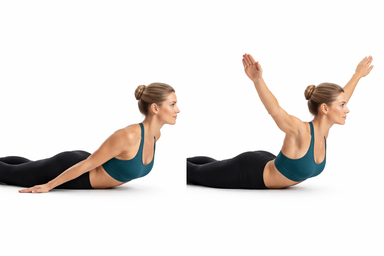
How to
A floor shoulder move that trains your upper back, rear shoulders, and shoulder control.
- Lie face down with your legs long and arms by your sides.
- Lift your chest slightly and turn your palms down.
- Sweep your arms out wide and overhead in a smooth arc.
- Sweep your arms back to your sides with control.
- Repeat for the set, keeping your head neutral.
- Keep your ribs down.
- Move slowly and smoothly.
- Shrugging your shoulders toward your ears.
- Lifting your chest too high.
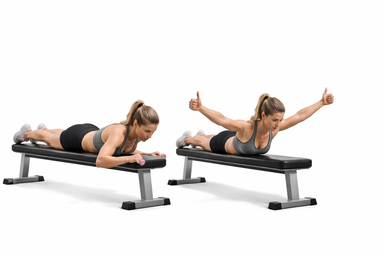
How to
A face-down shoulder raise that trains your upper back and rear shoulders.
- Lie face down with legs long and arms overhead in a Y.
- Set your thumbs up and keep your forehead near the floor.
- Lift your arms a few inches, then lower with control.
- Move your arms out to a T and repeat the lift.
- Continue alternating Y raises and T raises for your reps.
- Squeeze your shoulder blades gently
- Keep your neck long
- Shrugging your shoulders toward your ears
- Lifting your chest high off the floor
Finisher
Decompress and build grip/shoulder endurance. Skip if it causes shoulder pain.
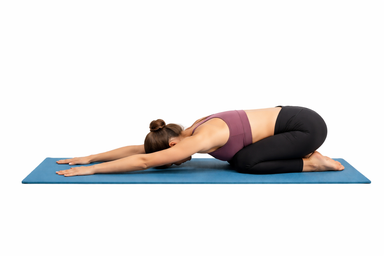
How to
A kneeling rest stretch that relaxes your back, hips, and shoulders while you breathe.
- Kneel with your big toes together and knees apart.
- Sit your hips back toward your heels.
- Reach your arms forward and lower your chest to the floor.
- Rest your forehead down and relax your neck.
- Hold the stretch and breathe slowly.
- Let your hips sink back
- Keep your neck relaxed
- Forcing your hips down
- Holding your breath
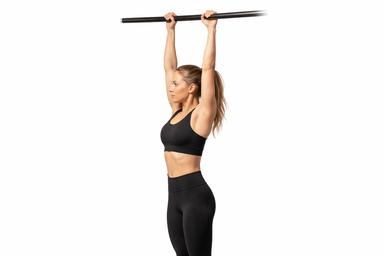
How to
A two-hand hang from an overhead bar that trains grip and upper-body hanging strength.
- Grip a sturdy overhead bar with both hands.
- Step or jump up so your arms are straight and feet are off the floor.
- Let your body hang long, with your ribs down.
- Hold for the set time and breathe slowly.
- Step down with control.
- Keep your grip firm.
- Stay still from shoulders to feet.
- Swinging or kicking your legs.
- Holding your breath during the hold.
Cool-Down
Downshift breathing and release neck/upper-back tension. Stretch and reset focus.

How to
A gentle neck stretch for one upper trapezius at a time. Hold it and breathe.
- Sit or stand tall with your shoulders relaxed.
- Hold a chair with the hand on the side you will stretch.
- Tilt your ear away from that shoulder until you feel a gentle stretch.
- Add light pressure with your other hand, if needed.
- Hold and breathe slowly, then switch sides.
- Keep both shoulders down.
- Use gentle pressure only.
- Pulling your head hard with your hand.
- Lifting the shoulder you are stretching.
How to
A kneeling rest stretch that relaxes your back, hips, and shoulders while you breathe.
- Kneel with your big toes together and knees apart.
- Sit your hips back toward your heels.
- Reach your arms forward and lower your chest to the floor.
- Rest your forehead down and relax your neck.
- Hold the stretch and breathe slowly.
- Let your hips sink back
- Keep your neck relaxed
- Forcing your hips down
- Holding your breath

Scapular Control Behind Every Rep
Band Pull-Aparts and Face Pulls directly train scapular retraction and posterior deltoid strength — the muscles most chronically underloaded in desk-bound postures. Prone Y-T Raises then isolate lower trapezius and serratus anterior, the stabilizers that keep your shoulder blades flush against your ribcage under load.

The Postural Debt Your Spine Is Carrying
Upper back weakness isn't just aesthetic — thoracic rounding shifts your cervical spine forward, compressing facet joints and overloading the upper trapezius into chronic tension. Thread the Needle and Cat-Cow address thoracic rotation and segmental mobility, the exact ranges modern sitting systematically eliminates.

Tension Before Load, Length After
This session follows an activation-before-strength sequence: mobility primes thoracic extension, band work recruits motor units at low risk, then Dead Hangs decompress the spine and restore shoulder capsule length post-effort. Add one resistance band level to Pull-Aparts every two weeks to apply progressive overload to your scapular stabilizers.