
Clean & Minimal AI Powered Fitness Routines
Download AppTattoo's Assisted Pull-Up Strength
Back-friendly upper-body strength focused on assisted pull-ups, posture, and stability for Tattoo.
Tattoo's Assisted Pull-Up Strength
Back-friendly upper-body strength focused on assisted pull-ups, posture, and stability for Tattoo.
Warm-Up (Pull + Posture)
Prep shoulders/scaps and brace for pulling without irritating the low back.
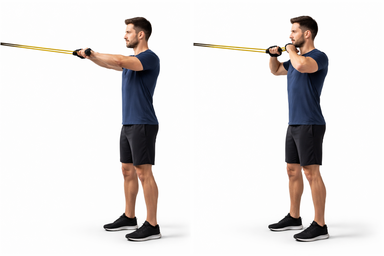
How to
A band pull to your face that trains your upper back, rear shoulders, and shoulder control.
- Anchor the band at face height and hold one end in each hand.
- Step back with arms straight and palms facing down or in.
- Pull the band toward your face, leading with your elbows.
- Squeeze your shoulder blades, then slowly extend your arms.
- Repeat for all reps with steady control.
- Keep your ribs down
- Pull elbows high and wide
- Shrugging your shoulders toward your ears
- Leaning back to move the band
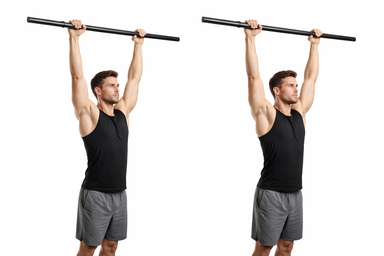
How to
A small pull-up prep that trains shoulder blade control and upper back strength from a dead hang.
- Hang from a bar with hands overhand and arms straight.
- Brace your body and let your shoulders rise toward your ears.
- Pull your shoulder blades down to lift your chest slightly.
- Keep your elbows straight as you pause at the top.
- Lower under control back to the hang and repeat.
- Move from your shoulder blades.
- Keep your ribs down.
- Bending your elbows to turn it into a pull-up.
- Swinging your body between reps.
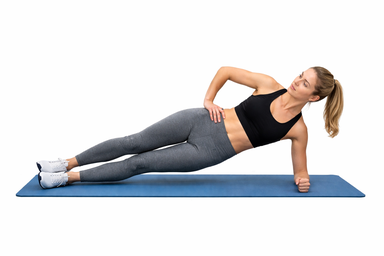
How to
A side hold that trains your obliques, hips, and shoulder stability.
- Lie on one side with your elbow under your shoulder and legs stacked.
- Lift your hips until your body forms a straight line.
- Hold the position and breathe steadily.
- Lower your hips with control.
- Finish your hold, then switch sides.
- Keep your hips stacked
- Press the floor away
- Letting your hips sag
- Rolling your chest toward the floor
Set A — Assisted Pull-Up + Brace
Use enough assistance to keep full range and a controlled lower.
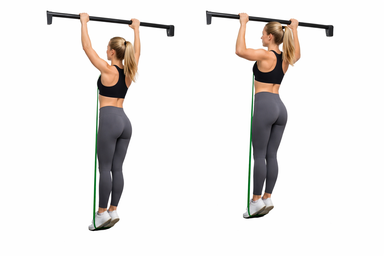
How to
A supported vertical pull that trains your back, biceps, and grip with less body weight.
- Set the assistance and grip the bar slightly wider than shoulders.
- Start hanging with arms straight and shoulders active.
- Pull your chest toward the bar, driving elbows down.
- Lower with control until your arms are straight again.
- Repeat for your reps.
- Keep your ribs down
- Lead with your chest
- Kicking or swinging to get up
- Shrugging your shoulders toward your ears
How to
A side hold that trains your obliques, hips, and shoulder stability.
- Lie on one side with your elbow under your shoulder and legs stacked.
- Lift your hips until your body forms a straight line.
- Hold the position and breathe steadily.
- Lower your hips with control.
- Finish your hold, then switch sides.
- Keep your hips stacked
- Press the floor away
- Letting your hips sag
- Rolling your chest toward the floor
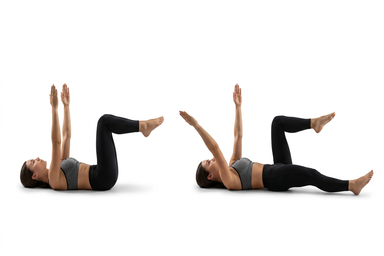
How to
A core move on your back that trains control while you move opposite arm and leg.
- Lie on your back with arms up and knees bent over hips.
- Press your lower back gently toward the floor.
- Lower one arm and the opposite leg with control.
- Return to the start, then repeat on the other side.
- Keep alternating sides for each rep.
- Move slow and stay braced
- Keep your ribs down
- Letting your lower back arch
- Rushing through the reps
Set B — Row + Rear Delts
Keep neck long; pull elbows toward ribs; pause 1 second at the top of each rep.
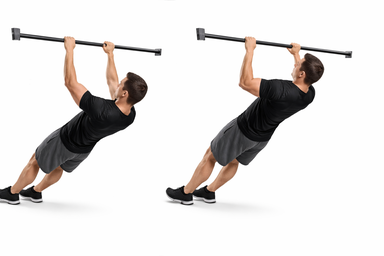
How to
A bodyweight row done under a bar that trains your upper back, lats, and biceps.
- Set a bar at waist height and lie under it.
- Grip the bar with straight arms and your body in a straight line.
- Pull your chest toward the bar.
- Pause briefly, then lower with control.
- Repeat for reps.
- Keep your body straight
- Pull elbows down and back
- Letting your hips sag
- Shrugging your shoulders toward your ears
How to
A band pull to your face that trains your upper back, rear shoulders, and shoulder control.
- Anchor the band at face height and hold one end in each hand.
- Step back with arms straight and palms facing down or in.
- Pull the band toward your face, leading with your elbows.
- Squeeze your shoulder blades, then slowly extend your arms.
- Repeat for all reps with steady control.
- Keep your ribs down
- Pull elbows high and wide
- Shrugging your shoulders toward your ears
- Leaning back to move the band
Set C — Push Balance (Back-Friendly)
Press with ribs down; elbows about 45° from the body; no back arching.
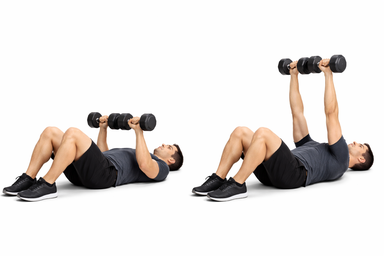
How to
A floor chest press with dumbbells that trains your chest, shoulders, and triceps.
- Lie on your back with knees bent and a dumbbell in each hand.
- Set upper arms on the floor, elbows about 45 degrees from your body.
- Press the dumbbells up until your arms are straight over your chest.
- Lower with control until your upper arms lightly touch the floor.
- Repeat for reps.
- Keep wrists stacked over elbows.
- Press both dumbbells evenly.
- Bouncing your arms off the floor.
- Letting elbows flare straight out.
Cool-Down
Downshift and open lats/upper back after pulling volume.
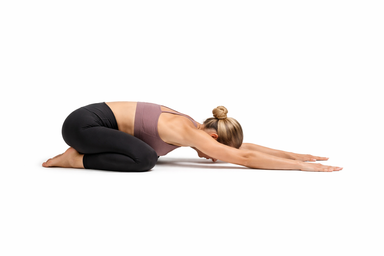
How to
A kneeling rest pose that gently stretches your back, hips, and shoulders.
- Kneel on the floor with your big toes together and knees apart.
- Sit your hips back toward your heels.
- Fold forward and reach your arms in front of you.
- Rest your forehead down and let your chest sink between your thighs.
- Hold the position and breathe slowly.
- Relax your shoulders
- Breathe into your back
- Forcing your hips down
- Holding your breath

Scapular Control Before Pulling Power
Scapular pull-ups prime the serratus anterior and lower trapezius before any loaded pulling, ensuring the shoulder girdle is stable when the lats engage during assisted pull-ups. Inverted rows reinforce horizontal pulling to balance vertical stress, protecting the posterior rotator cuff from cumulative strain.

The Assisted Pull-Up Progression Curve
Assisted pull-ups sit at the intersection of lat recruitment and bodyweight ratio — the single most common bottleneck for people building pull-up strength from scratch. Band face pulls directly counteract the forward-head posture that collapses pulling mechanics, keeping the cervical spine neutral so every rep translates to real strength rather than compensation.

Tension-to-Recovery Ratio in This Build
Dead bug and side plank are placed post-strength to reinforce anti-extension and anti-lateral-flexion core stiffness while the primary movers fatigue — a specificity choice that builds the trunk stability pull-ups actually demand. Reduce assistance band resistance by one level every 2–3 weeks when you can complete all reps with a 2-second pause at the top.