
Clean & Minimal AI Powered Fitness Routines
Download AppLow Energy Sandbag and Yoga
Alternating sandbag circuits and calm yoga to keep muscle engaged without draining you.
Low Energy Sandbag and Yoga
Alternating sandbag circuits and calm yoga to keep muscle engaged without draining you.
Warm-up
Mobility and core activation to prep your spine, hips, and shoulders for lifting work.
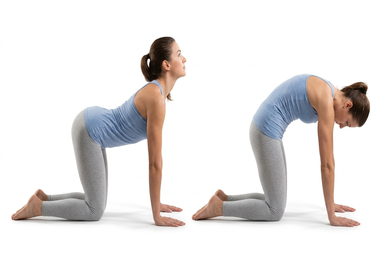
How to
A gentle spine mobility move on hands and knees that warms up your back, neck, and hips.
- Start on hands and knees with wrists under shoulders and knees under hips.
- Inhale and drop your belly as you lift your chest and tailbone.
- Exhale and round your back as you tuck your chin and tailbone.
- Move slowly between positions with your breath.
- Move one vertebra at a time
- Keep your hands and knees planted
- Shrugging your shoulders toward your ears
- Forcing your neck at the end range
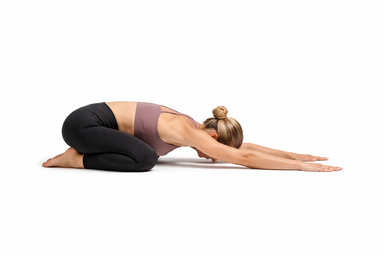
How to
A kneeling rest pose that gently stretches your back, hips, and shoulders.
- Kneel on the floor with your big toes together and knees apart.
- Sit your hips back toward your heels.
- Fold forward and reach your arms in front of you.
- Rest your forehead down and let your chest sink between your thighs.
- Hold the position and breathe slowly.
- Relax your shoulders
- Breathe into your back
- Forcing your hips down
- Holding your breath
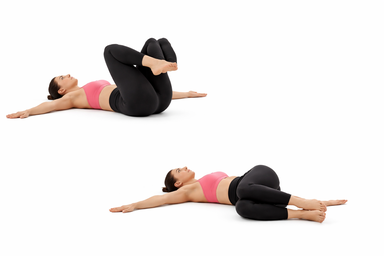
How to
A lying spinal twist hold that opens your torso and hips while you breathe.
- Lie on your back with your knees bent and feet on the floor.
- Let both knees fall to one side as your shoulders stay down.
- Turn your head away from your knees if comfortable.
- Hold the twist and breathe slowly.
- Return to center, then switch sides.
- Keep both shoulders heavy
- Move slowly into the twist
- Forcing your knees to the floor
- Letting your shoulders lift high
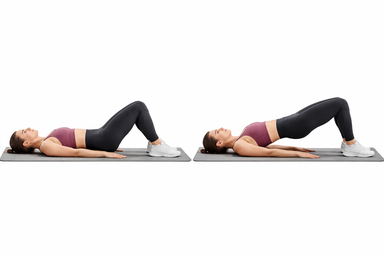
How to
A floor bridge hold that trains your glutes, hamstrings, and core.
- Lie on your back with knees bent and feet flat, hip-width apart.
- Place your arms by your sides and brace your core.
- Press through your heels and lift your hips until your body forms a line.
- Hold the bridge and breathe steadily.
- Lower your hips to the floor with control.
- Squeeze your glutes at the top
- Keep your ribs down
- Arching your lower back at the top
- Letting your knees cave inward
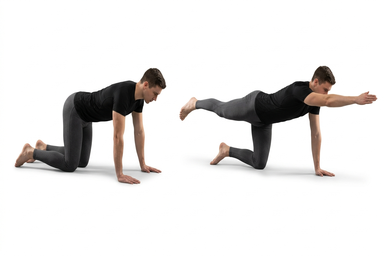
How to
A core stability move from all fours that trains your abs, back, glutes, and balance.
- Start on hands and knees with your hands under shoulders and knees under hips.
- Brace your core and keep your back flat.
- Reach one arm forward and the opposite leg back until they are straight.
- Pause briefly, then bring your hand and knee back under you.
- Repeat on the other side, alternating each rep.
- Keep your hips square
- Move slow and controlled
- Arching or sagging your lower back
- Rotating your hips as you reach
Strength One
Moderate sandbag work keeps the legs, chest, and trunk active without chasing fatigue.
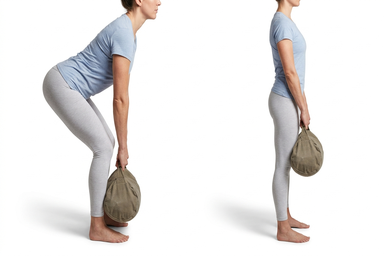
How to
A hip hinge with a sandbag that trains your glutes, hamstrings, back, and grip.
- Stand with feet hip-width, sandbag centered between your feet.
- Hinge at your hips and bend your knees to grip the handles or fabric.
- Brace your core, keep your chest up, and stand tall with the bag.
- Push your hips back and lower the sandbag to the floor with control.
- Reset your brace, then repeat for reps.
- Drive through your feet.
- Keep the bag close to your body.
- Rounding your back as you lift.
- Letting the bag drift away from you.
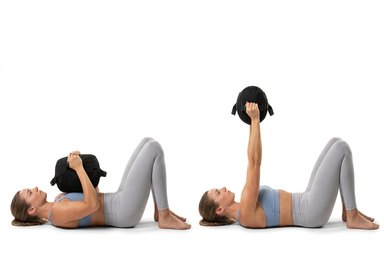
How to
A floor-based press with a sandbag that trains your chest, shoulders, and triceps.
- Lie on your back with knees bent and feet flat on the floor.
- Hold the sandbag at your chest with elbows on the floor.
- Press the sandbag up until your arms are straight.
- Lower it with control until your upper arms touch the floor.
- Keep your wrists stacked over elbows.
- Brace your core as you press.
- Bouncing your elbows off the floor.
- Letting the sandbag drift behind your shoulders.
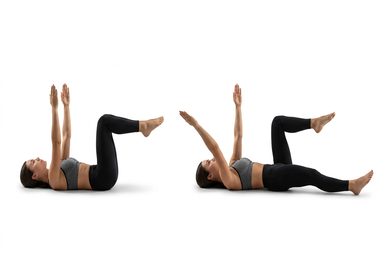
How to
A core move on your back that trains control while you move opposite arm and leg.
- Lie on your back with arms up and knees bent over hips.
- Press your lower back gently toward the floor.
- Lower one arm and the opposite leg with control.
- Return to the start, then repeat on the other side.
- Keep alternating sides for each rep.
- Move slow and stay braced
- Keep your ribs down
- Letting your lower back arch
- Rushing through the reps
Yoga Reset
Gentle floor-based mobility restores range and settles breathing before the next round.
How to
A gentle spine mobility move on hands and knees that warms up your back, neck, and hips.
- Start on hands and knees with wrists under shoulders and knees under hips.
- Inhale and drop your belly as you lift your chest and tailbone.
- Exhale and round your back as you tuck your chin and tailbone.
- Move slowly between positions with your breath.
- Move one vertebra at a time
- Keep your hands and knees planted
- Shrugging your shoulders toward your ears
- Forcing your neck at the end range
How to
A kneeling rest pose that gently stretches your back, hips, and shoulders.
- Kneel on the floor with your big toes together and knees apart.
- Sit your hips back toward your heels.
- Fold forward and reach your arms in front of you.
- Rest your forehead down and let your chest sink between your thighs.
- Hold the position and breathe slowly.
- Relax your shoulders
- Breathe into your back
- Forcing your hips down
- Holding your breath
How to
A floor bridge hold that trains your glutes, hamstrings, and core.
- Lie on your back with knees bent and feet flat, hip-width apart.
- Place your arms by your sides and brace your core.
- Press through your heels and lift your hips until your body forms a line.
- Hold the bridge and breathe steadily.
- Lower your hips to the floor with control.
- Squeeze your glutes at the top
- Keep your ribs down
- Arching your lower back at the top
- Letting your knees cave inward
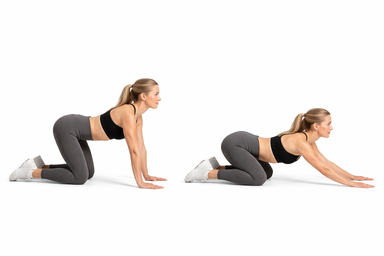
How to
A hands-and-knees rock back that moves your hips and spine while training control.
- Start on hands and knees with hands under shoulders and knees under hips.
- Brace lightly and keep your spine long.
- Push your hips back toward your heels.
- Pause briefly, then return to the start with control.
- Keep your back long
- Move slowly and smoothly
- Rounding your back hard as you rock back
- Letting your shoulders shrug toward your ears
Strength Two
A second strength pass adds squat, pull, and balance-friendly trunk control.
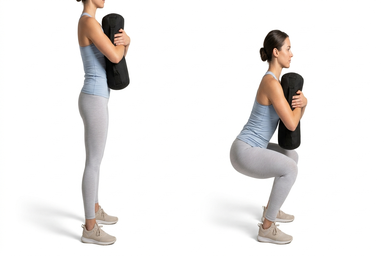
How to
A weighted squat holding a sandbag to your chest. It trains your legs, glutes, and core.
- Stand tall with feet about shoulder-width apart and hug the sandbag to your chest.
- Brace your core and keep your chest lifted.
- Push your hips back and bend your knees to squat down.
- Lower until you can keep control and your heels stay down.
- Drive through your feet to stand back up.
- Keep the bag tight to your body.
- Knees track in line with toes.
- Letting the sandbag pull your chest forward.
- Heels lifting as you squat.
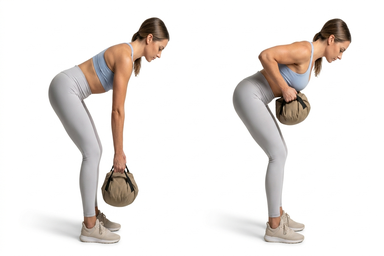
How to
A bent-over pull with a sandbag that trains your upper back, lats, and arms.
- Stand with feet hip-width and hold the sandbag in front of your thighs.
- Hinge at your hips until your torso is angled forward.
- Pull the sandbag toward your lower ribs.
- Squeeze your shoulder blades, then lower it with control.
- Keep your hinge and repeat for reps.
- Keep your back flat
- Pull elbows back, not out
- Rounding your back as you row
- Standing up to lift the sandbag
How to
A core stability move from all fours that trains your abs, back, glutes, and balance.
- Start on hands and knees with your hands under shoulders and knees under hips.
- Brace your core and keep your back flat.
- Reach one arm forward and the opposite leg back until they are straight.
- Pause briefly, then bring your hand and knee back under you.
- Repeat on the other side, alternating each rep.
- Keep your hips square
- Move slow and controlled
- Arching or sagging your lower back
- Rotating your hips as you reach
Long Exhale
Longer holds bring everything back down and leave you looser, not drained.
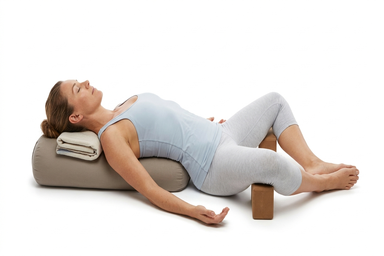
How to
A supported seated hip-opening hold that targets your inner thighs and hips.
- Sit on the floor with the soles of your feet together and knees open.
- Place support under your hips or knees as needed.
- Hold your feet or ankles and sit tall.
- Rest your knees into the support and breathe slowly.
- Bring your knees together, then extend your legs to come out.
- Sit tall through your spine.
- Let your knees be supported.
- Forcing your knees toward the floor.
- Rounding your back and collapsing forward.
How to
A lying spinal twist hold that opens your torso and hips while you breathe.
- Lie on your back with your knees bent and feet on the floor.
- Let both knees fall to one side as your shoulders stay down.
- Turn your head away from your knees if comfortable.
- Hold the twist and breathe slowly.
- Return to center, then switch sides.
- Keep both shoulders heavy
- Move slowly into the twist
- Forcing your knees to the floor
- Letting your shoulders lift high
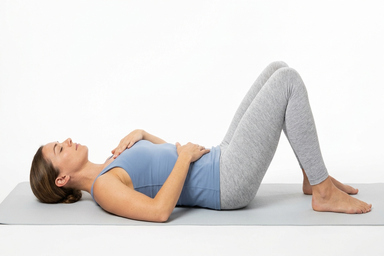
How to
A slow breathing drill that trains relaxed belly breathing and helps you control your breath.
- Lie on your back or sit tall with one hand on your belly.
- Inhale through your nose and let your belly rise.
- Exhale slowly and let your belly fall.
- Keep your chest and shoulders quiet.
- Continue for the set time with smooth breaths.
- Breathe low into your belly
- Keep your shoulders relaxed
- Shrugging your shoulders as you inhale
- Forcing the breath or holding tension
How to
A kneeling rest pose that gently stretches your back, hips, and shoulders.
- Kneel on the floor with your big toes together and knees apart.
- Sit your hips back toward your heels.
- Fold forward and reach your arms in front of you.
- Rest your forehead down and let your chest sink between your thighs.
- Hold the position and breathe slowly.
- Relax your shoulders
- Breathe into your back
- Forcing your hips down
- Holding your breath

Loaded Patterns Meet Nervous System Calm
Sandbag Deadlifts and Bear Hug Squats recruit posterior chain and anterior core under unstable load, demanding constant proprioceptive adjustment. Pairing these immediately with Cat-Cow and Quadruped Rock Back resets spinal mobility and parasympathetic tone, so each strength block starts fresh without accumulated tension.

Training Hard Without the Cortisol Spike
Low-energy training targets the challenge of staying physically capable on days when systemic fatigue, stress, or recovery demands make high-output work counterproductive. The alternating circuit-to-yoga structure keeps muscle fiber recruitment honest while preventing the hormonal and neural drain that turns a workout into a setback.

Why the Long Exhale Section Isn't a Cooldown
Diaphragmatic Breathing and Supine Twist at the end actively downregulate sympathetic nervous activity, accelerating the shift into recovery-mode physiology. Extend exhales to twice the length of your inhale during this section — this single adjustment amplifies vagal tone and makes the parasympathetic response measurably stronger, compounding the session's restorative effect.